
As per Intent Market Research, the Cancer Biological Therapy Market was valued at USD 25.9 Billion in 2024-e and will surpass USD 86.9 Billion by 2030; growing at a CAGR of 22.4% during 2025-2030.
The global cancer biological therapy market is witnessing significant growth due to rising cancer incidences, advancements in immunotherapy, and increasing demand for targeted treatments. This market includes a range of therapies such as monoclonal antibodies, cancer vaccines, cytokines, and gene therapy, all designed to leverage the body's immune system or target cancer cells more effectively. With increasing research and development, the market continues to expand, driven by technological advancements and higher healthcare expenditures.
Monoclonal Antibodies Segment Is Largest Owing to Their Versatility
Monoclonal antibodies (mAbs) have emerged as the largest and most widely used therapy type in cancer treatment. These lab-made molecules mimic the immune system’s ability to fight harmful pathogens such as viruses and bacteria. mAbs are used in treating several cancer types, including breast cancer, lung cancer, and colorectal cancer, due to their ability to specifically target and bind to cancer cells. The increasing adoption of mAbs is attributed to their proven efficacy, particularly in targeted cancer therapies. This segment has seen the launch of numerous blockbuster therapies, including Herceptin for breast cancer and Rituxan for lymphoma, positioning monoclonal antibodies as a critical component of modern oncology treatments.
The growth in monoclonal antibody therapies is further supported by the growing number of pipeline drugs in development, with several targeting novel cancer types and mutations. Additionally, the approval of biosimilars for mAbs has reduced treatment costs, making these therapies more accessible. As such, the demand for monoclonal antibodies is expected to continue to rise, with strong clinical outcomes and ongoing R&D driving their dominance in the cancer biological therapy landscape.
.JPG)
Lung Cancer Segment Is Fastest Growing Owing to Increasing Incidence Rates
Lung cancer is rapidly becoming the fastest-growing cancer type treated by biological therapies. It is one of the most common and deadly cancers globally, which increases the demand for innovative treatments. The application of immunotherapies, particularly immune checkpoint inhibitors like Keytruda and Opdivo, has revolutionized lung cancer treatment. These therapies work by enhancing the body’s immune system to identify and destroy cancer cells, offering an effective alternative to traditional treatments like chemotherapy and radiation.
Lung cancer treatment is further propelled by the growing number of clinical trials and approval of advanced therapies that target specific mutations, such as EGFR and ALK inhibitors. As early detection methods improve and targeted therapies become more effective, the lung cancer segment is poised for continued growth. With the rising incidence of lung cancer, particularly in developing regions, this segment will likely maintain its rapid expansion within the cancer biological therapy market.
Hospitals Are the Largest End-User Segment for Cancer Biological Therapy
Hospitals are the largest end-user segment in the cancer biological therapy market, owing to their central role in cancer treatment and care. Hospitals are the primary facilities where patients undergo advanced cancer therapies, including chemotherapy, radiotherapy, and biologic treatments. These institutions typically have the infrastructure, skilled professionals, and specialized equipment to administer complex treatments like monoclonal antibodies and immunotherapy.
Moreover, hospitals are preferred by patients for the access they provide to comprehensive cancer care, including diagnostics, surgeries, and post-treatment care. The ability to handle critical cancer cases and offer integrated treatment plans drives the dominance of hospitals in the end-user segment. This trend is expected to continue as healthcare systems evolve to offer advanced therapies that require specialized care and monitoring, further cementing hospitals' pivotal role in the cancer biological therapy market.
Intravenous Administration Segment Is Largest Owing to Its Efficacy
Intravenous (IV) administration is the largest route of administration for cancer biological therapies. This method ensures that biologic drugs are delivered directly into the bloodstream, allowing for faster and more efficient absorption. Intravenous infusion is especially beneficial for therapies like monoclonal antibodies and cytokines, which may require precise and controlled administration to achieve optimal efficacy. The rapid onset of action associated with intravenous administration contributes to its dominance in cancer biological therapy.
Additionally, intravenous administration is the preferred method in clinical settings where healthcare providers can closely monitor patients for potential side effects or allergic reactions. This administration route is particularly crucial in treating advanced cancers where quick therapeutic intervention is necessary. As new biologic therapies continue to emerge, the intravenous segment will maintain its leadership position due to the clinical efficacy and practicality it offers in delivering targeted cancer treatments.
Immune Checkpoint Inhibitors Segment Is Fastest Growing Due to Their Effectiveness
Immune checkpoint inhibitors are rapidly emerging as the fastest-growing mechanism of action in cancer biological therapy. These inhibitors work by blocking the proteins that prevent immune cells from attacking cancer cells, allowing the immune system to fight tumors more effectively. The approval of immune checkpoint inhibitors like PD-1/PD-L1 inhibitors, such as Keytruda and Opdivo, has significantly changed the treatment landscape for cancers like melanoma, lung cancer, and bladder cancer.
The growing adoption of immune checkpoint inhibitors is driven by their impressive efficacy in treating a variety of cancers, coupled with the development of combination therapies that enhance their effectiveness. With ongoing clinical trials and the expansion of indications for these drugs, the immune checkpoint inhibitors segment is set to maintain its rapid growth. The increasing number of patients benefiting from these therapies, combined with expanding research, positions immune checkpoint inhibitors as a cornerstone of modern oncology treatments.
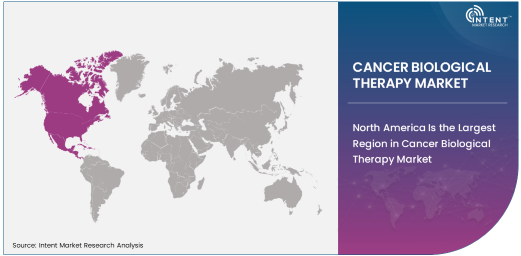
North America Is the Largest Region in Cancer Biological Therapy Market
North America is the largest region in the cancer biological therapy market, driven by high healthcare spending, advanced healthcare infrastructure, and strong adoption of cutting-edge therapies. The United States, in particular, is home to a large number of biotech companies and research institutions that are at the forefront of cancer research and therapy development. Additionally, the regulatory environment in North America supports the rapid approval and commercialization of new cancer therapies, further boosting market growth.
Moreover, North America has one of the highest cancer incidences globally, prompting significant demand for innovative cancer treatments. The increasing focus on personalized medicine, targeted therapies, and immunotherapies is expected to sustain the region's dominance. As cancer treatment continues to evolve, North America will remain a key player in the global cancer biological therapy market.
Competitive Landscape and Leading Companies
The cancer biological therapy market is highly competitive, with several leading companies driving innovation and market expansion. Key players include Amgen, Bristol Myers Squibb, Roche, Merck & Co., and Gilead Sciences, all of which have extensive portfolios of cancer therapies, including monoclonal antibodies and immune checkpoint inhibitors. These companies are heavily invested in research and development to discover novel therapies and maintain their market leadership.
The competitive landscape is characterized by frequent mergers, acquisitions, and partnerships, as companies aim to expand their product offerings and gain access to new technologies. Additionally, with increasing demand for personalized and targeted treatments, collaborations between pharmaceutical companies and biotechnology firms are becoming more common. As the market continues to evolve, companies will focus on expanding their pipeline, gaining regulatory approvals, and addressing unmet needs in cancer therapy to stay competitive in the rapidly growing oncology market.
List of Leading Companies:
- Amgen
- Bristol Myers Squibb
- Roche
- Merck & Co.
- Novartis
- Gilead Sciences
- Eli Lilly and Co.
- Regeneron Pharmaceuticals
- Sanofi
- Pfizer
- AstraZeneca
- Johnson & Johnson
- GlaxoSmithKline
- Celgene Corporation (Bristol Myers Squibb)
- Bayer AG
Recent Developments:
- Bristol Myers Squibb announced the FDA approval of a new monoclonal antibody therapy for lung cancer, significantly expanding their oncology portfolio.
- Merck & Co. completed a merger with a leading biotech firm, boosting their immunotherapy pipeline for the treatment of various cancers.
- Amgen launched a next-generation cancer vaccine aimed at treating colorectal cancer, marking a major step forward in preventive cancer treatment.
- Regeneron Pharmaceuticals received regulatory approval for a new cytokine therapy for blood cancer, aiming to improve patient outcomes in relapsed cases.
- Novartis unveiled a promising new CAR-T cell therapy for pediatric leukemia, highlighting the company's continued commitment to pediatric oncology advancements
Report Scope:
|
Report Features |
Description |
|
Market Size (2024-e) |
USD 25.9 Billion |
|
Forecasted Value (2030) |
USD 86.9 Billion |
|
CAGR (2025 – 2030) |
22.4% |
|
Base Year for Estimation |
2024-e |
|
Historic Year |
2023 |
|
Forecast Period |
2025 – 2030 |
|
Report Coverage |
Market Forecast, Market Dynamics, Competitive Landscape, Recent Developments |
|
Segments Covered |
Cancer Biological Therapy Market By Therapy Type (Monoclonal Antibodies, Cancer Vaccines, Cytokines & Interleukins, Gene Therapy, Oncolytic Virus Therapy), By Cancer Type (Breast Cancer, Lung Cancer, Colorectal Cancer, Prostate Cancer, Blood Cancer), By End-User (Hospitals, Clinics, Research Institutes), By Route of Administration (Intravenous, Subcutaneous, Oral), and By Mechanism of Action (Immune Checkpoint Inhibitors, Targeted Therapy, CAR-T Cell Therapy, Cancer Vaccines); Global Insights & Forecast (2023 – 2030) |
|
Regional Analysis |
North America (US, Canada, Mexico), Europe (Germany, France, UK, Italy, Spain, and Rest of Europe), Asia-Pacific (China, Japan, South Korea, Australia, India, and Rest of Asia-Pacific), Latin America (Brazil, Argentina, and Rest of Latin America), Middle East & Africa (Saudi Arabia, UAE, Rest of Middle East & Africa) |
|
Major Companies |
Amgen, Bristol Myers Squibb, Roche, Merck & Co., Novartis, Gilead Sciences, Eli Lilly and Co., Regeneron Pharmaceuticals, Sanofi, Pfizer, AstraZeneca, Johnson & Johnson, GlaxoSmithKline, Celgene Corporation (Bristol Myers Squibb), Bayer AG |
|
Customization Scope |
Customization for segments, region/country-level will be provided. Moreover, additional customization can be done based on the requirements |
Frequently Asked Questions
The Cancer Biological Therapy Market was valued at USD 25.9 Billion in 2024-e and is expected to grow at a CAGR of over 22.4% from 2025 to 2030.
Cancer biological therapy involves using natural or synthetic substances to target and treat cancer cells, often by enhancing the body’s immune system.
The key types include monoclonal antibodies, cancer vaccines, cytokines, gene therapy, and oncolytic virus therapy, each targeting cancer through different mechanisms.
Breast cancer, lung cancer, and colorectal cancer are some of the most common cancers treated with biological therapies, thanks to their high incidence rates.
Immune checkpoint inhibitors are drugs that block proteins preventing immune cells from attacking cancer cells, thus improving immune system effectiveness against tumors.
|
1. Introduction |
|
1.1. Market Definition |
|
1.2. Scope of the Study |
|
1.3. Research Assumptions |
|
1.4. Study Limitations |
|
2. Research Methodology |
|
2.1. Research Approach |
|
2.1.1. Top-Down Method |
|
2.1.2. Bottom-Up Method |
|
2.1.3. Factor Impact Analysis |
|
2.2. Insights & Data Collection Process |
|
2.2.1. Secondary Research |
|
2.2.2. Primary Research |
|
2.3. Data Mining Process |
|
2.3.1. Data Analysis |
|
2.3.2. Data Validation and Revalidation |
|
2.3.3. Data Triangulation |
|
3. Executive Summary |
|
3.1. Major Markets & Segments |
|
3.2. Highest Growing Regions and Respective Countries |
|
3.3. Impact of Growth Drivers & Inhibitors |
|
3.4. Regulatory Overview by Country |
|
4. Cancer Biological Therapy Market, by Therapy Type (Market Size & Forecast: USD Million, 2023 – 2030) |
|
4.1. Monoclonal Antibodies |
|
4.2. Cancer Vaccines |
|
4.3. Cytokines & Interleukins |
|
4.4. Gene Therapy |
|
4.5. Oncolytic Virus Therapy |
|
5. Cancer Biological Therapy Market, by Cancer Type (Market Size & Forecast: USD Million, 2023 – 2030) |
|
5.1. Breast Cancer |
|
5.2. Lung Cancer |
|
5.3. Colorectal Cancer |
|
5.4. Prostate Cancer |
|
5.5. Blood Cancer |
|
6. Cancer Biological Therapy Market, by End-User (Market Size & Forecast: USD Million, 2023 – 2030) |
|
6.1. Hospitals |
|
6.2. Clinics |
|
6.3. Research Institutes |
|
7. Cancer Biological Therapy Market, by Route of Administration (Market Size & Forecast: USD Million, 2023 – 2030) |
|
7.1. Intravenous |
|
7.2. Subcutaneous |
|
7.3. Oral |
|
8. Cancer Biological Therapy Market, by Mechanism of Action (Market Size & Forecast: USD Million, 2023 – 2030) |
|
8.1. Immune Checkpoint Inhibitors |
|
8.2. Targeted Therapy |
|
8.3. CAR-T Cell Therapy |
|
8.4. Cancer Vaccines |
|
9. Regional Analysis (Market Size & Forecast: USD Million, 2023 – 2030) |
|
9.1. Regional Overview |
|
9.2. North America |
|
9.2.1. Regional Trends & Growth Drivers |
|
9.2.2. Barriers & Challenges |
|
9.2.3. Opportunities |
|
9.2.4. Factor Impact Analysis |
|
9.2.5. Technology Trends |
|
9.2.6. North America Cancer Biological Therapy Market, by Therapy Type |
|
9.2.7. North America Cancer Biological Therapy Market, by Cancer Type |
|
9.2.8. North America Cancer Biological Therapy Market, by End-User |
|
9.2.9. North America Cancer Biological Therapy Market, by Route of Administration |
|
9.2.10. North America Cancer Biological Therapy Market, by Mechanism of Action |
|
9.2.11. By Country |
|
9.2.11.1. US |
|
9.2.11.1.1. US Cancer Biological Therapy Market, by Therapy Type |
|
9.2.11.1.2. US Cancer Biological Therapy Market, by Cancer Type |
|
9.2.11.1.3. US Cancer Biological Therapy Market, by End-User |
|
9.2.11.1.4. US Cancer Biological Therapy Market, by Route of Administration |
|
9.2.11.1.5. US Cancer Biological Therapy Market, by Mechanism of Action |
|
9.2.11.2. Canada |
|
9.2.11.3. Mexico |
|
*Similar segmentation will be provided for each region and country |
|
9.3. Europe |
|
9.4. Asia-Pacific |
|
9.5. Latin America |
|
9.6. Middle East & Africa |
|
10. Competitive Landscape |
|
10.1. Overview of the Key Players |
|
10.2. Competitive Ecosystem |
|
10.2.1. Level of Fragmentation |
|
10.2.2. Market Consolidation |
|
10.2.3. Product Innovation |
|
10.3. Company Share Analysis |
|
10.4. Company Benchmarking Matrix |
|
10.4.1. Strategic Overview |
|
10.4.2. Product Innovations |
|
10.5. Start-up Ecosystem |
|
10.6. Strategic Competitive Insights/ Customer Imperatives |
|
10.7. ESG Matrix/ Sustainability Matrix |
|
10.8. Manufacturing Network |
|
10.8.1. Locations |
|
10.8.2. Supply Chain and Logistics |
|
10.8.3. Product Flexibility/Customization |
|
10.8.4. Digital Transformation and Connectivity |
|
10.8.5. Environmental and Regulatory Compliance |
|
10.9. Technology Readiness Level Matrix |
|
10.10. Technology Maturity Curve |
|
10.11. Buying Criteria |
|
11. Company Profiles |
|
11.1. Amgen |
|
11.1.1. Company Overview |
|
11.1.2. Company Financials |
|
11.1.3. Product/Service Portfolio |
|
11.1.4. Recent Developments |
|
11.1.5. IMR Analysis |
|
*Similar information will be provided for other companies |
|
11.2. Bristol Myers Squibb |
|
11.3. Roche |
|
11.4. Merck & Co. |
|
11.5. Novartis |
|
11.6. Gilead Sciences |
|
11.7. Eli Lilly and Co. |
|
11.8. Regeneron Pharmaceuticals |
|
11.9. Sanofi |
|
11.10. Pfizer |
|
11.11. AstraZeneca |
|
11.12. Johnson & Johnson |
|
11.13. GlaxoSmithKline |
|
11.14. Celgene Corporation (Bristol Myers Squibb) |
|
11.15. Bayer AG |
|
12. Appendix |
A comprehensive market research approach was employed to gather and analyze data on The Cancer Biological Therapy Market. In the process, the analysis was also done to analyze the parent market and relevant adjacencies to measure the impact of them on Cancer Biological Therapy Market. The research methodology encompassed both secondary and primary research techniques, ensuring the accuracy and credibility of the findings.
.jpg)
Secondary Research
Secondary research involved a thorough review of pertinent industry reports, journals, articles, and publications. Additionally, annual reports, press releases, and investor presentations of industry players were scrutinized to gain insights into their market positioning and strategies.
Primary Research
Primary research involved conducting in-depth interviews with industry experts, stakeholders, and market participants across the E-Waste Management ecosystem. The primary research objectives included:
- Validating findings and assumptions derived from secondary research
- Gathering qualitative and quantitative data on market trends, drivers, and challenges
- Understanding the demand-side dynamics, encompassing end-users, component manufacturers, facility providers, and service providers
- Assessing the supply-side landscape, including technological advancements and recent developments
Market Size Assessment
A combination of top-down and bottom-up approaches was utilized to analyze the overall size of Cancer Biological Therapy Market. These methods were also employed to assess the size of various subsegments within the market. The market size assessment methodology encompassed the following steps:
- Identification of key industry players and relevant revenues through extensive secondary research
- Determination of the industry's supply chain and market size, in terms of value, through primary and secondary research processes
- Calculation of percentage shares, splits, and breakdowns using secondary sources and verification through primary sources
.jpg)
Data Triangulation
To ensure the accuracy and reliability of the market size, data triangulation was implemented. This involved cross-referencing data from various sources, including demand and supply side factors, market trends, and expert opinions. Additionally, top-down and bottom-up approaches were employed to validate the market size assessment.