
As per Intent Market Research, the Phenylalanine Market was valued at USD 0.7 Billion in 2024-e and will surpass USD 1.5 Billion by 2030; growing at a CAGR of 14.4% during 2025-2030.
The phenylalanine market is driven by the increasing demand for this essential amino acid across multiple industries, including food and beverages, pharmaceuticals, animal feed, and cosmetics. Phenylalanine, a vital amino acid, is critical for protein synthesis and is also used as a building block for the production of other amino acids. It is available in various forms, including L-phenylalanine, D-phenylalanine, and DL-phenylalanine, each serving different applications in diverse sectors. The market is expanding due to rising awareness of the importance of amino acids in human health, the growing popularity of dietary supplements, and the increasing use of phenylalanine in industrial applications.
As industries continue to recognize the benefits of phenylalanine, its role in both therapeutic and functional formulations is becoming more prominent. With advancements in production technologies and more efficient extraction processes, phenylalanine is now widely used for various therapeutic applications, including pain management and mood enhancement. Moreover, its increasing use in food products, animal feed, and cosmetic formulations is helping boost its market demand. The market is anticipated to witness sustained growth, particularly as the use of phenylalanine in specialized medical treatments and functional foods gains momentum.
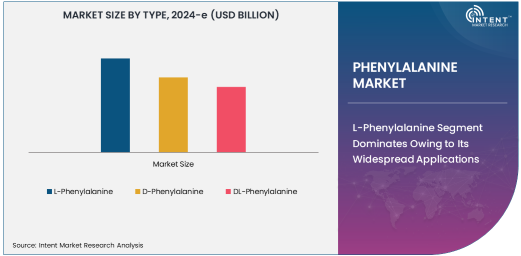
L-Phenylalanine Segment Dominates Owing to Its Widespread Applications
L-phenylalanine, the naturally occurring form of phenylalanine, holds the largest share in the phenylalanine market due to its widespread applications in food, beverages, and pharmaceuticals. L-phenylalanine is a vital amino acid involved in protein synthesis and is an essential component in the production of neurotransmitters such as dopamine, norepinephrine, and epinephrine. These functions make L-phenylalanine crucial for maintaining mental health, mood, and cognitive functions, driving its inclusion in various supplements, health products, and medications.
In the food and beverage industry, L-phenylalanine is commonly used as a sweetener in sugar substitutes like aspartame, which has further fueled its demand in the market. The increasing preference for low-calorie and sugar-free food options is driving this trend. In pharmaceuticals, L-phenylalanine is used in formulations to treat conditions such as depression, attention deficit hyperactivity disorder (ADHD), and Parkinson’s disease. Its widespread applications in these sectors, combined with growing consumer awareness of the health benefits of phenylalanine, have solidified L-phenylalanine as the leading segment in the global market.
Pharmaceutical Application is the Fastest Growing Segment Due to Rising Health Awareness
The pharmaceutical application of phenylalanine is experiencing rapid growth, primarily driven by the rising demand for amino acid-based therapies and the increasing prevalence of metabolic and neurological disorders. Phenylalanine is used in the synthesis of important neurotransmitters and hormones, making it integral in treating conditions such as phenylketonuria (PKU), a genetic disorder in which the body cannot process phenylalanine properly. Furthermore, phenylalanine-based drugs are being explored for their potential in mood enhancement and the treatment of depression, ADHD, and cognitive decline.
In addition to its therapeutic use in neurological conditions, phenylalanine is being investigated for its potential in other medical applications. The growing awareness of amino acids' role in overall health, particularly in managing metabolic disorders and enhancing mental well-being, is contributing to the expansion of the pharmaceutical segment. As research into the benefits of phenylalanine continues, the pharmaceutical industry is likely to see a significant increase in the demand for phenylalanine-based treatments, further driving growth in this sector.
Animal Feed Application is Key in Driving Market Demand
The animal feed application is another critical factor in the growth of the phenylalanine market, particularly in the production of animal protein. Phenylalanine is an essential amino acid for animals, helping to promote growth, muscle development, and overall health. It is often included in feed formulations for poultry, cattle, and swine to ensure proper nutrition and support high-quality meat production. As the global demand for animal-derived products increases, the need for high-quality animal feed, which includes phenylalanine, is also rising.
The growing emphasis on livestock health and productivity has led to a higher demand for amino acid supplementation in animal feeds. Phenylalanine's role in protein synthesis and muscle development is particularly important in livestock farming, where optimized nutrition directly impacts yield and meat quality. This increasing focus on efficient and high-quality livestock production is expected to continue to drive the demand for phenylalanine in the animal feed sector, making it one of the key growth areas in the market.
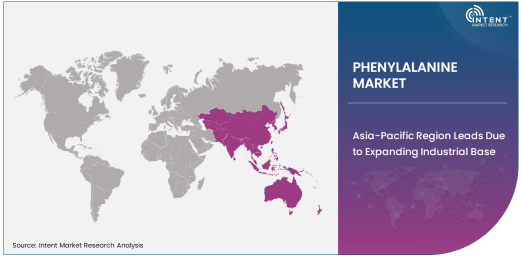
Asia-Pacific Region Leads Due to Expanding Industrial Base
The Asia-Pacific region is the largest and fastest-growing market for phenylalanine, owing to the rapidly expanding food, pharmaceutical, and animal feed industries in countries like China, India, and Japan. The growing population, along with rising disposable incomes, has spurred the demand for food and beverage products, particularly those that cater to health-conscious consumers seeking sugar alternatives and functional foods. Additionally, the increasing focus on improving healthcare and expanding pharmaceutical research in the region is contributing to the rise in the use of phenylalanine-based drugs.
Moreover, the strong presence of animal farming industries in the region has further boosted the demand for phenylalanine in animal feed. The growing awareness of the importance of nutritional supplementation in livestock has spurred demand for high-quality animal feed products, incorporating phenylalanine to improve livestock health and productivity. As industrialization continues to progress in Asia-Pacific, this region is expected to dominate the phenylalanine market in the coming years.
Competitive Landscape: Leading Companies Driving Innovation
The phenylalanine market is highly competitive, with key players including companies such as Evonik Industries, Ajinomoto Co., Inc., and Kyowa Hakko Bio Co., Ltd. These companies are at the forefront of producing and supplying phenylalanine and its derivatives, catering to the growing demand across various industries. Additionally, several other companies are focusing on improving production technologies, enhancing product purity, and expanding their distribution networks to maintain a competitive edge.
The market is characterized by ongoing research and development efforts aimed at introducing new formulations of phenylalanine that offer better performance and cost-effectiveness. Partnerships and collaborations with pharmaceutical companies and food manufacturers are also common strategies employed by key players to ensure product availability and meet the evolving demands of end-users. As the market continues to grow, innovation in production methods and applications will be key to sustaining competitive advantage.
Recent Developments:
- Ajinomoto Co., Inc. launched a new line of plant-based L-phenylalanine products to cater to the growing demand for plant-derived amino acids.
- Evonik Industries AG expanded its production capacity for Phenylalanine to meet the increasing demand in the food and pharmaceutical industries.
- Kyowa Hakko Bio Co., Ltd. unveiled a new, highly purified form of L-Phenylalanine for the dietary supplement market.
- CJ CheilJedang Corporation entered into a strategic partnership with a leading global beverage manufacturer to enhance the use of Phenylalanine in sweetener formulations.
- Lonza Group announced an investment in expanding its facilities to support increased production of phenylalanine for pharmaceutical applications.
List of Leading Companies:
- Ajinomoto Co., Inc.
- Evonik Industries AG
- Kyowa Hakko Bio Co., Ltd.
- CJ CheilJedang Corporation
- Amino GmbH
- China National Petroleum Corporation
- Beijing GXG Chemical Co., Ltd.
- Lonza Group
- Daesang Corporation
- Shandong Baisheng Pharmaceutical Co., Ltd.
- Fenchem Biotek Ltd.
- Anhui Jinbang Medicine Chemical Co., Ltd.
- Wuxi Jinghai Amino Acid Co., Ltd.
- Ningbo Zhenhai Haisheng Pharmaceutical Co., Ltd.
- NutraScience Labs
Report Scope:
|
Report Features |
Description |
|
Market Size (2024-e) |
USD 0.7 Billion |
|
Forecasted Value (2030) |
USD 1.5 Billion |
|
CAGR (2025 – 2030) |
14.4% |
|
Base Year for Estimation |
2024-e |
|
Historic Year |
2023 |
|
Forecast Period |
2025 – 2030 |
|
Report Coverage |
Market Forecast, Market Dynamics, Competitive Landscape, Recent Developments |
|
Segments Covered |
Phenylalanine Market By Type (L-Phenylalanine, D-Phenylalanine, DL-Phenylalanine), By Form (Powder, Granules, Tablets, Capsules), By End-Use Application (Food & Beverages, Pharmaceuticals, Animal Feed, Cosmetics and Personal Care) |
|
Regional Analysis |
North America (US, Canada, Mexico), Europe (Germany, France, UK, Italy, Spain, and Rest of Europe), Asia-Pacific (China, Japan, South Korea, Australia, India, and Rest of Asia-Pacific), Latin America (Brazil, Argentina, and Rest of Latin America), Middle East & Africa (Saudi Arabia, UAE, Rest of Middle East & Africa) |
|
Major Companies |
Ajinomoto Co., Inc., Evonik Industries AG, Kyowa Hakko Bio Co., Ltd., CJ CheilJedang Corporation, Amino GmbH, China National Petroleum Corporation, Beijing GXG Chemical Co., Ltd., Lonza Group, Daesang Corporation, Shandong Baisheng Pharmaceutical Co., Ltd., Fenchem Biotek Ltd., Anhui Jinbang Medicine Chemical Co., Ltd., Wuxi Jinghai Amino Acid Co., Ltd., Ningbo Zhenhai Haisheng Pharmaceutical Co., Ltd., NutraScience Labs |
|
Customization Scope |
Customization for segments, region/country-level will be provided. Moreover, additional customization can be done based on the requirements |
|
1. Introduction |
|
1.1. Market Definition |
|
1.2. Scope of the Study |
|
1.3. Research Assumptions |
|
1.4. Study Limitations |
|
2. Research Methodology |
|
2.1. Research Approach |
|
2.1.1. Top-Down Method |
|
2.1.2. Bottom-Up Method |
|
2.1.3. Factor Impact Analysis |
|
2.2. Insights & Data Collection Process |
|
2.2.1. Secondary Research |
|
2.2.2. Primary Research |
|
2.3. Data Mining Process |
|
2.3.1. Data Analysis |
|
2.3.2. Data Validation and Revalidation |
|
2.3.3. Data Triangulation |
|
3. Executive Summary |
|
3.1. Major Markets & Segments |
|
3.2. Highest Growing Regions and Respective Countries |
|
3.3. Impact of Growth Drivers & Inhibitors |
|
3.4. Regulatory Overview by Country |
|
4. Phenylalanine Market, by Type (Market Size & Forecast: USD Million, 2023 – 2030) |
|
4.1. L-Phenylalanine |
|
4.2. D-Phenylalanine |
|
4.3. DL-Phenylalanine |
|
5. Phenylalanine Market, by Form (Market Size & Forecast: USD Million, 2023 – 2030) |
|
5.1. Powder |
|
5.2. Granules |
|
5.3. Tablets |
|
5.4. Capsules |
|
6. Phenylalanine Market, by End-Use Application (Market Size & Forecast: USD Million, 2023 – 2030) |
|
6.1. Food & Beverages |
|
6.2. Pharmaceuticals |
|
6.3. Animal Feed |
|
6.4. Cosmetics and Personal Care |
|
6.5. Others |
|
7. Regional Analysis (Market Size & Forecast: USD Million, 2023 – 2030) |
|
7.1. Regional Overview |
|
7.2. North America |
|
7.2.1. Regional Trends & Growth Drivers |
|
7.2.2. Barriers & Challenges |
|
7.2.3. Opportunities |
|
7.2.4. Factor Impact Analysis |
|
7.2.5. Technology Trends |
|
7.2.6. North America Phenylalanine Market, by Type |
|
7.2.7. North America Phenylalanine Market, by Form |
|
7.2.8. North America Phenylalanine Market, by End-Use Application |
|
7.2.9. By Country |
|
7.2.9.1. US |
|
7.2.9.1.1. US Phenylalanine Market, by Type |
|
7.2.9.1.2. US Phenylalanine Market, by Form |
|
7.2.9.1.3. US Phenylalanine Market, by End-Use Application |
|
7.2.9.2. Canada |
|
7.2.9.3. Mexico |
|
*Similar segmentation will be provided for each region and country |
|
7.3. Europe |
|
7.4. Asia-Pacific |
|
7.5. Latin America |
|
7.6. Middle East & Africa |
|
8. Competitive Landscape |
|
8.1. Overview of the Key Players |
|
8.2. Competitive Ecosystem |
|
8.2.1. Level of Fragmentation |
|
8.2.2. Market Consolidation |
|
8.2.3. Product Innovation |
|
8.3. Company Share Analysis |
|
8.4. Company Benchmarking Matrix |
|
8.4.1. Strategic Overview |
|
8.4.2. Product Innovations |
|
8.5. Start-up Ecosystem |
|
8.6. Strategic Competitive Insights/ Customer Imperatives |
|
8.7. ESG Matrix/ Sustainability Matrix |
|
8.8. Manufacturing Network |
|
8.8.1. Locations |
|
8.8.2. Supply Chain and Logistics |
|
8.8.3. Product Flexibility/Customization |
|
8.8.4. Digital Transformation and Connectivity |
|
8.8.5. Environmental and Regulatory Compliance |
|
8.9. Technology Readiness Level Matrix |
|
8.10. Technology Maturity Curve |
|
8.11. Buying Criteria |
|
9. Company Profiles |
|
9.1. Ajinomoto Co., Inc. |
|
9.1.1. Company Overview |
|
9.1.2. Company Financials |
|
9.1.3. Product/Service Portfolio |
|
9.1.4. Recent Developments |
|
9.1.5. IMR Analysis |
|
*Similar information will be provided for other companies |
|
9.2. Evonik Industries AG |
|
9.3. Kyowa Hakko Bio Co., Ltd. |
|
9.4. CJ CheilJedang Corporation |
|
9.5. Amino GmbH |
|
9.6. China National Petroleum Corporation |
|
9.7. Beijing GXG Chemical Co., Ltd. |
|
9.8. Lonza Group |
|
9.9. Daesang Corporation |
|
9.10. Shandong Baisheng Pharmaceutical Co., Ltd. |
|
9.11. Fenchem Biotek Ltd. |
|
9.12. Anhui Jinbang Medicine Chemical Co., Ltd. |
|
9.13. Wuxi Jinghai Amino Acid Co., Ltd. |
|
9.14. Ningbo Zhenhai Haisheng Pharmaceutical Co., Ltd. |
|
9.15. NutraScience Labs |
|
10. Appendix |
A comprehensive market research approach was employed to gather and analyze data on the Phenylalanine Market. In the process, the analysis was also done to analyze the parent market and relevant adjacencies to measure the impact of them on the Phenylalanine Market. The research methodology encompassed both secondary and primary research techniques, ensuring the accuracy and credibility of the findings.
.jpg)
Secondary Research
Secondary research involved a thorough review of pertinent industry reports, journals, articles, and publications. Additionally, annual reports, press releases, and investor presentations of industry players were scrutinized to gain insights into their market positioning and strategies.
Primary Research
Primary research involved conducting in-depth interviews with industry experts, stakeholders, and market participants across the E-Waste Management ecosystem. The primary research objectives included:
- Validating findings and assumptions derived from secondary research
- Gathering qualitative and quantitative data on market trends, drivers, and challenges
- Understanding the demand-side dynamics, encompassing end-users, component manufacturers, facility providers, and service providers
- Assessing the supply-side landscape, including technological advancements and recent developments
Market Size Assessment
A combination of top-down and bottom-up approaches was utilized to analyze the overall size of the Phenylalanine Market. These methods were also employed to assess the size of various subsegments within the market. The market size assessment methodology encompassed the following steps:
- Identification of key industry players and relevant revenues through extensive secondary research
- Determination of the industry's supply chain and market size, in terms of value, through primary and secondary research processes
- Calculation of percentage shares, splits, and breakdowns using secondary sources and verification through primary sources
.jpg)
Data Triangulation
To ensure the accuracy and reliability of the market size, data triangulation was implemented. This involved cross-referencing data from various sources, including demand and supply side factors, market trends, and expert opinions. Additionally, top-down and bottom-up approaches were employed to validate the market size assessment.
NA