
As per Intent Market Research, the Phenyl Ethyl Market was valued at USD 0.4 Billion in 2024-e and will surpass USD 1.0 Billion by 2030; growing at a CAGR of 15.6% during 2025-2030.
The phenyl ethyl market is witnessing robust growth due to the versatile applications of phenyl ethyl derivatives, including phenyl ethyl alcohol and phenyl ethyl acetate. These compounds are widely used across several industries, such as fragrances and flavors, pharmaceuticals, food and beverages, cosmetics, and industrial applications. Phenyl ethyl alcohol, known for its pleasant rose-like fragrance, is a key ingredient in perfumes and personal care products, while phenyl ethyl acetate, with its fruity and floral scent, is used extensively in flavorings. As consumer demand for high-quality fragrances, flavors, and functional products continues to rise, the phenyl ethyl market is expected to expand across these diverse sectors.
The market is characterized by a wide range of applications that offer significant growth opportunities, particularly in emerging markets. The growing preference for natural and organic products in the cosmetics and food industries, alongside the increasing demand for specialty fragrances, is driving market momentum. Furthermore, phenyl ethyl derivatives are also gaining traction in industrial applications, where they are utilized as solvents and intermediates in the production of various chemicals.
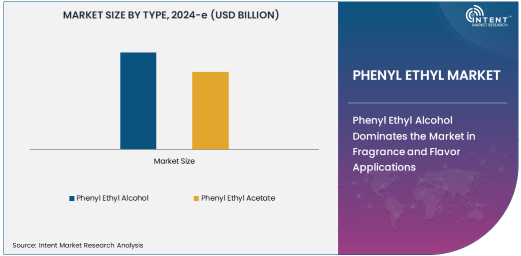
Phenyl Ethyl Alcohol Dominates the Market in Fragrance and Flavor Applications
Phenyl ethyl alcohol, often referred to as rose alcohol, holds the largest share in the phenyl ethyl market, particularly due to its widespread use in the fragrance and flavor industries. This compound is prized for its floral, rose-like aroma, making it a key component in many perfumes, colognes, and personal care products. In the flavor industry, phenyl ethyl alcohol is used to impart a sweet, floral flavor to food and beverages, particularly in products like candies, baked goods, and soft drinks.
The demand for premium, long-lasting fragrances in the personal care and cosmetics sectors is a significant driver for the continued growth of phenyl ethyl alcohol. With an increasing focus on natural and sustainable ingredients, phenyl ethyl alcohol's plant-based production methods, typically derived from roses and other floral sources, make it an attractive option for fragrance manufacturers seeking to cater to eco-conscious consumers. This growing preference for natural fragrances in personal care and cosmetics further strengthens phenyl ethyl alcohol's position as the largest and most widely used segment in the market.
Phenyl Ethyl Acetate Sees Rapid Growth in Food and Beverage Industry
Phenyl ethyl acetate is emerging as one of the fastest-growing segments in the phenyl ethyl market, primarily driven by its increasing applications in the food and beverage industry. Known for its fruity and floral scent, phenyl ethyl acetate is widely used as a flavoring agent, providing a sweet, rose-like flavor to various food products, including beverages, confectioneries, and baked goods. As the global demand for unique and premium flavors in food and drinks grows, phenyl ethyl acetate is becoming a popular choice among manufacturers looking to innovate with natural and appealing flavors.
The rising trend for healthier, natural, and organic food products is also contributing to the rapid growth of phenyl ethyl acetate. Consumers are increasingly seeking clean-label products, and the use of natural flavoring agents like phenyl ethyl acetate aligns with these preferences. As food and beverage companies continue to experiment with new taste profiles and enhance their offerings, phenyl ethyl acetate's role in flavor enhancement is expected to increase significantly, positioning it as a key growth driver in the market.
Pharmaceuticals Drive Phenyl Ethyl Market Growth
The pharmaceutical sector is another major contributor to the expansion of the phenyl ethyl market. Phenyl ethyl alcohol and phenyl ethyl acetate have applications in the formulation of certain medicines, particularly in creating pleasant aromas and masking undesirable odors in oral medications. These compounds are also being explored for their potential therapeutic properties, including antioxidant and anti-inflammatory effects, which are particularly valuable in the production of supplements and topical creams.
With the rise in the prevalence of lifestyle diseases and a growing focus on health and wellness, the demand for pharmaceutical products that are both effective and pleasant to use is on the rise. The use of phenyl ethyl derivatives in these products adds value, offering both functional and sensory benefits. As the pharmaceutical industry continues to innovate with new formulations, phenyl ethyl alcohol and phenyl ethyl acetate are expected to see increasing demand, further fueling market growth.
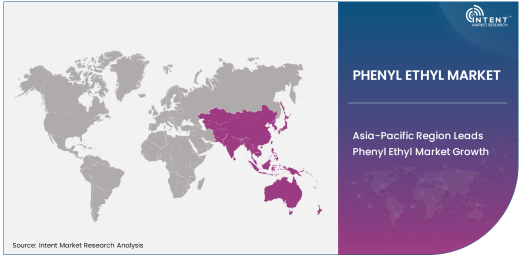
Asia-Pacific Region Leads Phenyl Ethyl Market Growth
The Asia-Pacific region is poised to dominate the phenyl ethyl market due to the growing demand for fragrances, flavors, and personal care products in emerging economies like China and India. The region's expanding middle class, coupled with rising disposable incomes, is driving the consumption of luxury personal care items and premium food and beverage products, creating significant opportunities for phenyl ethyl alcohol and phenyl ethyl acetate. Additionally, the region's large-scale manufacturing capabilities and low production costs contribute to the affordability and accessibility of phenyl ethyl derivatives, further accelerating market growth.
As consumer preferences in Asia-Pacific shift towards natural and sustainable products, phenyl ethyl alcohol and phenyl ethyl acetate, which can be derived from plant-based sources, are becoming increasingly popular. With a large consumer base and growing industrial sectors, Asia-Pacific is set to be the fastest-growing and largest regional market for phenyl ethyl derivatives in the coming years.
Competitive Landscape: Key Players Driving Market Innovation
The phenyl ethyl market is competitive, with several key players focusing on product development, innovation, and expanding their market presence. Leading companies in the market include BASF, Koninklijke DSM N.V., and Symrise AG, among others. These companies are known for their expertise in flavor and fragrance formulations, and they continually invest in research and development to create high-quality phenyl ethyl derivatives that meet the evolving demands of consumers and businesses.
The competitive landscape is characterized by a growing trend towards sustainable production methods and a focus on natural, eco-friendly ingredients. As consumer preferences continue to evolve, companies in the phenyl ethyl market are investing in innovative production techniques, such as biotechnology and sustainable sourcing, to stay ahead of the competition. Strategic partnerships, mergers, and acquisitions are also common strategies used by market leaders to expand their product offerings and reach new markets.
Recent Developments:
- BASF SE expanded its production facility for Phenyl Ethyl Alcohol to meet the growing demand from the fragrance industry.
- Givaudan SA introduced a new sustainable method for producing Phenyl Ethyl Acetate, enhancing its appeal to eco-conscious brands.
- Symrise AG announced a strategic partnership with a global perfume manufacturer to develop innovative fragrance solutions using Phenyl Ethyl Alcohol.
- International Flavors & Fragrances Inc. launched a new line of food and beverage flavors based on Phenyl Ethyl Acetate, targeting the confectionery market.
- Takasago International Corporation revealed a new patented process for enhancing the aroma of Phenyl Ethyl Alcohol, improving its application in cosmetics.
List of Leading Companies:
- BASF SE
- Firmenich International SA
- Givaudan SA
- International Flavors & Fragrances Inc.
- Symrise AG
- Takasago International Corporation
- Aurochemicals Pvt. Ltd.
- J. T. Baker (Avantor)
- LANXESS AG
- Eastman Chemical Company
- Jiangxi Hengcheng Natural Flavor & Fragrance Co., Ltd.
- T. Hasegawa Co., Ltd.
- Vigon International, Inc.
- Robertet SA
- Mane SA
Report Scope:
|
Report Features |
Description |
|
Market Size (2024-e) |
USD 0.4 Billion |
|
Forecasted Value (2030) |
USD 1.0 Billion |
|
CAGR (2025 – 2030) |
15.6% |
|
Base Year for Estimation |
2024-e |
|
Historic Year |
2023 |
|
Forecast Period |
2025 – 2030 |
|
Report Coverage |
Market Forecast, Market Dynamics, Competitive Landscape, Recent Developments |
|
Segments Covered |
Phenyl Ethyl Market By Type (Phenyl Ethyl Alcohol, Phenyl Ethyl Acetate), By End-Use Application (Fragrances and Flavors, Pharmaceuticals, Food & Beverages, Cosmetics and Personal Care, Industrial Applications) |
|
Regional Analysis |
North America (US, Canada, Mexico), Europe (Germany, France, UK, Italy, Spain, and Rest of Europe), Asia-Pacific (China, Japan, South Korea, Australia, India, and Rest of Asia-Pacific), Latin America (Brazil, Argentina, and Rest of Latin America), Middle East & Africa (Saudi Arabia, UAE, Rest of Middle East & Africa) |
|
Major Companies |
BASF SE, Firmenich International SA, Givaudan SA, International Flavors & Fragrances Inc., Symrise AG, Takasago International Corporation, Aurochemicals Pvt. Ltd., J. T. Baker (Avantor), LANXESS AG, Eastman Chemical Company, Jiangxi Hengcheng Natural Flavor & Fragrance Co., Ltd., T. Hasegawa Co., Ltd., Vigon International, Inc., Robertet SA, Mane SA |
|
Customization Scope |
Customization for segments, region/country-level will be provided. Moreover, additional customization can be done based on the requirements |
|
1. Introduction |
|
1.1. Market Definition |
|
1.2. Scope of the Study |
|
1.3. Research Assumptions |
|
1.4. Study Limitations |
|
2. Research Methodology |
|
2.1. Research Approach |
|
2.1.1. Top-Down Method |
|
2.1.2. Bottom-Up Method |
|
2.1.3. Factor Impact Analysis |
|
2.2. Insights & Data Collection Process |
|
2.2.1. Secondary Research |
|
2.2.2. Primary Research |
|
2.3. Data Mining Process |
|
2.3.1. Data Analysis |
|
2.3.2. Data Validation and Revalidation |
|
2.3.3. Data Triangulation |
|
3. Executive Summary |
|
3.1. Major Markets & Segments |
|
3.2. Highest Growing Regions and Respective Countries |
|
3.3. Impact of Growth Drivers & Inhibitors |
|
3.4. Regulatory Overview by Country |
|
4. Phenyl Ethyl Market, by Type (Market Size & Forecast: USD Million, 2023 – 2030) |
|
4.1. Phenyl Ethyl Alcohol |
|
4.2. Phenyl Ethyl Acetate |
|
5. Phenyl Ethyl Market, by End-Use Application (Market Size & Forecast: USD Million, 2023 – 2030) |
|
5.1. Fragrances and Flavors |
|
5.2. Pharmaceuticals |
|
5.3. Food & Beverages |
|
5.4. Cosmetics and Personal Care |
|
5.5. Industrial Applications |
|
6. Regional Analysis (Market Size & Forecast: USD Million, 2023 – 2030) |
|
6.1. Regional Overview |
|
6.2. North America |
|
6.2.1. Regional Trends & Growth Drivers |
|
6.2.2. Barriers & Challenges |
|
6.2.3. Opportunities |
|
6.2.4. Factor Impact Analysis |
|
6.2.5. Technology Trends |
|
6.2.6. North America Phenyl Ethyl Market, by Type |
|
6.2.7. North America Phenyl Ethyl Market, by End-Use Application |
|
6.2.8. By Country |
|
6.2.8.1. US |
|
6.2.8.1.1. US Phenyl Ethyl Market, by Type |
|
6.2.8.1.2. US Phenyl Ethyl Market, by End-Use Application |
|
6.2.8.2. Canada |
|
6.2.8.3. Mexico |
|
*Similar segmentation will be provided for each region and country |
|
6.3. Europe |
|
6.4. Asia-Pacific |
|
6.5. Latin America |
|
6.6. Middle East & Africa |
|
7. Competitive Landscape |
|
7.1. Overview of the Key Players |
|
7.2. Competitive Ecosystem |
|
7.2.1. Level of Fragmentation |
|
7.2.2. Market Consolidation |
|
7.2.3. Product Innovation |
|
7.3. Company Share Analysis |
|
7.4. Company Benchmarking Matrix |
|
7.4.1. Strategic Overview |
|
7.4.2. Product Innovations |
|
7.5. Start-up Ecosystem |
|
7.6. Strategic Competitive Insights/ Customer Imperatives |
|
7.7. ESG Matrix/ Sustainability Matrix |
|
7.8. Manufacturing Network |
|
7.8.1. Locations |
|
7.8.2. Supply Chain and Logistics |
|
7.8.3. Product Flexibility/Customization |
|
7.8.4. Digital Transformation and Connectivity |
|
7.8.5. Environmental and Regulatory Compliance |
|
7.9. Technology Readiness Level Matrix |
|
7.10. Technology Maturity Curve |
|
7.11. Buying Criteria |
|
8. Company Profiles |
|
8.1. BASF SE |
|
8.1.1. Company Overview |
|
8.1.2. Company Financials |
|
8.1.3. Product/Service Portfolio |
|
8.1.4. Recent Developments |
|
8.1.5. IMR Analysis |
|
*Similar information will be provided for other companies |
|
8.2. Firmenich International SA |
|
8.3. Givaudan SA |
|
8.4. International Flavors & Fragrances Inc. |
|
8.5. Symrise AG |
|
8.6. Takasago International Corporation |
|
8.7. Aurochemicals Pvt. Ltd. |
|
8.8. J. T. Baker (Avantor) |
|
8.9. LANXESS AG |
|
8.10. Eastman Chemical Company |
|
8.11. Jiangxi Hengcheng Natural Flavor & Fragrance Co., Ltd. |
|
8.12. T. Hasegawa Co., Ltd. |
|
8.13. Vigon International, Inc. |
|
8.14. Robertet SA |
|
8.15. Mane SA |
|
9. Appendix |
A comprehensive market research approach was employed to gather and analyze data on the Phenyl Ethyl Market. In the process, the analysis was also done to analyze the parent market and relevant adjacencies to measure the impact of them on the Phenyl Ethyl Market. The research methodology encompassed both secondary and primary research techniques, ensuring the accuracy and credibility of the findings.
.jpg)
Secondary Research
Secondary research involved a thorough review of pertinent industry reports, journals, articles, and publications. Additionally, annual reports, press releases, and investor presentations of industry players were scrutinized to gain insights into their market positioning and strategies.
Primary Research
Primary research involved conducting in-depth interviews with industry experts, stakeholders, and market participants across the E-Waste Management ecosystem. The primary research objectives included:
- Validating findings and assumptions derived from secondary research
- Gathering qualitative and quantitative data on market trends, drivers, and challenges
- Understanding the demand-side dynamics, encompassing end-users, component manufacturers, facility providers, and service providers
- Assessing the supply-side landscape, including technological advancements and recent developments
Market Size Assessment
A combination of top-down and bottom-up approaches was utilized to analyze the overall size of the Phenyl Ethyl Market. These methods were also employed to assess the size of various subsegments within the market. The market size assessment methodology encompassed the following steps:
- Identification of key industry players and relevant revenues through extensive secondary research
- Determination of the industry's supply chain and market size, in terms of value, through primary and secondary research processes
- Calculation of percentage shares, splits, and breakdowns using secondary sources and verification through primary sources
.jpg)
Data Triangulation
To ensure the accuracy and reliability of the market size, data triangulation was implemented. This involved cross-referencing data from various sources, including demand and supply side factors, market trends, and expert opinions. Additionally, top-down and bottom-up approaches were employed to validate the market size assessment.
NA