
As per Intent Market Research, the Peyronies Disease Treatment Market was valued at USD 1.2 Billion in 2024-e and will surpass USD 2.0 Billion by 2030; growing at a CAGR of 8.0% during 2025-2030.
The Peyronie’s Disease treatment market has been experiencing steady growth due to increasing awareness of the condition, advancements in treatment options, and rising incidences of the disease. Peyronie’s Disease, characterized by the development of fibrous scar tissue in the penis, leads to curved, painful erections and can significantly affect a patient’s quality of life. Treatment options vary, ranging from oral medications to surgeries, with ongoing research into more effective therapies. The market is further driven by the growing emphasis on male health, the increasing adoption of minimally invasive treatments, and the expansion of healthcare access across both developed and emerging markets.
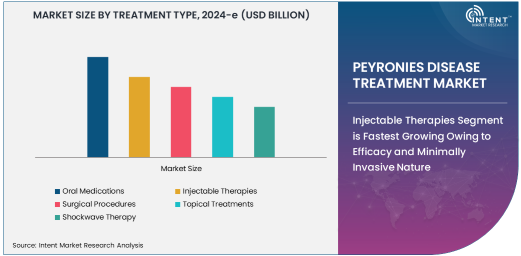
Injectable Therapies Segment is Fastest Growing Owing to Efficacy and Minimally Invasive Nature
Among the various treatment types for Peyronie’s Disease, injectable therapies are seeing the fastest growth. Injectable treatments like collagenase clostridium histolyticum (CCH) have gained significant traction due to their high efficacy in reducing penile curvature and minimizing pain. The appeal of injectable therapies lies in their targeted approach, offering faster results with fewer side effects compared to traditional surgical procedures. Additionally, injectable therapies are minimally invasive, which has led to increased patient preference, as they are a less daunting alternative to surgery while still providing significant improvements in condition outcomes.
The adoption of injectable therapies has been further bolstered by the growing availability of newer, more effective treatments and the expanding pipeline of injectable drugs. With approval from regulatory agencies such as the FDA and EMA, injectable therapies are becoming a mainstream option for treating Peyronie’s Disease, contributing to the segment’s rapid growth. These treatments are also more cost-effective for both healthcare providers and patients compared to surgical options, further driving their widespread use.
Collagenase Clostridium Histolyticum is Leading Drug Type Due to Proven Effectiveness
Collagenase clostridium histolyticum (CCH) remains the leading drug type for treating Peyronie’s Disease. CCH, sold under the brand name Xiaflex, has gained approval from regulatory bodies for its ability to break down the collagen buildup in the penis that causes the curvature. The drug is specifically designed to target the fibrous tissue directly, addressing the root cause of Peyronie’s Disease. Its proven effectiveness in reducing curvature and improving erectile function has made it the preferred choice for both doctors and patients. CCH’s success in clinical trials and its subsequent widespread adoption have cemented its position as the dominant drug type for treating this condition.
Moreover, CCH’s ability to deliver results with minimal adverse effects has made it a pivotal treatment in the management of Peyronie’s Disease. As patients and healthcare providers seek less invasive and more effective treatment options, collagenase clostridium histolyticum continues to grow in prominence, driving the overall market for Peyronie’s Disease treatments forward.
Hospitals Segment is Largest Due to Extensive Infrastructure and Advanced Care
Among the various end-user segments, hospitals represent the largest segment in the Peyronie’s Disease treatment market. This is largely due to the comprehensive infrastructure and advanced care available in hospital settings, which are equipped to handle complex cases of Peyronie’s Disease, including those requiring surgical intervention or injectable treatments like CCH. Hospitals also tend to have specialized urology departments that focus on the diagnosis and treatment of male reproductive health conditions, further solidifying their role as the dominant end-user.
The hospital segment benefits from its ability to offer a wide range of treatment options, including advanced therapies and surgeries, making it the go-to choice for patients with severe cases of Peyronie’s Disease. Additionally, hospitals often provide follow-up care and rehabilitation services, which are crucial for managing long-term outcomes. As healthcare systems continue to invest in specialized services for male health, the hospital segment is expected to remain the largest for the foreseeable future.
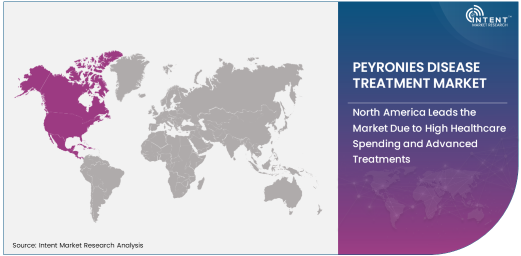
North America Leads the Market Due to High Healthcare Spending and Advanced Treatments
North America is the largest region in the Peyronie’s Disease treatment market, driven by high healthcare spending, advanced medical infrastructure, and a growing awareness of male health issues. In particular, the United States is a significant contributor to this growth, with a large number of healthcare providers offering specialized treatments for Peyronie’s Disease. The region is home to major pharmaceutical companies and research institutions, fostering a strong pipeline of new treatments and innovations. Furthermore, the approval of injectable therapies like collagenase clostridium histolyticum has played a pivotal role in expanding treatment options and improving patient outcomes in North America.
The increasing awareness of Peyronie’s Disease, alongside the availability of effective treatments and high patient demand for less invasive options, continues to support North America’s dominance in the market. As the population ages and more men seek treatment for erectile dysfunction and related conditions, the North American market is expected to continue to grow at a steady pace.
Leading Companies and Competitive Landscape
Key players in the Peyronie’s Disease treatment market include companies like Endo Pharmaceuticals, Pfizer, Inc., Boston Scientific Corporation, and Ferring Pharmaceuticals, which have been at the forefront of treatment innovations. These companies are investing heavily in research and development to bring new solutions to market, particularly in the areas of injectable therapies and minimally invasive procedures. Additionally, pharmaceutical giants such as AbbVie, Eli Lilly, and Medtronic are expanding their portfolios to include treatments specifically for urological diseases, including Peyronie’s Disease.
The competitive landscape is characterized by a mix of large multinational pharmaceutical companies and specialized urology-focused firms. Collaborations and partnerships are common in this market, as companies seek to leverage each other’s expertise in drug development, regulatory approvals, and distribution. With increasing competition in injectable therapies, drug efficacy, patient outcomes, and cost-effectiveness will be key differentiators for market leadership.
Recent Developments:
- Endo Pharmaceuticals announced the launch of a new collagenase injection for Peyronie’s disease treatment, receiving FDA approval for its use in 2024.
- Boston Scientific expanded its urology portfolio with a new shockwave therapy device designed to treat erectile dysfunction caused by Peyronie’s disease.
- Pfizer, Inc. completed the acquisition of a biotech company specializing in the development of treatments for urological diseases, including Peyronie’s disease.
- AbbVie has entered into a partnership with a leading pharmaceutical company to co-develop a topical treatment for Peyronie’s disease.
- Ferring Pharmaceuticals received regulatory approval from the EMA for their new injectable therapy aimed at reducing the symptoms of Peyronie’s disease.
List of Leading Companies:
- Endo Pharmaceuticals
- Pfizer, Inc.
- Eli Lilly and Co.
- Melesio Pharmaceuticals
- Boston Scientific Corporation
- HealthTronics, Inc.
- Ferring Pharmaceuticals
- AbbVie, Inc.
- Auxilium Pharmaceuticals
- Novartis AG
- Spectrum Pharmaceuticals
- Medtronic
- GlaxoSmithKline PLC
- Johnson & Johnson
- Sanofi
Report Scope:
|
Report Features |
Description |
|
Market Size (2024-e) |
USD 1.2 Billion |
|
Forecasted Value (2030) |
USD 2.0 Billion |
|
CAGR (2025 – 2030) |
8.0% |
|
Base Year for Estimation |
2024-e |
|
Historic Year |
2023 |
|
Forecast Period |
2025 – 2030 |
|
Report Coverage |
Market Forecast, Market Dynamics, Competitive Landscape, Recent Developments |
|
Segments Covered |
Peyronie’s Disease Treatment Market By Treatment Type (Oral Medications, Injectable Therapies, Surgical Procedures, Topical Treatments, Shockwave Therapy), By Drug Type (Collagenase Clostridium Histolyticum, Verapamil, Interferon, Other Drugs), By End-User (Hospitals, Clinics, Home Care) |
|
Regional Analysis |
North America (US, Canada, Mexico), Europe (Germany, France, UK, Italy, Spain, and Rest of Europe), Asia-Pacific (China, Japan, South Korea, Australia, India, and Rest of Asia-Pacific), Latin America (Brazil, Argentina, and Rest of Latin America), Middle East & Africa (Saudi Arabia, UAE, Rest of Middle East & Africa) |
|
Major Companies |
Endo Pharmaceuticals, Pfizer, Inc., Eli Lilly and Co., Melesio Pharmaceuticals, Boston Scientific Corporation, HealthTronics, Inc., Ferring Pharmaceuticals, AbbVie, Inc., Auxilium Pharmaceuticals, Novartis AG, Spectrum Pharmaceuticals, Medtronic, GlaxoSmithKline PLC, Johnson & Johnson, Sanofi |
|
Customization Scope |
Customization for segments, region/country-level will be provided. Moreover, additional customization can be done based on the requirements |
|
1. Introduction |
|
1.1. Market Definition |
|
1.2. Scope of the Study |
|
1.3. Research Assumptions |
|
1.4. Study Limitations |
|
2. Research Methodology |
|
2.1. Research Approach |
|
2.1.1. Top-Down Method |
|
2.1.2. Bottom-Up Method |
|
2.1.3. Factor Impact Analysis |
|
2.2. Insights & Data Collection Process |
|
2.2.1. Secondary Research |
|
2.2.2. Primary Research |
|
2.3. Data Mining Process |
|
2.3.1. Data Analysis |
|
2.3.2. Data Validation and Revalidation |
|
2.3.3. Data Triangulation |
|
3. Executive Summary |
|
3.1. Major Markets & Segments |
|
3.2. Highest Growing Regions and Respective Countries |
|
3.3. Impact of Growth Drivers & Inhibitors |
|
3.4. Regulatory Overview by Country |
|
4. Peyronies Disease Treatment Market, by Treatment Type (Market Size & Forecast: USD Million, 2023 – 2030) |
|
4.1. Oral Medications |
|
4.2. Injectable Therapies |
|
4.3. Surgical Procedures |
|
4.4. Topical Treatments |
|
4.5. Shockwave Therapy |
|
5. Peyronies Disease Treatment Market, by Drug Type (Market Size & Forecast: USD Million, 2023 – 2030) |
|
5.1. Collagenase Clostridium Histolyticum |
|
5.2. Verapamil |
|
5.3. Interferon |
|
5.4. Other Drugs |
|
6. Peyronies Disease Treatment Market, by End-User (Market Size & Forecast: USD Million, 2023 – 2030) |
|
6.1. Hospitals |
|
6.2. Clinics |
|
6.3. Home Care |
|
7. Regional Analysis (Market Size & Forecast: USD Million, 2023 – 2030) |
|
7.1. Regional Overview |
|
7.2. North America |
|
7.2.1. Regional Trends & Growth Drivers |
|
7.2.2. Barriers & Challenges |
|
7.2.3. Opportunities |
|
7.2.4. Factor Impact Analysis |
|
7.2.5. Technology Trends |
|
7.2.6. North America Peyronies Disease Treatment Market, by Treatment Type |
|
7.2.7. North America Peyronies Disease Treatment Market, by Drug Type |
|
7.2.8. North America Peyronies Disease Treatment Market, by End-User |
|
7.2.9. By Country |
|
7.2.9.1. US |
|
7.2.9.1.1. US Peyronies Disease Treatment Market, by Treatment Type |
|
7.2.9.1.2. US Peyronies Disease Treatment Market, by Drug Type |
|
7.2.9.1.3. US Peyronies Disease Treatment Market, by End-User |
|
7.2.9.2. Canada |
|
7.2.9.3. Mexico |
|
*Similar segmentation will be provided for each region and country |
|
7.3. Europe |
|
7.4. Asia-Pacific |
|
7.5. Latin America |
|
7.6. Middle East & Africa |
|
8. Competitive Landscape |
|
8.1. Overview of the Key Players |
|
8.2. Competitive Ecosystem |
|
8.2.1. Level of Fragmentation |
|
8.2.2. Market Consolidation |
|
8.2.3. Product Innovation |
|
8.3. Company Share Analysis |
|
8.4. Company Benchmarking Matrix |
|
8.4.1. Strategic Overview |
|
8.4.2. Product Innovations |
|
8.5. Start-up Ecosystem |
|
8.6. Strategic Competitive Insights/ Customer Imperatives |
|
8.7. ESG Matrix/ Sustainability Matrix |
|
8.8. Manufacturing Network |
|
8.8.1. Locations |
|
8.8.2. Supply Chain and Logistics |
|
8.8.3. Product Flexibility/Customization |
|
8.8.4. Digital Transformation and Connectivity |
|
8.8.5. Environmental and Regulatory Compliance |
|
8.9. Technology Readiness Level Matrix |
|
8.10. Technology Maturity Curve |
|
8.11. Buying Criteria |
|
9. Company Profiles |
|
9.1. Endo Pharmaceuticals |
|
9.1.1. Company Overview |
|
9.1.2. Company Financials |
|
9.1.3. Product/Service Portfolio |
|
9.1.4. Recent Developments |
|
9.1.5. IMR Analysis |
|
*Similar information will be provided for other companies |
|
9.2. Pfizer, Inc. |
|
9.3. Eli Lilly and Co. |
|
9.4. Melesio Pharmaceuticals |
|
9.5. Boston Scientific Corporation |
|
9.6. HealthTronics, Inc. |
|
9.7. Ferring Pharmaceuticals |
|
9.8. AbbVie, Inc. |
|
9.9. Auxilium Pharmaceuticals |
|
9.10. Novartis AG |
|
9.11. Spectrum Pharmaceuticals |
|
9.12. Medtronic |
|
9.13. GlaxoSmithKline PLC |
|
9.14. Johnson & Johnson |
|
9.15. Sanofi |
|
10. Appendix |
A comprehensive market research approach was employed to gather and analyze data on the Peyronie’s Disease Treatment. In the process, the analysis was also done to analyze the parent market and relevant adjacencies to measure the impact of them on the Peyronie’s Disease Treatment. The research methodology encompassed both secondary and primary research techniques, ensuring the accuracy and credibility of the findings.
.jpg)
Secondary Research
Secondary research involved a thorough review of pertinent industry reports, journals, articles, and publications. Additionally, annual reports, press releases, and investor presentations of industry players were scrutinized to gain insights into their market positioning and strategies.
Primary Research
Primary research involved conducting in-depth interviews with industry experts, stakeholders, and market participants across the E-Waste Management ecosystem. The primary research objectives included:
- Validating findings and assumptions derived from secondary research
- Gathering qualitative and quantitative data on market trends, drivers, and challenges
- Understanding the demand-side dynamics, encompassing end-users, component manufacturers, facility providers, and service providers
- Assessing the supply-side landscape, including technological advancements and recent developments
Market Size Assessment
A combination of top-down and bottom-up approaches was utilized to analyze the overall size of the Peyronie’s Disease Treatment. These methods were also employed to assess the size of various subsegments within the market. The market size assessment methodology encompassed the following steps:
- Identification of key industry players and relevant revenues through extensive secondary research
- Determination of the industry's supply chain and market size, in terms of value, through primary and secondary research processes
- Calculation of percentage shares, splits, and breakdowns using secondary sources and verification through primary sources
.jpg)
Data Triangulation
To ensure the accuracy and reliability of the market size, data triangulation was implemented. This involved cross-referencing data from various sources, including demand and supply side factors, market trends, and expert opinions. Additionally, top-down and bottom-up approaches were employed to validate the market size assessment.
NA