
As per Intent Market Research, the Ornamental Fish Feed Market was valued at USD 3.0 Billion in 2024-e and will surpass USD 5.3 Billion by 2030; growing at a CAGR of 9.9% during 2025-2030.
The ornamental fish feed market has been experiencing significant growth, driven by the increasing demand for ornamental fish in both aquariums and aquaculture. As the popularity of fishkeeping continues to rise, especially in residential settings and public aquariums, the need for specialized, high-quality fish feed is expanding. With a wide range of ornamental fish species, including freshwater, saltwater, and aquarium fish, the market is driven by the need for nutrition-specific formulations that promote the health, growth, and vibrant coloration of these fish. The growing trend of aquarium hobbyism, along with the rise in demand from pet stores and aquaculture industries, is expected to continue fueling market expansion.
Additionally, advancements in feed formulations, which include highly nutritious ingredients such as proteins, vitamins, and minerals, are further driving the market. Manufacturers are focusing on producing specialized fish feeds to meet the dietary needs of various ornamental fish species, whether for boosting growth or enhancing coloration. The increasing awareness regarding the benefits of balanced, species-specific feed is fostering growth in the market as pet owners and aquaculture professionals prioritize high-quality feed options to ensure the health and longevity of ornamental fish.
Pellets Segment is Largest Owing to Preference for Convenient and Efficient Feeding
The pellets segment is the largest in the ornamental fish feed market, primarily due to the growing preference for pellets among both aquarium owners and aquaculture professionals. Pellets are highly popular because they are convenient to feed and easy to handle. They provide a well-balanced diet for ornamental fish, and their slow-dissolving nature ensures that fish consume the feed gradually, minimizing wastage. This type of feed is also designed to float or sink, catering to the feeding behavior of different fish species, which further enhances its appeal.
Pellets also offer several advantages over other feed types, including longer shelf life, ease of storage, and consistency in nutrient content. They are typically manufactured using advanced technology that ensures uniformity in size and nutrient distribution, making them an ideal choice for both hobbyists and commercial fish farmers. The versatility and efficiency of pellets in meeting the diverse dietary requirements of ornamental fish make them the preferred option for many end-users, from private aquarium owners to large-scale aquaculture operations.

Frozen Feed Segment is Fastest Growing Owing to Nutritional Benefits and Natural Appeal
The frozen feed segment is the fastest-growing in the ornamental fish feed market, driven by its nutritional benefits and natural appeal to ornamental fish. Frozen feed, which includes options such as frozen brine shrimp, bloodworms, and other natural organisms, is highly valued for its ability to provide fish with a diet that closely resembles what they would eat in the wild. This type of feed is rich in essential fatty acids, proteins, and other nutrients that are vital for promoting vibrant colors, healthy growth, and overall well-being in ornamental fish.
The growing interest in providing ornamental fish with a more natural and varied diet is fueling the rise in demand for frozen feed. It is especially popular among aquarium owners who wish to mimic the natural feeding habits of their fish, leading to the increased adoption of frozen feed in the market. As consumers become more conscious of the nutritional value and authenticity of the products they offer to their ornamental fish, frozen feed's appeal continues to rise, positioning it as the fastest-growing segment in the market.
Aquaculture End-Use Industry is Largest Owing to Commercial Demand for High-Quality Fish Feed
The aquaculture industry is the largest end-use sector in the ornamental fish feed market, driven by the increasing need for high-quality, nutrient-rich fish feed to support the commercial breeding and farming of ornamental fish. Aquaculture has seen rapid growth due to the rising demand for ornamental fish in various sectors, including aquarium fish production, export markets, and fish farming for recreational purposes. As a result, aquaculture professionals rely heavily on specialized ornamental fish feed to promote healthy fish growth and vibrant coloration, which are crucial for the marketability of ornamental species.
The focus on increasing efficiency in fish farming operations, as well as improving the health and appearance of farmed fish, has led to a surge in the demand for high-quality feed. Aquaculture companies prioritize nutrition-focused feeds that can optimize fish health, accelerate growth rates, and minimize diseases, thereby supporting sustainable and profitable fish farming. The increasing demand for ornamental fish in both commercial and private aquariums continues to drive the growth of the aquaculture sector, cementing its position as the largest end-use industry in the market.
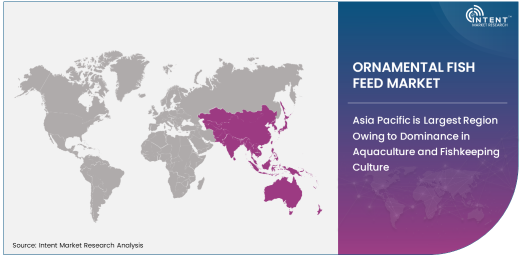
Asia Pacific is Largest Region Owing to Dominance in Aquaculture and Fishkeeping Culture
Asia Pacific is the largest region in the ornamental fish feed market, primarily due to its dominance in both aquaculture and the ornamental fishkeeping culture. Countries such as China, India, and Thailand are major players in the ornamental fish industry, both in terms of fish farming and consumption. Asia Pacific is home to a wide variety of ornamental fish species, including both freshwater and saltwater species, which are highly sought after for both local markets and international exports.
The region’s strong aquaculture industry, coupled with a growing interest in aquarium fishkeeping, contributes significantly to the demand for ornamental fish feed. Additionally, the increasing disposable income in countries like China and India has led to a rise in pet ownership and an expansion in the number of home aquariums, further boosting the demand for high-quality ornamental fish feed. As Asia Pacific continues to lead the global ornamental fish feed market, the region's strong market presence is expected to sustain its dominance in the coming years.
Competitive Landscape and Key Players
The ornamental fish feed market is competitive, with several key players leading the industry. Prominent companies in this market include Cargill Incorporated, Alltech, Tetra Fish, and Zeigler Bros., Inc. These companies are at the forefront of developing and supplying a wide range of fish feed products, including pellets, flakes, granules, and frozen feed.
The competitive landscape is characterized by a focus on product innovation and sustainability. Leading companies are continually improving their feed formulations to cater to the specific dietary needs of various ornamental fish species, ensuring superior nutrition and promoting healthy growth. Additionally, many companies are adopting environmentally friendly practices, such as using sustainable ingredients and reducing their environmental impact. As the market for ornamental fish feed expands, companies that can offer high-quality, nutritionally balanced products and sustainable practices are likely to lead the market.
Recent Developments:
- Mars Petcare launched a new line of specialized ornamental fish feed targeting various tropical species.
- Nestlé Purina Petcare expanded its portfolio with a new fish food product focused on enhancing color and vitality in aquarium fish.
- Cargill Inc. introduced a sustainable fish feed designed for ornamental fish with a reduced environmental footprint.
- Tetra Fish unveiled an advanced nutritional formula for ornamental fish, aiming to improve digestion and color enhancement.
- Hikari Sales USA, Inc. rolled out a new premium feed designed for saltwater fish with enhanced protein content.
List of Leading Companies:
- Mars Petcare
- Nestlé Purina Petcare
- Spectrum Brands
- Cargill Inc.
- Alltech Inc.
- ADM Animal Nutrition
- Nutrafin
- Tetra Fish
- Hikari Sales USA, Inc.
- Ziegler Bros. Inc.
- Skretting
- Ridley Corporation
- Blue Ridge Aquaculture
- Lafeber Company
- New Life Spectrum
Report Scope:
|
Report Features |
Description |
|
Market Size (2024-e) |
USD 3.0 Billion |
|
Forecasted Value (2030) |
USD 5.3 Billion |
|
CAGR (2025 – 2030) |
9.9% |
|
Base Year for Estimation |
2024-e |
|
Historic Year |
2023 |
|
Forecast Period |
2025 – 2030 |
|
Report Coverage |
Market Forecast, Market Dynamics, Competitive Landscape, Recent Developments |
|
Segments Covered |
Ornamental Fish Feed Market By Product Type (Flakes, Granules, Pellets, Tablets), By Feed Type (Dry Feed, Frozen Feed, Live Feed), By Application (Freshwater Fish, Saltwater Fish, Aquarium Fish), and By End-Use Industry (Aquaculture, Pet Stores, Aquarium Owners) |
|
Regional Analysis |
North America (US, Canada, Mexico), Europe (Germany, France, UK, Italy, Spain, and Rest of Europe), Asia-Pacific (China, Japan, South Korea, Australia, India, and Rest of Asia-Pacific), Latin America (Brazil, Argentina, and Rest of Latin America), Middle East & Africa (Saudi Arabia, UAE, Rest of Middle East & Africa) |
|
Major Companies |
Mars Petcare, Nestlé Purina Petcare, Spectrum Brands, Cargill Inc., Alltech Inc., ADM Animal Nutrition, Nutrafin, Tetra Fish, Hikari Sales USA, Inc., Ziegler Bros. Inc., Skretting, Ridley Corporation, Blue Ridge Aquaculture, Lafeber Company, New Life Spectrum |
|
Customization Scope |
Customization for segments, region/country-level will be provided. Moreover, additional customization can be done based on the requirements |
|
1. Introduction |
|
1.1. Market Definition |
|
1.2. Scope of the Study |
|
1.3. Research Assumptions |
|
1.4. Study Limitations |
|
2. Research Methodology |
|
2.1. Research Approach |
|
2.1.1. Top-Down Method |
|
2.1.2. Bottom-Up Method |
|
2.1.3. Factor Impact Analysis |
|
2.2. Insights & Data Collection Process |
|
2.2.1. Secondary Research |
|
2.2.2. Primary Research |
|
2.3. Data Mining Process |
|
2.3.1. Data Analysis |
|
2.3.2. Data Validation and Revalidation |
|
2.3.3. Data Triangulation |
|
3. Executive Summary |
|
3.1. Major Markets & Segments |
|
3.2. Highest Growing Regions and Respective Countries |
|
3.3. Impact of Growth Drivers & Inhibitors |
|
3.4. Regulatory Overview by Country |
|
4. Ornamental Fish Feed Market, by Product Type (Market Size & Forecast: USD Million, 2023 – 2030) |
|
4.1. Flakes |
|
4.2. Granules |
|
4.3. Pellets |
|
4.4. Tablets |
|
4.5. Others |
|
5. Ornamental Fish Feed Market, by Feed Type (Market Size & Forecast: USD Million, 2023 – 2030) |
|
5.1. Dry Feed |
|
5.2. Frozen Feed |
|
5.3. Live Feed |
|
5.4. Others |
|
6. Ornamental Fish Feed Market, by Application (Market Size & Forecast: USD Million, 2023 – 2030) |
|
6.1. Freshwater Fish |
|
6.2. Saltwater Fish |
|
6.3. Aquarium Fish |
|
6.4. Others |
|
7. Ornamental Fish Feed Market, by End-Use Industry (Market Size & Forecast: USD Million, 2023 – 2030) |
|
7.1. Aquaculture |
|
7.2. Pet Stores |
|
7.3. Aquarium Owners |
|
7.4. Others |
|
8. Regional Analysis (Market Size & Forecast: USD Million, 2023 – 2030) |
|
8.1. Regional Overview |
|
8.2. North America |
|
8.2.1. Regional Trends & Growth Drivers |
|
8.2.2. Barriers & Challenges |
|
8.2.3. Opportunities |
|
8.2.4. Factor Impact Analysis |
|
8.2.5. Technology Trends |
|
8.2.6. North America Ornamental Fish Feed Market, by Product Type |
|
8.2.7. North America Ornamental Fish Feed Market, by Feed Type |
|
8.2.8. North America Ornamental Fish Feed Market, by Application |
|
8.2.9. North America Ornamental Fish Feed Market, by End-Use Industry |
|
8.2.10. By Country |
|
8.2.10.1. US |
|
8.2.10.1.1. US Ornamental Fish Feed Market, by Product Type |
|
8.2.10.1.2. US Ornamental Fish Feed Market, by Feed Type |
|
8.2.10.1.3. US Ornamental Fish Feed Market, by Application |
|
8.2.10.1.4. US Ornamental Fish Feed Market, by End-Use Industry |
|
8.2.10.2. Canada |
|
8.2.10.3. Mexico |
|
*Similar segmentation will be provided for each region and country |
|
8.3. Europe |
|
8.4. Asia-Pacific |
|
8.5. Latin America |
|
8.6. Middle East & Africa |
|
9. Competitive Landscape |
|
9.1. Overview of the Key Players |
|
9.2. Competitive Ecosystem |
|
9.2.1. Level of Fragmentation |
|
9.2.2. Market Consolidation |
|
9.2.3. Product Innovation |
|
9.3. Company Share Analysis |
|
9.4. Company Benchmarking Matrix |
|
9.4.1. Strategic Overview |
|
9.4.2. Product Innovations |
|
9.5. Start-up Ecosystem |
|
9.6. Strategic Competitive Insights/ Customer Imperatives |
|
9.7. ESG Matrix/ Sustainability Matrix |
|
9.8. Manufacturing Network |
|
9.8.1. Locations |
|
9.8.2. Supply Chain and Logistics |
|
9.8.3. Product Flexibility/Customization |
|
9.8.4. Digital Transformation and Connectivity |
|
9.8.5. Environmental and Regulatory Compliance |
|
9.9. Technology Readiness Level Matrix |
|
9.10. Technology Maturity Curve |
|
9.11. Buying Criteria |
|
10. Company Profiles |
|
10.1. Mars Petcare |
|
10.1.1. Company Overview |
|
10.1.2. Company Financials |
|
10.1.3. Product/Service Portfolio |
|
10.1.4. Recent Developments |
|
10.1.5. IMR Analysis |
|
*Similar information will be provided for other companies |
|
10.2. Nestlé Purina Petcare |
|
10.3. Spectrum Brands |
|
10.4. Cargill Inc. |
|
10.5. Alltech Inc. |
|
10.6. ADM Animal Nutrition |
|
10.7. Nutrafin |
|
10.8. Tetra Fish |
|
10.9. Hikari Sales USA, Inc. |
|
10.10. Ziegler Bros. Inc. |
|
10.11. Skretting |
|
10.12. Ridley Corporation |
|
10.13. Blue Ridge Aquaculture |
|
10.14. Lafeber Company |
|
10.15. New Life Spectrum |
|
11. Appendix |
A comprehensive market research approach was employed to gather and analyze data on the Ornamental Fish Feed Market. In the process, the analysis was also done to analyze the parent market and relevant adjacencies to measure the impact of them on the Ornamental Fish Feed Market. The research methodology encompassed both secondary and primary research techniques, ensuring the accuracy and credibility of the findings.
.jpg)
Secondary Research
Secondary research involved a thorough review of pertinent industry reports, journals, articles, and publications. Additionally, annual reports, press releases, and investor presentations of industry players were scrutinized to gain insights into their market positioning and strategies.
Primary Research
Primary research involved conducting in-depth interviews with industry experts, stakeholders, and market participants across the E-Waste Management ecosystem. The primary research objectives included:
- Validating findings and assumptions derived from secondary research
- Gathering qualitative and quantitative data on market trends, drivers, and challenges
- Understanding the demand-side dynamics, encompassing end-users, component manufacturers, facility providers, and service providers
- Assessing the supply-side landscape, including technological advancements and recent developments
Market Size Assessment
A combination of top-down and bottom-up approaches was utilized to analyze the overall size of the Ornamental Fish Feed Market. These methods were also employed to assess the size of various subsegments within the market. The market size assessment methodology encompassed the following steps:
- Identification of key industry players and relevant revenues through extensive secondary research
- Determination of the industry's supply chain and market size, in terms of value, through primary and secondary research processes
- Calculation of percentage shares, splits, and breakdowns using secondary sources and verification through primary sources
.jpg)
Data Triangulation
To ensure the accuracy and reliability of the market size, data triangulation was implemented. This involved cross-referencing data from various sources, including demand and supply side factors, market trends, and expert opinions. Additionally, top-down and bottom-up approaches were employed to validate the market size assessment.
NA