
As per Intent Market Research, the Orexin Receptors Hypocretin Receptor Antagonist Market was valued at USD 1.3 Billion in 2024-e and will surpass USD 3.5 Billion by 2030; growing at a CAGR of 18.1% during 2025 - 2030.
The Orexin Receptors Hypocretin Receptor Antagonist Market is emerging as a significant segment within the broader sleep disorder treatment market. Orexin, a neuropeptide involved in regulating wakefulness and sleep, has become a key target in addressing disorders like narcolepsy and insomnia. Orexin receptor antagonists, particularly those targeting Orexin receptor 1 and 2, work by inhibiting the activity of orexin, promoting sleep and helping manage these conditions more effectively. As sleep disorders continue to rise globally, driven by lifestyle changes, increased stress, and other health factors, the demand for targeted, innovative treatments is increasing. The market is witnessing considerable growth due to advancements in drug development, as well as an increasing focus on improving sleep quality and overall health.
Orexin Receptor 1 Antagonist Is Largest Drug Type Owing to Its Specificity and Efficacy
The Orexin receptor 1 antagonist segment is the largest within the market, driven by its specificity and effectiveness in treating sleep disorders like narcolepsy and insomnia. Orexin receptor 1 plays a crucial role in promoting wakefulness, and its inhibition has been shown to help induce sleep in patients suffering from sleep disorders. Drugs targeting this receptor have demonstrated substantial efficacy in reducing the symptoms of narcolepsy, such as excessive daytime sleepiness, making them a preferred option for patients with this condition.
The development of Orexin receptor 1 antagonists has been a significant focus for pharmaceutical companies, as these drugs target the core mechanism of sleep-wake regulation. With continued research and clinical trials, this segment is expected to maintain dominance in the Orexin receptors hypocretin receptor antagonist market, as new drugs enter the market, providing more targeted solutions for patients.
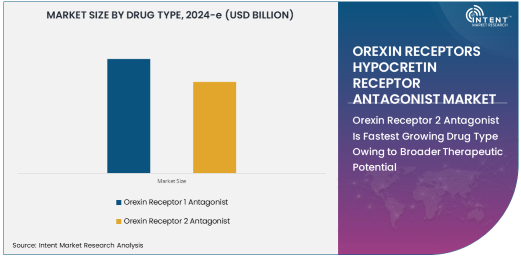
Orexin Receptor 2 Antagonist Is Fastest Growing Drug Type Owing to Broader Therapeutic Potential
The Orexin receptor 2 antagonist segment is the fastest growing in the market, owing to its broader therapeutic potential and the expanding use of these drugs to treat a variety of sleep disorders. While Orexin receptor 1 antagonists are primarily focused on narcolepsy and insomnia, receptor 2 antagonists have shown promise in addressing a wider range of conditions, including sleep apnea and other related disorders. Research suggests that Orexin receptor 2 plays a role in regulating arousal and stress responses, and its antagonism could offer additional benefits in treating conditions associated with poor sleep quality.
As pharmaceutical companies continue to explore the therapeutic potential of Orexin receptor 2 antagonists, this segment is gaining traction for its ability to treat a wider spectrum of sleep-related disorders. The growing clinical evidence and expanding approval of Orexin receptor 2 antagonists are contributing to their rapid market growth.
Narcolepsy Segment Is Largest Application Owing to High Incidence and Severe Symptoms
The narcolepsy application segment holds the largest share of the Orexin Receptors Hypocretin Receptor Antagonist Market, driven by the high incidence and severity of symptoms associated with this sleep disorder. Narcolepsy is a chronic condition characterized by excessive daytime sleepiness, sudden muscle weakness, and disrupted sleep-wake cycles. Orexin receptor antagonists, particularly those targeting Orexin receptor 1, have shown effectiveness in managing these symptoms by restoring normal sleep patterns and improving overall quality of life for patients.
Given the significant burden of narcolepsy on both patients and healthcare systems, the demand for effective treatments is growing. Orexin receptor antagonists are increasingly seen as a breakthrough in narcolepsy management, making this application the largest and most significant in the market.
Home Care Segment Is Largest End-Use Industry Owing to Growing Preference for At-Home Treatment
The home care segment is the largest end-use industry in the Orexin Receptors Hypocretin Receptor Antagonist Market, driven by the rising preference for at-home treatment of sleep disorders. Oral medications for sleep disorders, such as Orexin receptor antagonists, are well-suited for home care, as they allow patients to manage their condition without frequent visits to healthcare facilities. The convenience of at-home treatment, coupled with the increasing awareness of sleep disorders, is contributing to the market's growth in this segment.
Patients with narcolepsy or insomnia are increasingly seeking long-term, manageable solutions to improve their sleep quality. The ability to take these medications at home, coupled with the growing availability of telemedicine and online pharmacies, further drives the demand for Orexin receptor antagonists in home care settings.
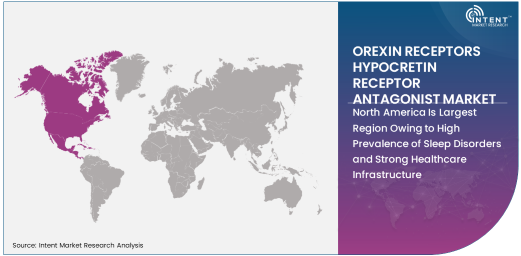
North America Is Largest Region Owing to High Prevalence of Sleep Disorders and Strong Healthcare Infrastructure
North America is the largest region in the Orexin Receptors Hypocretin Receptor Antagonist Market, driven by the high prevalence of sleep disorders and the region’s well-developed healthcare infrastructure. Sleep disorders, including narcolepsy and insomnia, are increasingly recognized as significant health issues, and there is a growing demand for advanced pharmacological treatments. North America benefits from a robust healthcare system, strong research and development capabilities, and early adoption of innovative treatments, making it the largest market for Orexin receptor antagonists.
The region is also home to several leading pharmaceutical companies that are developing and commercializing new Orexin receptor antagonist therapies. Furthermore, the increasing focus on sleep health and the availability of treatment options in hospitals, clinics, and home care settings are contributing to North America’s dominance in this market.
Competitive Landscape and Key Players
The Orexin Receptors Hypocretin Receptor Antagonist Market is competitive, with key players such as Merck & Co., Idorsia Pharmaceuticals, and Takeda Pharmaceutical Company leading the development and commercialization of Orexin receptor antagonists. These companies are at the forefront of research in sleep disorder treatments, focusing on the development of innovative therapies that target Orexin receptors to improve sleep quality and reduce the symptoms of conditions like narcolepsy and insomnia.
The competitive landscape is also marked by strategic collaborations and partnerships aimed at advancing drug discovery, clinical development, and market access. As the demand for effective treatments for sleep disorders continues to grow, leading players are expected to invest heavily in R&D to introduce new and improved Orexin receptor antagonists. The market’s future growth will be shaped by the increasing need for targeted, patient-friendly treatments and the continued exploration of the therapeutic potential of Orexin receptor antagonists across various sleep-related conditions.
Recent Developments:
- Takeda Pharmaceutical Company received FDA approval for a new orexin receptor antagonist aimed at improving sleep quality in patients with chronic insomnia.
- Jazz Pharmaceuticals expanded its product line with a new formulation of Suvorexant targeting patients with severe narcolepsy symptoms.
- Merck & Co., Inc. announced a partnership with a biotech firm to develop next-generation orexin receptor antagonists for insomnia and sleep-related disorders.
- Biogen Inc. is conducting late-stage clinical trials for a novel orexin receptor 2 antagonist for the treatment of sleep apnea.
- Astellas Pharma launched a global clinical trial to investigate the efficacy of its orexin receptor antagonist in patients with both insomnia and depression.
List of Leading Companies:
- Takeda Pharmaceutical Company Limited
- Merck & Co., Inc.
- Eli Lilly and Company
- Jazz Pharmaceuticals
- Johnson & Johnson
- Biogen Inc.
- Sandoz (Novartis)
- Teva Pharmaceutical Industries Ltd.
- Sanofi S.A.
- Sumitomo Dainippon Pharma Co., Ltd.
- Amgen Inc.
- Astellas Pharma Inc.
- Otsuka Pharmaceutical Co., Ltd.
- Pfizer Inc.
- Vanda Pharmaceuticals
Report Scope:
|
Report Features |
Description |
|
Market Size (2024-e) |
USD 1.3 Billion |
|
Forecasted Value (2030) |
USD 3.5 Billion |
|
CAGR (2025 – 2030) |
18.1% |
|
Base Year for Estimation |
2024-e |
|
Historic Year |
2023 |
|
Forecast Period |
2025 – 2030 |
|
Report Coverage |
Market Forecast, Market Dynamics, Competitive Landscape, Recent Developments |
|
Segments Covered |
Global Orexin Receptors Hypocretin Receptor Antagonist Market by Drug Type (Orexin Receptor 1 Antagonist, Orexin Receptor 2 Antagonist), by Application (Narcolepsy, Insomnia, Sleep Disorders), by End-Use Industry (Hospitals, Clinics, Home Care) |
|
Regional Analysis |
North America (US, Canada, Mexico), Europe (Germany, France, UK, Italy, Spain, and Rest of Europe), Asia-Pacific (China, Japan, South Korea, Australia, India, and Rest of Asia-Pacific), Latin America (Brazil, Argentina, and Rest of Latin America), Middle East & Africa (Saudi Arabia, UAE, Rest of Middle East & Africa) |
|
Major Companies |
Takeda Pharmaceutical Company Limited, Merck & Co., Inc., Eli Lilly and Company, Jazz Pharmaceuticals, Johnson & Johnson, Biogen Inc., Teva Pharmaceutical Industries Ltd., Sanofi S.A., Sumitomo Dainippon Pharma Co., Ltd., Amgen Inc., Astellas Pharma Inc., Otsuka Pharmaceutical Co., Ltd., Vanda Pharmaceuticals |
|
Customization Scope |
Customization for segments, region/country-level will be provided. Moreover, additional customization can be done based on the requirements |
|
1. Introduction |
|
1.1. Market Definition |
|
1.2. Scope of the Study |
|
1.3. Research Assumptions |
|
1.4. Study Limitations |
|
2. Research Methodology |
|
2.1. Research Approach |
|
2.1.1. Top-Down Method |
|
2.1.2. Bottom-Up Method |
|
2.1.3. Factor Impact Analysis |
|
2.2. Insights & Data Collection Process |
|
2.2.1. Secondary Research |
|
2.2.2. Primary Research |
|
2.3. Data Mining Process |
|
2.3.1. Data Analysis |
|
2.3.2. Data Validation and Revalidation |
|
2.3.3. Data Triangulation |
|
3. Executive Summary |
|
3.1. Major Markets & Segments |
|
3.2. Highest Growing Regions and Respective Countries |
|
3.3. Impact of Growth Drivers & Inhibitors |
|
3.4. Regulatory Overview by Country |
|
4. Orexin Receptors Hypocretin Receptor Antagonist Market, by Drug Type (Market Size & Forecast: USD Million, 2023 – 2030) |
|
4.1. Orexin Receptor 1 Antagonist |
|
4.2. Orexin Receptor 2 Antagonist |
|
5. Orexin Receptors Hypocretin Receptor Antagonist Market, by Application (Market Size & Forecast: USD Million, 2023 – 2030) |
|
5.1. Narcolepsy |
|
5.2. Insomnia |
|
5.3. Sleep Disorders |
|
5.4. Others |
|
6. Orexin Receptors Hypocretin Receptor Antagonist Market, by End-Use Industry (Market Size & Forecast: USD Million, 2023 – 2030) |
|
6.1. Hospitals |
|
6.2. Clinics |
|
6.3. Home Care |
|
7. Regional Analysis (Market Size & Forecast: USD Million, 2023 – 2030) |
|
7.1. Regional Overview |
|
7.2. North America |
|
7.2.1. Regional Trends & Growth Drivers |
|
7.2.2. Barriers & Challenges |
|
7.2.3. Opportunities |
|
7.2.4. Factor Impact Analysis |
|
7.2.5. Technology Trends |
|
7.2.6. North America Orexin Receptors Hypocretin Receptor Antagonist Market, by Drug Type |
|
7.2.7. North America Orexin Receptors Hypocretin Receptor Antagonist Market, by Application |
|
7.2.8. North America Orexin Receptors Hypocretin Receptor Antagonist Market, by End-Use Industry |
|
7.2.9. By Country |
|
7.2.9.1. US |
|
7.2.9.1.1. US Orexin Receptors Hypocretin Receptor Antagonist Market, by Drug Type |
|
7.2.9.1.2. US Orexin Receptors Hypocretin Receptor Antagonist Market, by Application |
|
7.2.9.1.3. US Orexin Receptors Hypocretin Receptor Antagonist Market, by End-Use Industry |
|
7.2.9.2. Canada |
|
7.2.9.3. Mexico |
|
*Similar segmentation will be provided for each region and country |
|
7.3. Europe |
|
7.4. Asia-Pacific |
|
7.5. Latin America |
|
7.6. Middle East & Africa |
|
8. Competitive Landscape |
|
8.1. Overview of the Key Players |
|
8.2. Competitive Ecosystem |
|
8.2.1. Level of Fragmentation |
|
8.2.2. Market Consolidation |
|
8.2.3. Product Innovation |
|
8.3. Company Share Analysis |
|
8.4. Company Benchmarking Matrix |
|
8.4.1. Strategic Overview |
|
8.4.2. Product Innovations |
|
8.5. Start-up Ecosystem |
|
8.6. Strategic Competitive Insights/ Customer Imperatives |
|
8.7. ESG Matrix/ Sustainability Matrix |
|
8.8. Manufacturing Network |
|
8.8.1. Locations |
|
8.8.2. Supply Chain and Logistics |
|
8.8.3. Product Flexibility/Customization |
|
8.8.4. Digital Transformation and Connectivity |
|
8.8.5. Environmental and Regulatory Compliance |
|
8.9. Technology Readiness Level Matrix |
|
8.10. Technology Maturity Curve |
|
8.11. Buying Criteria |
|
9. Company Profiles |
|
9.1. Takeda Pharmaceutical Company Limited |
|
9.1.1. Company Overview |
|
9.1.2. Company Financials |
|
9.1.3. Product/Service Portfolio |
|
9.1.4. Recent Developments |
|
9.1.5. IMR Analysis |
|
*Similar information will be provided for other companies |
|
9.2. Merck & Co., Inc. |
|
9.3. Eli Lilly and Company |
|
9.4. Jazz Pharmaceuticals |
|
9.5. Johnson & Johnson |
|
9.6. Biogen Inc. |
|
9.7. Sandoz (Novartis) |
|
9.8. Teva Pharmaceutical Industries Ltd. |
|
9.9. Sanofi S.A. |
|
9.10. Sumitomo Dainippon Pharma Co., Ltd. |
|
9.11. Amgen Inc. |
|
9.12. Astellas Pharma Inc. |
|
9.13. Otsuka Pharmaceutical Co., Ltd. |
|
9.14. Pfizer Inc. |
|
9.15. Vanda Pharmaceuticals |
|
10. Appendix |
A comprehensive market research approach was employed to gather and analyze data on the Orexin Receptors Hypocretin Receptor Antagonist Market. In the process, the analysis was also done to analyze the parent market and relevant adjacencies to measure the impact of them on the Orexin Receptors Hypocretin Receptor Antagonist Market. The research methodology encompassed both secondary and primary research techniques, ensuring the accuracy and credibility of the findings.
.jpg)
Secondary Research
Secondary research involved a thorough review of pertinent industry reports, journals, articles, and publications. Additionally, annual reports, press releases, and investor presentations of industry players were scrutinized to gain insights into their market positioning and strategies.
Primary Research
Primary research involved conducting in-depth interviews with industry experts, stakeholders, and market participants across the E-Waste Management ecosystem. The primary research objectives included:
- Validating findings and assumptions derived from secondary research
- Gathering qualitative and quantitative data on market trends, drivers, and challenges
- Understanding the demand-side dynamics, encompassing end-users, component manufacturers, facility providers, and service providers
- Assessing the supply-side landscape, including technological advancements and recent developments
Market Size Assessment
A combination of top-down and bottom-up approaches was utilized to analyze the overall size of the Orexin Receptors Hypocretin Receptor Antagonist Market. These methods were also employed to assess the size of various subsegments within the market. The market size assessment methodology encompassed the following steps:
- Identification of key industry players and relevant revenues through extensive secondary research
- Determination of the industry's supply chain and market size, in terms of value, through primary and secondary research processes
- Calculation of percentage shares, splits, and breakdowns using secondary sources and verification through primary sources
.jpg)
Data Triangulation
To ensure the accuracy and reliability of the market size, data triangulation was implemented. This involved cross-referencing data from various sources, including demand and supply side factors, market trends, and expert opinions. Additionally, top-down and bottom-up approaches were employed to validate the market size assessment.
NA