
As per Intent Market Research, the Ophthalmology EMR Software Market was valued at USD 562.5 million in 2024-e and will surpass USD 988.1 million by 2030; growing at a CAGR of 9.8% during 2025 - 2030.
The ophthalmology EMR (Electronic Medical Record) software market is experiencing substantial growth as healthcare institutions increasingly prioritize the digital transformation of their operations. The rising incidence of eye conditions, such as cataracts, glaucoma, and diabetic retinopathy, has created a demand for efficient management of patient information and treatment histories. As ophthalmology practices face increasing pressure to enhance patient care, improve operational efficiency, and meet regulatory standards, EMR software has become a cornerstone in modernizing their workflows. Furthermore, innovations in artificial intelligence (AI), machine learning (ML), and cloud computing are driving the adoption of more sophisticated solutions, helping providers deliver personalized care and improve clinical outcomes.
Additionally, with an increasing emphasis on patient-centered care, the ability to maintain accurate, real-time data across various healthcare settings has become essential. Ophthalmology EMR systems integrate patient data from different departments, such as diagnostics, surgery, and post-operative care, offering a unified platform to streamline operations. These systems also enhance patient satisfaction by reducing wait times, improving appointment scheduling, and offering remote consultation features. As the market continues to grow, we can expect an even greater focus on making EMR solutions more customizable and adaptable to the specific needs of ophthalmology practices.
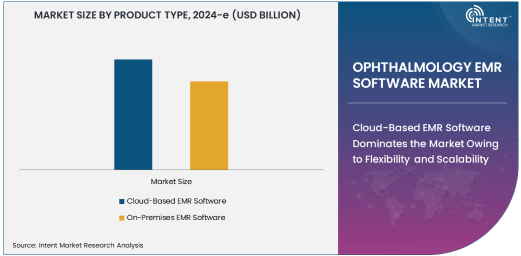
Cloud-Based EMR Software Dominates the Market Owing to Flexibility and Scalability
Cloud-based EMR software is the dominant product type in the ophthalmology EMR market, driving its widespread adoption due to its numerous advantages. Cloud-based solutions are particularly attractive for healthcare providers due to their scalability, cost-effectiveness, and ability to offer remote access. These systems allow ophthalmologists and other medical professionals to access patient records and imaging data from any location, enabling real-time collaboration across multidisciplinary teams. As more ophthalmology practices seek to improve care coordination and streamline their operations, cloud-based systems are becoming the preferred choice. The flexibility of cloud software also allows healthcare facilities to scale their usage as needed, supporting everything from small clinics to large hospital systems.
Furthermore, cloud-based solutions often come with automated software updates, ensuring compliance with the latest industry regulations, such as HIPAA (Health Insurance Portability and Accountability Act), without requiring manual intervention. This reduces the burden on IT staff and ensures that the software remains secure and up-to-date. The ongoing trend toward remote consultations and telemedicine is also benefiting cloud-based systems, as they facilitate secure and easy communication between healthcare providers and patients. The wide-ranging benefits of cloud solutions, including cost efficiency, data accessibility, and flexibility, have made them the backbone of modern ophthalmology practices.
Integrated EMR Software Surges in Popularity Among Healthcare Providers
In terms of deployment mode, integrated EMR software is witnessing the fastest growth, driven by the increasing need for consolidated systems that can manage both clinical and operational functions. Integrated solutions connect various departments, from patient scheduling to billing, ensuring that healthcare providers have a comprehensive view of each patient's medical history and treatment plan. This integration reduces errors, improves workflow efficiency, and enhances the overall quality of care. As ophthalmology practices aim to deliver better patient experiences while increasing operational efficiency, integrated systems are becoming essential in achieving these goals.
One key factor behind the rapid adoption of integrated EMR software is the growing shift toward value-based care. By combining patient data with real-time analytics and performance metrics, integrated EMR systems allow healthcare providers to make informed decisions, track patient outcomes, and manage costs more effectively. Moreover, the ability to connect with other healthcare facilities and share information in a secure and compliant manner is especially important as more healthcare organizations adopt patient-centered care models. Integrated software solutions also help ophthalmology practices streamline communication between different teams, improving collaboration and reducing delays in care delivery.
Patient Scheduling Applications Continue to Lead in Demand for EMR Software
Within the application segment, patient scheduling software remains the largest and most widely adopted application within ophthalmology EMR systems. These solutions help practices manage patient appointments, reduce waiting times, and optimize resource utilization. In a busy ophthalmology clinic, scheduling software automates appointment bookings, reminders, and follow-ups, which reduces administrative workload and minimizes human error. Additionally, this system ensures that patients receive timely care, which is critical in managing chronic eye conditions that require regular monitoring and treatment. With the increasing demand for convenience and the need for efficient resource management, patient scheduling systems have become a vital tool in ophthalmology practices.
The growing patient load and complexity of scheduling in ophthalmology practices have driven the need for these specialized software solutions. Patient scheduling software not only improves operational efficiency but also enhances the patient experience by offering appointment reminders and easy rescheduling options. These features are particularly valuable as patients seek more control over their appointments, especially in the post-pandemic world, where telemedicine has gained widespread popularity.
Hospitals Remain the Largest End-Users of Ophthalmology EMR Software
Hospitals are the largest end-users of ophthalmology EMR software due to the complexity of their operations and the variety of services they offer. These institutions handle a significant volume of patients, including those with complex ophthalmic conditions that require specialized care. EMR software allows hospitals to manage patient records more efficiently, ensuring quick access to information across various departments, including diagnostics, surgery, and post-operative care. Hospitals also benefit from integrated software solutions that provide a seamless flow of information, enhancing collaboration between different healthcare teams and improving patient outcomes.
Although ophthalmology clinics and ambulatory surgical centers also represent substantial market segments, hospitals continue to dominate in terms of overall demand due to the large-scale, multifaceted nature of their operations. The increasing adoption of cloud-based and integrated EMR systems in hospitals further strengthens their position as the primary end-users of these solutions.
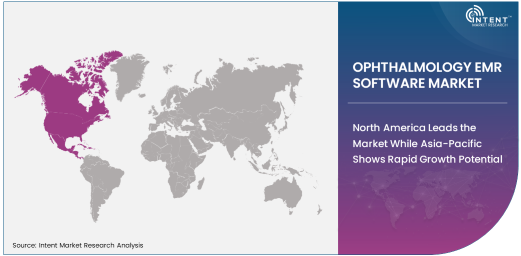
North America Leads the Market While Asia-Pacific Shows Rapid Growth Potential
Geographically, North America remains the leading region in the ophthalmology EMR software market, largely due to the advanced healthcare infrastructure, high adoption rates of digital healthcare solutions, and supportive government initiatives aimed at promoting the use of electronic health records. In particular, the United States has seen rapid growth in the adoption of EMR systems, driven by federal policies such as the HITECH Act and the push toward value-based care. The presence of major players in the market and the ongoing demand for innovative solutions also contribute to North America’s dominance.
However, the Asia-Pacific region is quickly emerging as the fastest-growing region in the ophthalmology EMR software market. Factors such as rising healthcare expenditure, increasing digitalization of healthcare systems, and a growing patient population in countries like China and India are driving this growth. As healthcare providers in this region embrace electronic health records to improve care delivery and streamline operations, the demand for ophthalmology-specific EMR software is expected to rise rapidly.
Competitive Landscape: Key Players Shape the Market Through Innovation and Expansion
The ophthalmology EMR software market is highly competitive, with several key players leading the charge in innovation and market expansion. Companies such as Compulink, Modernizing Medicine, and Nextech are recognized for their comprehensive EMR solutions tailored specifically for ophthalmology practices. These companies continuously enhance their offerings by incorporating advanced technologies like AI, machine learning, and predictive analytics, which enable ophthalmologists to provide more accurate diagnoses and personalized treatment plans.
Smaller players and new entrants are focusing on niche solutions and offering more affordable EMR systems to cater to the needs of smaller ophthalmology clinics and outpatient centers. Partnerships, acquisitions, and collaborations with other healthcare IT providers are common strategies used by market leaders to expand their product portfolios and enhance interoperability. The market is also witnessing increased investment in research and development, as companies aim to stay ahead of the curve and meet the evolving needs of ophthalmology practices worldwide.
Recent Developments:
- In December 2024, Epic Systems Corporation announced new AI features in its ophthalmology EMR platform to enhance clinical decision-making.
- In November 2024, Modernizing Medicine introduced a telehealth-integrated module for its ophthalmology-specific EMR software.
- In October 2024, Nextech Systems launched an updated version of its EMR with advanced retina-specific charting templates.
- In September 2024, Greenway Health introduced a cloud-based ophthalmology EMR solution targeting small to mid-sized practices.
- In August 2024, EyeMD EMR Healthcare Systems announced a partnership with diagnostic device manufacturers to improve software interoperability.
List of Leading Companies:
- Epic Systems Corporation
- Cerner Corporation
- Allscripts Healthcare Solutions, Inc.
- NextGen Healthcare Information Systems, LLC
- Athenahealth, Inc.
- eClinicalWorks
- Modernizing Medicine
- Kareo, Inc.
- Meditech
- AdvancedMD, Inc.
- Practice Fusion, Inc.
- Greenway Health, LLC
- Compulink Healthcare Solutions
- Nextech Systems, LLC
- EyeMD EMR Healthcare Systems
Report Scope:
|
Report Features |
Description |
|
Market Size (2024-e) |
USD 562.5 million |
|
Forecasted Value (2030) |
USD 988.1 million |
|
CAGR (2025 – 2030) |
9.8% |
|
Base Year for Estimation |
2024-e |
|
Historic Year |
2023 |
|
Forecast Period |
2025 – 2030 |
|
Report Coverage |
Market Forecast, Market Dynamics, Competitive Landscape, Recent Developments |
|
Segments Covered |
Ophthalmology EMR Software Market By Product Type (Cloud-Based EMR Software, On-Premises EMR Software), By Deployment Mode (Standalone EMR Software, Integrated EMR Software), By Application (Patient Scheduling, E-Prescribing, Workflow Management, Billing & Claims Management, Clinical Documentation), By End-User (Hospitals, Ophthalmology Clinics, Ambulatory Surgical Centers) |
|
Regional Analysis |
North America (US, Canada, Mexico), Europe (Germany, France, UK, Italy, Spain, and Rest of Europe), Asia-Pacific (China, Japan, South Korea, Australia, India, and Rest of Asia-Pacific), Latin America (Brazil, Argentina, and Rest of Latin America), Middle East & Africa (Saudi Arabia, UAE, Rest of Middle East & Africa) |
|
Major Companies |
Epic Systems Corporation, Cerner Corporation, Allscripts Healthcare Solutions, Inc., NextGen Healthcare Information Systems, LLC, Athenahealth, Inc., eClinicalWorks, Modernizing Medicine, Kareo, Inc., Meditech, AdvancedMD, Inc., Practice Fusion, Inc., Greenway Health, LLC, Compulink Healthcare Solutions, Nextech Systems, LLC, EyeMD EMR Healthcare Systems |
|
Customization Scope |
Customization for segments, region/country-level will be provided. Moreover, additional customization can be done based on the requirements |
|
1. Introduction |
|
1.1. Market Definition |
|
1.2. Scope of the Study |
|
1.3. Research Assumptions |
|
1.4. Study Limitations |
|
2. Research Methodology |
|
2.1. Research Approach |
|
2.1.1. Top-Down Method |
|
2.1.2. Bottom-Up Method |
|
2.1.3. Factor Impact Analysis |
|
2.2. Insights & Data Collection Process |
|
2.2.1. Secondary Research |
|
2.2.2. Primary Research |
|
2.3. Data Mining Process |
|
2.3.1. Data Analysis |
|
2.3.2. Data Validation and Revalidation |
|
2.3.3. Data Triangulation |
|
3. Executive Summary |
|
3.1. Major Markets & Segments |
|
3.2. Highest Growing Regions and Respective Countries |
|
3.3. Impact of Growth Drivers & Inhibitors |
|
3.4. Regulatory Overview by Country |
|
4. Ophthalmology EMR Software Market, by Product Type (Market Size & Forecast: USD Million, 2023 – 2030) |
|
4.1. Cloud-Based EMR Software |
|
4.2. On-Premises EMR Software |
|
5. Ophthalmology EMR Software Market, by Deployment Mode (Market Size & Forecast: USD Million, 2023 – 2030) |
|
5.1. Standalone EMR Software |
|
5.2. Integrated EMR Software |
|
6. Ophthalmology EMR Software Market, by Application (Market Size & Forecast: USD Million, 2023 – 2030) |
|
6.1. Patient Scheduling |
|
6.2. E-Prescribing |
|
6.3. Workflow Management |
|
6.4. Billing & Claims Management |
|
6.5. Clinical Documentation |
|
6.6. Others |
|
7. Ophthalmology EMR Software Market, by End-User (Market Size & Forecast: USD Million, 2023 – 2030) |
|
7.1. Hospitals |
|
7.2. Ophthalmology Clinics |
|
7.3. Ambulatory Surgical Centers |
|
8. Regional Analysis (Market Size & Forecast: USD Million, 2023 – 2030) |
|
8.1. Regional Overview |
|
8.2. North America |
|
8.2.1. Regional Trends & Growth Drivers |
|
8.2.2. Barriers & Challenges |
|
8.2.3. Opportunities |
|
8.2.4. Factor Impact Analysis |
|
8.2.5. Technology Trends |
|
8.2.6. North America Ophthalmology EMR Software Market, by Product Type |
|
8.2.7. North America Ophthalmology EMR Software Market, by Deployment Mode |
|
8.2.8. North America Ophthalmology EMR Software Market, by Application |
|
8.2.9. North America Ophthalmology EMR Software Market, by End-User |
|
8.2.10. By Country |
|
8.2.10.1. US |
|
8.2.10.1.1. US Ophthalmology EMR Software Market, by Product Type |
|
8.2.10.1.2. US Ophthalmology EMR Software Market, by Deployment Mode |
|
8.2.10.1.3. US Ophthalmology EMR Software Market, by Application |
|
8.2.10.1.4. US Ophthalmology EMR Software Market, by End-User |
|
8.2.10.2. Canada |
|
8.2.10.3. Mexico |
|
*Similar segmentation will be provided for each region and country |
|
8.3. Europe |
|
8.4. Asia-Pacific |
|
8.5. Latin America |
|
8.6. Middle East & Africa |
|
9. Competitive Landscape |
|
9.1. Overview of the Key Players |
|
9.2. Competitive Ecosystem |
|
9.2.1. Level of Fragmentation |
|
9.2.2. Market Consolidation |
|
9.2.3. Product Innovation |
|
9.3. Company Share Analysis |
|
9.4. Company Benchmarking Matrix |
|
9.4.1. Strategic Overview |
|
9.4.2. Product Innovations |
|
9.5. Start-up Ecosystem |
|
9.6. Strategic Competitive Insights/ Customer Imperatives |
|
9.7. ESG Matrix/ Sustainability Matrix |
|
9.8. Manufacturing Network |
|
9.8.1. Locations |
|
9.8.2. Supply Chain and Logistics |
|
9.8.3. Product Flexibility/Customization |
|
9.8.4. Digital Transformation and Connectivity |
|
9.8.5. Environmental and Regulatory Compliance |
|
9.9. Technology Readiness Level Matrix |
|
9.10. Technology Maturity Curve |
|
9.11. Buying Criteria |
|
10. Company Profiles |
|
10.1. Epic Systems Corporation |
|
10.1.1. Company Overview |
|
10.1.2. Company Financials |
|
10.1.3. Product/Service Portfolio |
|
10.1.4. Recent Developments |
|
10.1.5. IMR Analysis |
|
*Similar information will be provided for other companies |
|
10.2. Cerner Corporation |
|
10.3. Allscripts Healthcare Solutions, Inc. |
|
10.4. NextGen Healthcare Information Systems, LLC |
|
10.5. Athenahealth, Inc. |
|
10.6. eClinicalWorks |
|
10.7. Modernizing Medicine |
|
10.8. Kareo, Inc. |
|
10.9. Meditech |
|
10.10. AdvancedMD, Inc. |
|
10.11. Practice Fusion, Inc. |
|
10.12. Greenway Health, LLC |
|
10.13. Compulink Healthcare Solutions |
|
10.14. Nextech Systems, LLC |
|
10.15. EyeMD EMR Healthcare Systems |
|
11. Appendix |
A comprehensive market research approach was employed to gather and analyze data on the Ophthalmology EMR Software Market. In the process, the analysis was also done to analyze the parent market and relevant adjacencies to measure the impact of them on the Ophthalmology EMR Software Market. The research methodology encompassed both secondary and primary research techniques, ensuring the accuracy and credibility of the findings.
.jpg)
Secondary Research
Secondary research involved a thorough review of pertinent industry reports, journals, articles, and publications. Additionally, annual reports, press releases, and investor presentations of industry players were scrutinized to gain insights into their market positioning and strategies.
Primary Research
Primary research involved conducting in-depth interviews with industry experts, stakeholders, and market participants across the E-Waste Management ecosystem. The primary research objectives included:
- Validating findings and assumptions derived from secondary research
- Gathering qualitative and quantitative data on market trends, drivers, and challenges
- Understanding the demand-side dynamics, encompassing end-users, component manufacturers, facility providers, and service providers
- Assessing the supply-side landscape, including technological advancements and recent developments
Market Size Assessment
A combination of top-down and bottom-up approaches was utilized to analyze the overall size of the Ophthalmology EMR Software Market. These methods were also employed to assess the size of various subsegments within the market. The market size assessment methodology encompassed the following steps:
- Identification of key industry players and relevant revenues through extensive secondary research
- Determination of the industry's supply chain and market size, in terms of value, through primary and secondary research processes
- Calculation of percentage shares, splits, and breakdowns using secondary sources and verification through primary sources
.jpg)
Data Triangulation
To ensure the accuracy and reliability of the market size, data triangulation was implemented. This involved cross-referencing data from various sources, including demand and supply side factors, market trends, and expert opinions. Additionally, top-down and bottom-up approaches were employed to validate the market size assessment.
NA