
As per Intent Market Research, the Motorcycle Helmet Market was valued at USD 3.2 Billion in 2024-e and will surpass USD 5.2 Billion by 2030; growing at a CAGR of 7.0% during 2025-2030.
The global motorcycle helmet market has experienced significant growth in recent years, driven by increasing safety awareness among riders, technological advancements, and a surge in global motorcycle ownership. Helmets are considered essential safety gear for riders, and their demand is closely linked to rising concerns over road safety and stringent government regulations. The market is expected to continue expanding as more countries implement and enforce mandatory helmet laws, further boosting demand for protective headgear.
In addition to safety considerations, the market is also benefiting from the growing popularity of recreational motorcycling and motorcycle sports, including motocross, racing, and touring. Manufacturers are focusing on developing helmets that not only provide superior protection but also enhance comfort, aerodynamics, and communication, which is attracting a broader consumer base. As a result, the market is witnessing the emergence of new and innovative helmet designs, catering to a wide range of riding styles, preferences, and price points.
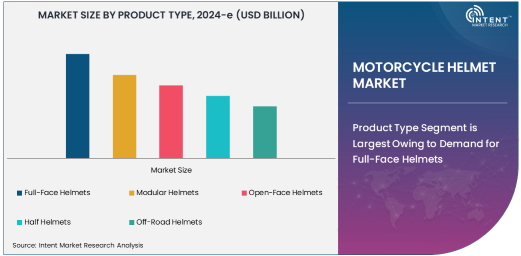
Product Type Segment is Largest Owing to Demand for Full-Face Helmets
The motorcycle helmet market is characterized by several product types, including full-face helmets, modular helmets, open-face helmets, half helmets, and off-road helmets. Among these, full-face helmets dominate the market due to their comprehensive protection, which appeals to both casual riders and professional bikers. Full-face helmets offer the best safety features, covering the entire head, face, and chin, making them the preferred choice for riders prioritizing protection, particularly in high-speed and high-risk conditions.
Full-face helmets’ popularity is further fueled by advancements in technology, including the integration of features like anti-fog visors, communication systems, and improved aerodynamics. Additionally, full-face helmets are widely adopted by riders participating in competitive events like MotoGP and motocross, where high levels of protection are essential. The growing awareness around rider safety and increased demand for premium and high-performance models also contributes to the sustained growth of the full-face helmet segment within the market.
Material Segment is Fastest Growing Due to Carbon Fiber Adoption
The material segment of the motorcycle helmet market features various materials such as polycarbonate, carbon fiber, fiberglass, composite, and Kevlar. Among these, carbon fiber is experiencing the fastest growth due to its superior strength-to-weight ratio, making it highly attractive for performance-driven consumers. Carbon fiber helmets are lightweight yet highly durable, offering a combination of high protection and comfort that appeals to serious riders, especially in sports like motorcycle racing.
Riders' increasing preference for lightweight helmets without compromising on safety is propelling the demand for carbon fiber. Moreover, innovations in the manufacturing process of carbon fiber helmets have led to cost reductions, making them more accessible to a wider audience, not just elite professional riders. This trend aligns with the growing interest in high-performance helmets, contributing to the rapid expansion of the carbon fiber helmet subsegment in the market.
End-User Segment is Largest Owing to Male Rider Dominance
The end-user segment in the motorcycle helmet market is categorized into men, women, and kids. Men continue to be the largest consumer group within the market, driven by the higher number of male riders worldwide. Men tend to favor a broad range of helmet types, from off-road to full-face helmets, reflecting their diverse riding interests, including touring, commuting, and competitive racing. The dominance of male riders is further supported by the cultural and societal factors that have historically associated motorcycling more with men.
As the market continues to expand globally, manufacturers are increasingly targeting male riders with product offerings that combine style, safety, and performance. Additionally, the availability of helmets in various styles, colors, and sizes tailored for men drives the demand, ensuring that the male rider segment remains the dominant force in the market.
Distribution Channel Segment is Largest Due to Strong Offline Presence
The distribution channel segment in the motorcycle helmet market is divided into online and offline channels. The offline distribution channel remains the largest, primarily due to established retail networks such as specialty stores, supermarkets, and motorcycle dealerships. These physical outlets offer consumers the opportunity to try on helmets, ensuring the right fit and comfort, which is crucial when selecting protective headgear. Offline stores also benefit from customer trust and brand loyalty, which are essential in the high-stakes decision-making process related to safety products like helmets.
While online channels are growing rapidly, especially during the COVID-19 pandemic, offline retail continues to dominate the market. The ability to physically inspect the helmet, speak with knowledgeable staff, and immediately make a purchase provides a tangible benefit to consumers. This segment is expected to maintain its leadership as the most significant channel in the motorcycle helmet market.
Price Range Segment is Fastest Growing Due to Premium Product Demand
The price range segment of the motorcycle helmet market is categorized into premium, mid-range, and economy helmets. The premium segment is the fastest growing, driven by a surge in demand for high-quality helmets that offer enhanced safety, comfort, and advanced features. Premium helmets are highly sought after by professional riders, as well as affluent consumers who value both performance and aesthetics. These helmets typically incorporate the latest technologies, such as Bluetooth connectivity, integrated cameras, and improved ventilation systems, which contribute to their appeal.
The increasing focus on safety standards and a heightened sense of personal protection among riders have led to an uptrend in premium helmet sales. As more riders are willing to invest in higher-end helmets for superior features and increased durability, the premium segment is poised to continue its rapid growth within the market.
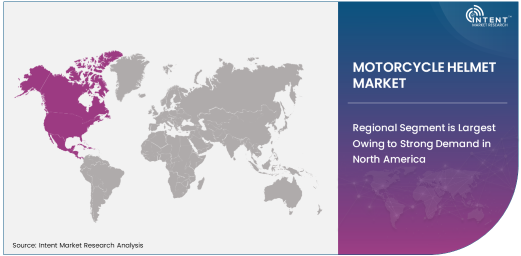
Regional Segment is Largest Owing to Strong Demand in North America
The regional market for motorcycle helmets is segmented into North America, Europe, Asia Pacific, Latin America, and the Middle East & Africa. North America holds the largest share of the market, driven by the high number of motorcycle enthusiasts, particularly in the United States. The region has a well-established motorcycle culture, with millions of active riders, which sustains demand for helmets across all product types. Furthermore, the stringent safety regulations in North America ensure that riders prioritize high-quality helmets, further boosting the market.
The presence of key helmet manufacturers in the region, along with a strong distribution network, also contributes to North America’s dominance. The growing interest in motorcycle sports, leisure activities, and increasing awareness of road safety continue to drive the demand for motorcycle helmets in this region, solidifying its position as the largest market.
Competitive Landscape and Leading Companies
The motorcycle helmet market is highly competitive, with several established players constantly innovating and introducing new models to cater to diverse consumer needs. Companies like Shoei, HJC Helmets, Bell Helmets, Arai Helmet, and AGV Helmets lead the market, dominating both premium and mid-range product segments. These companies invest heavily in R&D to improve helmet safety standards, introduce lighter materials, and integrate advanced technologies like communication systems and safety sensors.
The competitive landscape is also witnessing increased mergers, acquisitions, and collaborations aimed at expanding product portfolios and strengthening market presence. Companies are increasingly focusing on offering a wide range of helmet types, from budget-friendly options to high-end performance models, catering to both casual riders and professional competitors. As a result, the market remains dynamic, with a continuous push for technological advancements, improved safety standards, and personalized consumer experiences.
Recent Developments:
- Bell Helmets has launched a new full-face helmet model with improved aerodynamics and comfort features aimed at competitive riders.
- AGV released a new line of high-performance carbon fiber helmets, targeting racing enthusiasts and premium users for enhanced safety and lightweight design.
- Shoei Co. Ltd. entered a strategic partnership with motorcycle manufacturers to promote joint safety innovations and integrated helmet technologies.
- HJC Helmets expanded its product portfolio by introducing a series of off-road helmets, designed to meet the needs of motocross and adventure riders.
- Schuberth Helmets received regulatory approval for its latest helmet line designed to meet European and North American safety standards.
List of Leading Companies:
- Shoei Co. Ltd.
- HJC Helmets
- Bell Helmets (Vista Outdoor Inc.)
- Arai Helmet Limited
- AGV Helmets (Dainese)
- Schuberth GmbH
- Shark Helmets
- Icon Motosports
- LS2 Helmets
- Nolan Group (N-Com)
- Suomy Helmets
- Thor MX (Leatt Corporation)
- Biltwell Inc.
- O'Neal Racing
- POC Sports
Report Scope:
|
Report Features |
Description |
|
Market Size (2024-e) |
USD 3.2 Billion |
|
Forecasted Value (2030) |
USD 5.2 Billion |
|
CAGR (2025 – 2030) |
7.0% |
|
Base Year for Estimation |
2024-e |
|
Historic Year |
2023 |
|
Forecast Period |
2025 – 2030 |
|
Report Coverage |
Market Forecast, Market Dynamics, Competitive Landscape, Recent Developments |
|
Segments Covered |
Motorcycle Helmet Market By Product Type (Full-Face Helmets, Modular Helmets, Open-Face Helmets, Half Helmets, Off-Road Helmets), By Material (Polycarbonate, Carbon Fiber, Fiberglass, Composite, Kevlar), By End-User (Men, Women, Kids), By Distribution Channel (Online, Offline), By Price Range (Premium, Mid-Range, Economy), and By Region; Global Insights & Forecast (2023 – 2030) |
|
Regional Analysis |
North America (US, Canada, Mexico), Europe (Germany, France, UK, Italy, Spain, and Rest of Europe), Asia-Pacific (China, Japan, South Korea, Australia, India, and Rest of Asia-Pacific), Latin America (Brazil, Argentina, and Rest of Latin America), Middle East & Africa (Saudi Arabia, UAE, Rest of Middle East & Africa) |
|
Major Companies |
Shoei Co. Ltd., HJC Helmets, Bell Helmets (Vista Outdoor Inc.), Arai Helmet Limited, AGV Helmets (Dainese), Schuberth GmbH, Shark Helmets, Icon Motosports, LS2 Helmets, Nolan Group (N-Com), Suomy Helmets, Thor MX (Leatt Corporation), Biltwell Inc., O'Neal Racing, POC Sports |
|
Customization Scope |
Customization for segments, region/country-level will be provided. Moreover, additional customization can be done based on the requirements |
|
1. Introduction |
|
1.1. Market Definition |
|
1.2. Scope of the Study |
|
1.3. Research Assumptions |
|
1.4. Study Limitations |
|
2. Research Methodology |
|
2.1. Research Approach |
|
2.1.1. Top-Down Method |
|
2.1.2. Bottom-Up Method |
|
2.1.3. Factor Impact Analysis |
|
2.2. Insights & Data Collection Process |
|
2.2.1. Secondary Research |
|
2.2.2. Primary Research |
|
2.3. Data Mining Process |
|
2.3.1. Data Analysis |
|
2.3.2. Data Validation and Revalidation |
|
2.3.3. Data Triangulation |
|
3. Executive Summary |
|
3.1. Major Markets & Segments |
|
3.2. Highest Growing Regions and Respective Countries |
|
3.3. Impact of Growth Drivers & Inhibitors |
|
3.4. Regulatory Overview by Country |
|
4. Motorcycle Helmet Market, by Product Type (Market Size & Forecast: USD Million, 2023 – 2030) |
|
4.1. Full-Face Helmets |
|
4.2. Modular Helmets |
|
4.3. Open-Face Helmets |
|
4.4. Half Helmets |
|
4.5. Off-Road Helmets |
|
5. Motorcycle Helmet Market, by Material (Market Size & Forecast: USD Million, 2023 – 2030) |
|
5.1. Polycarbonate |
|
5.2. Carbon Fiber |
|
5.3. Fiberglass |
|
5.4. Composite |
|
5.5. Kevlar |
|
6. Motorcycle Helmet Market, by End-User (Market Size & Forecast: USD Million, 2023 – 2030) |
|
6.1. Men |
|
6.2. Women |
|
6.3. Kids |
|
7. Motorcycle Helmet Market, by Distribution Channel (Market Size & Forecast: USD Million, 2023 – 2030) |
|
7.1. Online |
|
7.2. Offline |
|
7.2.1. Specialty Stores |
|
7.2.2. Supermarkets |
|
7.2.3. E-commerce Platforms |
|
8. Motorcycle Helmet Market, by Price Range (Market Size & Forecast: USD Million, 2023 – 2030) |
|
8.1. Premium |
|
8.2. Mid-Range |
|
8.3. Economy |
|
9. Regional Analysis (Market Size & Forecast: USD Million, 2023 – 2030) |
|
9.1. Regional Overview |
|
9.2. North America |
|
9.2.1. Regional Trends & Growth Drivers |
|
9.2.2. Barriers & Challenges |
|
9.2.3. Opportunities |
|
9.2.4. Factor Impact Analysis |
|
9.2.5. Technology Trends |
|
9.2.6. North America Motorcycle Helmet Market, by Product Type |
|
9.2.7. North America Motorcycle Helmet Market, by Material |
|
9.2.8. North America Motorcycle Helmet Market, by End-User |
|
9.2.9. North America Motorcycle Helmet Market, by Distribution Channel |
|
9.2.10. North America Motorcycle Helmet Market, by Price Range |
|
9.2.11. By Country |
|
9.2.11.1. US |
|
9.2.11.1.1. US Motorcycle Helmet Market, by Product Type |
|
9.2.11.1.2. US Motorcycle Helmet Market, by Material |
|
9.2.11.1.3. US Motorcycle Helmet Market, by End-User |
|
9.2.11.1.4. US Motorcycle Helmet Market, by Distribution Channel |
|
9.2.11.1.5. US Motorcycle Helmet Market, by Price Range |
|
9.2.11.2. Canada |
|
9.2.11.3. Mexico |
|
*Similar segmentation will be provided for each region and country |
|
9.3. Europe |
|
9.4. Asia-Pacific |
|
9.5. Latin America |
|
9.6. Middle East & Africa |
|
10. Competitive Landscape |
|
10.1. Overview of the Key Players |
|
10.2. Competitive Ecosystem |
|
10.2.1. Level of Fragmentation |
|
10.2.2. Market Consolidation |
|
10.2.3. Product Innovation |
|
10.3. Company Share Analysis |
|
10.4. Company Benchmarking Matrix |
|
10.4.1. Strategic Overview |
|
10.4.2. Product Innovations |
|
10.5. Start-up Ecosystem |
|
10.6. Strategic Competitive Insights/ Customer Imperatives |
|
10.7. ESG Matrix/ Sustainability Matrix |
|
10.8. Manufacturing Network |
|
10.8.1. Locations |
|
10.8.2. Supply Chain and Logistics |
|
10.8.3. Product Flexibility/Customization |
|
10.8.4. Digital Transformation and Connectivity |
|
10.8.5. Environmental and Regulatory Compliance |
|
10.9. Technology Readiness Level Matrix |
|
10.10. Technology Maturity Curve |
|
10.11. Buying Criteria |
|
11. Company Profiles |
|
11.1. Shoei Co. Ltd. |
|
11.1.1. Company Overview |
|
11.1.2. Company Financials |
|
11.1.3. Product/Service Portfolio |
|
11.1.4. Recent Developments |
|
11.1.5. IMR Analysis |
|
*Similar information will be provided for other companies |
|
11.2. HJC Helmets |
|
11.3. Bell Helmets (Vista Outdoor Inc.) |
|
11.4. Arai Helmet Limited |
|
11.5. AGV Helmets (Dainese) |
|
11.6. Schuberth GmbH |
|
11.7. Shark Helmets |
|
11.8. Icon Motosports |
|
11.9. LS2 Helmets |
|
11.10. Nolan Group (N-Com) |
|
11.11. Suomy Helmets |
|
11.12. Thor MX (Leatt Corporation) |
|
11.13. Biltwell Inc. |
|
11.14. O'Neal Racing |
|
11.15. POC Sports |
|
12. Appendix |
A comprehensive market research approach was employed to gather and analyze data on the Motorcycle Helmet Market. In the process, the analysis was also done to analyze the parent market and relevant adjacencies to measure the impact of them on the Motorcycle Helmet Market. The research methodology encompassed both secondary and primary research techniques, ensuring the accuracy and credibility of the findings.
.jpg)
Secondary Research
Secondary research involved a thorough review of pertinent industry reports, journals, articles, and publications. Additionally, annual reports, press releases, and investor presentations of industry players were scrutinized to gain insights into their market positioning and strategies.
Primary Research
Primary research involved conducting in-depth interviews with industry experts, stakeholders, and market participants across the E-Waste Management ecosystem. The primary research objectives included:
- Validating findings and assumptions derived from secondary research
- Gathering qualitative and quantitative data on market trends, drivers, and challenges
- Understanding the demand-side dynamics, encompassing end-users, component manufacturers, facility providers, and service providers
- Assessing the supply-side landscape, including technological advancements and recent developments
Market Size Assessment
A combination of top-down and bottom-up approaches was utilized to analyze the overall size of the Motorcycle Helmet Market. These methods were also employed to assess the size of various subsegments within the market. The market size assessment methodology encompassed the following steps:
- Identification of key industry players and relevant revenues through extensive secondary research
- Determination of the industry's supply chain and market size, in terms of value, through primary and secondary research processes
- Calculation of percentage shares, splits, and breakdowns using secondary sources and verification through primary sources
.jpg)
Data Triangulation
To ensure the accuracy and reliability of the market size, data triangulation was implemented. This involved cross-referencing data from various sources, including demand and supply side factors, market trends, and expert opinions. Additionally, top-down and bottom-up approaches were employed to validate the market size assessment.
NA