
As per Intent Market Research, the Morphine, Buprenorphine and Related Drugs Market was valued at USD 6.5 Billion in 2024-e and will surpass USD 11.3 Billion by 2030; growing at a CAGR of 8.3% during 2025-2030.
The global market for morphine, buprenorphine, and other opioid-based drugs is expanding rapidly as the demand for pain management solutions continues to rise. These drugs play a crucial role in the healthcare system, particularly in pain management, anesthesia, and the treatment of drug dependence. Opioids such as morphine, buprenorphine, oxycodone, fentanyl, and hydrocodone are widely used for their potent analgesic properties, providing relief for patients with chronic pain, acute injuries, and those undergoing surgeries. The growing prevalence of chronic pain, opioid use disorder, and the increasing geriatric population have significantly contributed to the market's growth. The rising awareness of opioid dependency and the push for alternative delivery methods have also shaped the market's evolution.
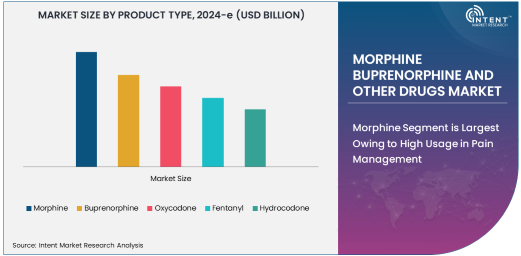
Morphine Segment is Largest Owing to High Usage in Pain Management
Among the various opioid-based drugs available, morphine remains the largest segment, accounting for a significant share of the market. As one of the most effective and widely used opioids, morphine is primarily utilized in hospitals and healthcare settings to manage moderate to severe pain, particularly in postoperative care and palliative care. Its strong analgesic effects and long history of use make it a staple in pain management protocols globally. Additionally, morphine is often the benchmark against which other opioids are measured for their efficacy and safety in pain relief.
Despite the increasing availability of alternative opioids like buprenorphine and fentanyl, morphine continues to dominate due to its versatility in pain relief. Its widespread application across various healthcare settings, including surgeries, cancer treatment, and end-of-life care, ensures its strong position in the market. Furthermore, morphine's availability in various formulations, including oral, intravenous, and epidural, enhances its accessibility for patients with different pain management needs.
Opioid Analgesics Class is Largest Owing to Broad Therapeutic Applications
The opioid analgesics class, which includes morphine, oxycodone, and hydrocodone, is the largest segment in the opioid drug market. Opioid analgesics are designed for the management of pain, making them essential in both acute and chronic conditions. With opioid addiction and dependence being a global concern, opioid analgesics have also been subject to stricter regulations in recent years. However, their continued use in clinical settings for pain management, particularly in cancer care, post-surgical recovery, and trauma cases, ensures that this segment remains dominant in the market.
The wide application of opioid analgesics in managing both acute and chronic pain continues to drive the segment’s growth. These drugs are particularly effective in providing pain relief where non-opioid treatments are insufficient, thereby maintaining their demand despite the rise of alternative therapies. The ongoing research into better pain management techniques and the development of combination therapies with lower abuse potential are expected to sustain the opioid analgesics market.
Pain Management Application is Largest Owing to Global Demand for Effective Pain Relief
The largest application of morphine, buprenorphine, and other opioid-based drugs is pain management. Chronic pain conditions, such as cancer-related pain, arthritis, and neuropathic pain, require long-term medication management, often necessitating the use of opioids for effective relief. Opioid-based medications, particularly morphine and oxycodone, are the cornerstone of pain management strategies, offering significant improvements in the quality of life for patients with severe pain. The demand for effective pain relief is growing globally, driven by an aging population and the rising incidence of chronic conditions.
Pain management remains the largest application area because it encompasses a wide range of medical conditions that require consistent and potent analgesia. The demand for opioids in managing postoperative pain and pain from traumatic injuries further drives the market. Moreover, advancements in personalized medicine and opioid formulations aimed at minimizing abuse potential are also contributing to the sustained growth of this segment.
Hospitals Segment is Largest Owing to Increased Surgical Procedures
Hospitals are the largest end-user segment for morphine, buprenorphine, and other opioid-based drugs. The demand for opioids in hospital settings is particularly high due to the increasing number of surgical procedures, trauma cases, and cancer treatments. These settings require potent analgesics to manage postoperative pain, making hospitals the largest consumers of opioid medications. The high prevalence of surgeries and the increasing need for effective pain management in critical care units and emergency rooms further contribute to the dominance of this segment.
Hospitals, with their extensive patient base and the need for specialized pain management treatments, continue to be the largest end-users of opioid drugs. The role of opioids in managing pain in intensive care units and for patients undergoing major surgeries makes this sector integral to the overall growth of the market. With rising healthcare standards and advancements in surgical techniques, the demand for opioids in hospital settings is expected to remain strong.
Oral Administration Route is Largest Owing to Convenience and Efficacy
The oral administration route is the largest segment for opioid-based drugs like morphine, buprenorphine, and oxycodone. Oral formulations are widely used because they provide an effective and convenient way for patients to manage their pain at home. Oral opioids, particularly extended-release formulations, allow for consistent pain control over long periods, making them ideal for chronic pain patients. The ease of use and non-invasive nature of oral administration make it a preferred choice for many patients and healthcare providers.
Oral opioids are widely available in various forms, such as tablets, capsules, and liquid formulations, and can be easily prescribed for both short-term and long-term use. The convenience of oral administration, coupled with advancements in drug delivery systems that offer controlled release, ensures that this route remains the dominant method for opioid administration.
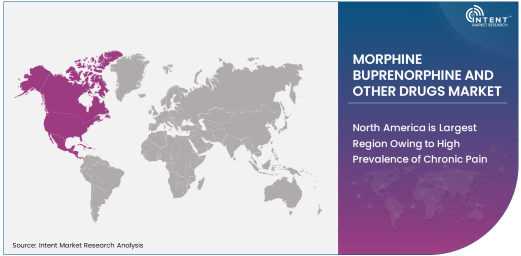
North America is Largest Region Owing to High Prevalence of Chronic Pain
North America is the largest region in the morphine, buprenorphine, and other opioid-based drugs market. The high prevalence of chronic pain conditions, the growing aging population, and the well-established healthcare infrastructure contribute to the region’s dominance in the market. Additionally, the opioid crisis, although a public health challenge, has increased awareness and led to greater scrutiny of opioid prescription practices, driving demand for opioid medications that balance efficacy and safety. The regulatory landscape in North America is evolving, with a shift toward abuse-deterrent formulations and improved addiction treatment options.
North America’s large healthcare sector, particularly in the U.S. and Canada, is expected to continue driving demand for opioid-based drugs. Despite ongoing challenges related to opioid misuse, the region remains the largest consumer of these medications due to the extensive healthcare needs of its population and the demand for pain management therapies.
Leading Companies and Competitive Landscape
The morphine, buprenorphine, and other opioid-based drug market is highly competitive, with several global players dominating the space. Leading companies such as Pfizer Inc., Johnson & Johnson, and Mylan N.V. are significant contributors to the market, providing a range of opioid-based medications for pain management. These companies are investing in research and development to create new formulations that address the growing concerns around opioid misuse and addiction. Furthermore, many of these companies are working on developing abuse-deterrent formulations and alternative pain management therapies to reduce the risk of dependency.
The competitive landscape is characterized by the presence of both multinational pharmaceutical giants and regional players. Companies are focusing on strategic mergers and acquisitions, collaborations with healthcare providers, and regulatory compliance to strengthen their market positions. With increasing scrutiny from regulators and rising public concern over opioid misuse, the industry is shifting toward more responsible prescribing practices and the development of opioid alternatives.
Recent Developments:
- Pfizer Inc. recently received FDA approval for a new formulation of morphine to enhance pain management in postoperative patients.
- Johnson & Johnson announced the launch of a new transdermal buprenorphine patch aimed at improving opioid addiction treatment.
- Abbott Laboratories launched a new analgesic drug, which combines buprenorphine and naloxone, to reduce opioid misuse.
- Mylan N.V. completed a merger with Pfizer's generic drugs unit, expanding its reach in opioid medication production.
- Teva Pharmaceutical Industries Ltd. has expanded its generic fentanyl line, making opioids more affordable for hospitals and clinics.
List of Leading Companies:
- Pfizer Inc.
- Johnson & Johnson
- Abbott Laboratories
- GlaxoSmithKline
- Novartis AG
- Eli Lilly and Co.
- Sanofi
- Teva Pharmaceutical Industries Ltd.
- Mylan N.V.
- Endo International
- Purdue Pharma
- Hikma Pharmaceuticals
- Mallinckrodt Pharmaceuticals
- Amgen Inc.
- Astellas Pharma Inc.
Report Scope:
|
Report Features |
Description |
|
Market Size (2024-e) |
USD 6.5 Billion |
|
Forecasted Value (2030) |
USD 11.3 Billion |
|
CAGR (2025 – 2030) |
8.3% |
|
Base Year for Estimation |
2024-e |
|
Historic Year |
2023 |
|
Forecast Period |
2025 – 2030 |
|
Report Coverage |
Market Forecast, Market Dynamics, Competitive Landscape, Recent Developments |
|
Segments Covered |
Morphine, Buprenorphine and Related Drugs Market by Product Type (Morphine, Buprenorphine, Oxycodone, Fentanyl, Hydrocodone), Drug Class (Opioid Analgesics, Partial Opioid Agonists, Full Opioid Agonists), Application (Pain Management, Anesthesia, Drug Dependence Treatment, Palliative Care, Postoperative Pain Relief), End-User (Hospitals, Clinics, Rehabilitation Centers, Home Care, Pharmaceutical Research), and Route of Administration (Oral, Intravenous, Sublingual, Transdermal, Intramuscular): Global Insights & Forecast (2023 – 2030) |
|
Regional Analysis |
North America (US, Canada, Mexico), Europe (Germany, France, UK, Italy, Spain, and Rest of Europe), Asia-Pacific (China, Japan, South Korea, Australia, India, and Rest of Asia-Pacific), Latin America (Brazil, Argentina, and Rest of Latin America), Middle East & Africa (Saudi Arabia, UAE, Rest of Middle East & Africa) |
|
Major Companies |
Pfizer Inc., Johnson & Johnson, Abbott Laboratories, GlaxoSmithKline, Novartis AG, Eli Lilly and Co., Sanofi, Teva Pharmaceutical Industries Ltd., Mylan N.V., Endo International, Purdue Pharma, Hikma Pharmaceuticals, Mallinckrodt Pharmaceuticals, Amgen Inc., Astellas Pharma Inc. |
|
Customization Scope |
Customization for segments, region/country-level will be provided. Moreover, additional customization can be done based on the requirements |
|
1. Introduction |
|
1.1. Market Definition |
|
1.2. Scope of the Study |
|
1.3. Research Assumptions |
|
1.4. Study Limitations |
|
2. Research Methodology |
|
2.1. Research Approach |
|
2.1.1. Top-Down Method |
|
2.1.2. Bottom-Up Method |
|
2.1.3. Factor Impact Analysis |
|
2.2. Insights & Data Collection Process |
|
2.2.1. Secondary Research |
|
2.2.2. Primary Research |
|
2.3. Data Mining Process |
|
2.3.1. Data Analysis |
|
2.3.2. Data Validation and Revalidation |
|
2.3.3. Data Triangulation |
|
3. Executive Summary |
|
3.1. Major Markets & Segments |
|
3.2. Highest Growing Regions and Respective Countries |
|
3.3. Impact of Growth Drivers & Inhibitors |
|
3.4. Regulatory Overview by Country |
|
4. Morphine, Buprenorphine and Related Drugs Market, by Product Type (Market Size & Forecast: USD Million, 2023 – 2030) |
|
4.1. Morphine |
|
4.2. Buprenorphine |
|
4.3. Oxycodone |
|
4.4. Fentanyl |
|
4.5. Hydrocodone |
|
5. Morphine, Buprenorphine and Related Drugs Market, by Drug Class (Market Size & Forecast: USD Million, 2023 – 2030) |
|
5.1. Opioid Analgesics |
|
5.2. Partial Opioid Agonists |
|
5.3. Full Opioid Agonists |
|
6. Morphine, Buprenorphine and Related Drugs Market, by Application (Market Size & Forecast: USD Million, 2023 – 2030) |
|
6.1. Pain Management |
|
6.2. Anesthesia |
|
6.3. Drug Dependence Treatment |
|
6.4. Palliative Care |
|
6.5. Postoperative Pain Relief |
|
7. Morphine, Buprenorphine and Related Drugs Market, by End-User (Market Size & Forecast: USD Million, 2023 – 2030) |
|
7.1. Hospitals |
|
7.2. Clinics |
|
7.3. Rehabilitation Centers |
|
7.4. Home Care |
|
7.5. Pharmaceutical Research |
|
8. Morphine, Buprenorphine and Related Drugs Market, by Route of Administration (Market Size & Forecast: USD Million, 2023 – 2030) |
|
8.1. Oral |
|
8.2. Intravenous |
|
8.3. Sublingual |
|
8.4. Transdermal |
|
8.5. Intramuscular |
|
9. Regional Analysis (Market Size & Forecast: USD Million, 2023 – 2030) |
|
9.1. Regional Overview |
|
9.2. North America |
|
9.2.1. Regional Trends & Growth Drivers |
|
9.2.2. Barriers & Challenges |
|
9.2.3. Opportunities |
|
9.2.4. Factor Impact Analysis |
|
9.2.5. Technology Trends |
|
9.2.6. North America Morphine, Buprenorphine and Related Drugs Market, by Product Type |
|
9.2.7. North America Morphine, Buprenorphine and Related Drugs Market, by Drug Class |
|
9.2.8. North America Morphine, Buprenorphine and Related Drugs Market, by Application |
|
9.2.9. North America Morphine, Buprenorphine and Related Drugs Market, by End-User |
|
9.2.10. North America Morphine, Buprenorphine and Related Drugs Market, by Route of Administration |
|
9.2.11. By Country |
|
9.2.11.1. US |
|
9.2.11.1.1. US Morphine, Buprenorphine and Related Drugs Market, by Product Type |
|
9.2.11.1.2. US Morphine, Buprenorphine and Related Drugs Market, by Drug Class |
|
9.2.11.1.3. US Morphine, Buprenorphine and Related Drugs Market, by Application |
|
9.2.11.1.4. US Morphine, Buprenorphine and Related Drugs Market, by End-User |
|
9.2.11.1.5. US Morphine, Buprenorphine and Related Drugs Market, by Route of Administration |
|
9.2.11.2. Canada |
|
9.2.11.3. Mexico |
|
*Similar segmentation will be provided for each region and country |
|
9.3. Europe |
|
9.4. Asia-Pacific |
|
9.5. Latin America |
|
9.6. Middle East & Africa |
|
10. Competitive Landscape |
|
10.1. Overview of the Key Players |
|
10.2. Competitive Ecosystem |
|
10.2.1. Level of Fragmentation |
|
10.2.2. Market Consolidation |
|
10.2.3. Product Innovation |
|
10.3. Company Share Analysis |
|
10.4. Company Benchmarking Matrix |
|
10.4.1. Strategic Overview |
|
10.4.2. Product Innovations |
|
10.5. Start-up Ecosystem |
|
10.6. Strategic Competitive Insights/ Customer Imperatives |
|
10.7. ESG Matrix/ Sustainability Matrix |
|
10.8. Manufacturing Network |
|
10.8.1. Locations |
|
10.8.2. Supply Chain and Logistics |
|
10.8.3. Product Flexibility/Customization |
|
10.8.4. Digital Transformation and Connectivity |
|
10.8.5. Environmental and Regulatory Compliance |
|
10.9. Technology Readiness Level Matrix |
|
10.10. Technology Maturity Curve |
|
10.11. Buying Criteria |
|
11. Company Profiles |
|
11.1. Pfizer Inc. |
|
11.1.1. Company Overview |
|
11.1.2. Company Financials |
|
11.1.3. Product/Service Portfolio |
|
11.1.4. Recent Developments |
|
11.1.5. IMR Analysis |
|
*Similar information will be provided for other companies |
|
11.2. Johnson & Johnson |
|
11.3. Abbott Laboratories |
|
11.4. GlaxoSmithKline |
|
11.5. Novartis AG |
|
11.6. Eli Lilly and Co. |
|
11.7. Sanofi |
|
11.8. Teva Pharmaceutical Industries Ltd. |
|
11.9. Mylan N.V. |
|
11.10. Endo International |
|
11.11. Purdue Pharma |
|
11.12. Hikma Pharmaceuticals |
|
11.13. Mallinckrodt Pharmaceuticals |
|
11.14. Amgen Inc. |
|
11.15. Astellas Pharma Inc. |
|
12. Appendix |
A comprehensive market research approach was employed to gather and analyze data on the Morphine, Buprenorphine and Related Drugs Market. In the process, the analysis was also done to analyze the parent market and relevant adjacencies to measure the impact of them on the Morphine, Buprenorphine and Related Drugs Market. The research methodology encompassed both secondary and primary research techniques, ensuring the accuracy and credibility of the findings.
.jpg)
Secondary Research
Secondary research involved a thorough review of pertinent industry reports, journals, articles, and publications. Additionally, annual reports, press releases, and investor presentations of industry players were scrutinized to gain insights into their market positioning and strategies.
Primary Research
Primary research involved conducting in-depth interviews with industry experts, stakeholders, and market participants across the E-Waste Management ecosystem. The primary research objectives included:
- Validating findings and assumptions derived from secondary research
- Gathering qualitative and quantitative data on market trends, drivers, and challenges
- Understanding the demand-side dynamics, encompassing end-users, component manufacturers, facility providers, and service providers
- Assessing the supply-side landscape, including technological advancements and recent developments
Market Size Assessment
A combination of top-down and bottom-up approaches was utilized to analyze the overall size of the Morphine, Buprenorphine and Related Drugs Market. These methods were also employed to assess the size of various subsegments within the market. The market size assessment methodology encompassed the following steps:
- Identification of key industry players and relevant revenues through extensive secondary research
- Determination of the industry's supply chain and market size, in terms of value, through primary and secondary research processes
- Calculation of percentage shares, splits, and breakdowns using secondary sources and verification through primary sources
.jpg)
Data Triangulation
To ensure the accuracy and reliability of the market size, data triangulation was implemented. This involved cross-referencing data from various sources, including demand and supply side factors, market trends, and expert opinions. Additionally, top-down and bottom-up approaches were employed to validate the market size assessment.
NA