
As per Intent Market Research, the Methicillin Resistant Staphylococcus Aureus (MRSA) Drugs Market was valued at USD 3.9 billion in 2024-e and will surpass USD 6.1 billion by 2030; growing at a CAGR of 7.8% during 2024 - 2030.
The Methicillin-Resistant Staphylococcus Aureus (MRSA) drugs market is experiencing significant growth due to the increasing prevalence of MRSA infections and the growing demand for effective treatments. MRSA, a strain of bacteria resistant to common antibiotics, has become a major challenge in both hospital and community settings, leading to the need for specialized drug treatments. The rising number of healthcare-associated infections, coupled with the limitations of traditional antibiotics, is driving the demand for alternative therapeutic options. As MRSA continues to pose a serious threat, the development and availability of new and advanced MRSA drugs are critical in ensuring effective management and treatment.
The market for MRSA drugs is evolving with the introduction of new antibiotic classes and non-antibiotic therapies that offer improved efficacy, especially against resistant strains. Antibiotics remain the mainstay of treatment, but non-antibiotic therapies are gaining traction as adjunct therapies or in cases where antibiotics are not effective. The increasing focus on research and development, along with regulatory approvals for newer treatment options, is expected to further propel the growth of this market.
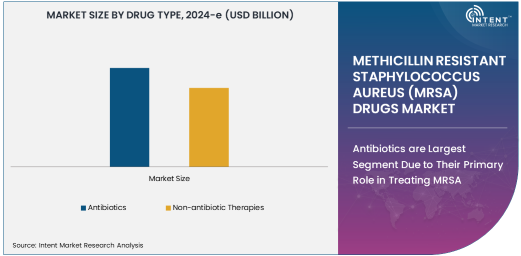
Antibiotics are Largest Segment Due to Their Primary Role in Treating MRSA
The antibiotics segment holds the largest share in the MRSA drugs market due to the central role antibiotics play in treating MRSA infections. MRSA is notorious for its resistance to many commonly used antibiotics, making the use of specialized antibiotics essential. Antibiotics like glycopeptides, oxazolidinones, and lipopeptides are considered effective in treating MRSA infections and have been widely adopted for clinical use.
Glycopeptides, particularly vancomycin, have been the go-to treatment for MRSA infections, although resistance to this class is increasing, which has spurred the development of alternative antibiotics. Oxazolidinones, such as linezolid, and newer antibiotics like daptomycin (a lipopeptide) are now being used to treat resistant strains. The development of novel antibiotics is critical in managing MRSA and ensuring the continued effectiveness of treatments, which is why antibiotics will continue to dominate the market in the coming years.
Oxazolidinones is Fastest Growing Segment Due to Effectiveness Against Resistant Strains
Oxazolidinones, a relatively newer class of antibiotics, is the fastest-growing segment in the MRSA drugs market due to their proven efficacy against MRSA strains that are resistant to other treatments. Linezolid, the most widely used drug in this class, has shown strong performance in treating both hospital-acquired and community-associated MRSA infections. Oxazolidinones inhibit bacterial protein synthesis, making them effective even against resistant strains that do not respond to older antibiotics like penicillins or cephalosporins.
The rise in MRSA resistance to traditional antibiotics, combined with the limited options for treating severe MRSA infections, has positioned oxazolidinones as an important class in the fight against resistant bacteria. As the incidence of multi-drug-resistant MRSA strains increases, the demand for oxazolidinones is expected to grow rapidly, making it the fastest-growing antibiotic class in the MRSA drugs market.
Injectable Route of Administration is Largest Segment Due to Severe Infections Requiring Immediate Treatment
The injectable route of administration is the largest segment in the MRSA drugs market, primarily due to the need for rapid and effective treatment in severe MRSA infections. In cases of hospital-acquired MRSA infections, where the risk of complications like sepsis is high, injectable antibiotics are often preferred because they provide quick and reliable delivery of the drug into the bloodstream. Injectable forms of antibiotics, including vancomycin, daptomycin, and linezolid, are commonly used in hospital settings to manage acute and serious MRSA infections.
The injectable route ensures that patients receive an immediate therapeutic dose, which is crucial for infections that progress rapidly. Additionally, many antibiotics used to treat MRSA infections are not absorbed well when taken orally, making injectable formulations the preferred option in the acute treatment of MRSA. As hospital admissions for severe MRSA infections increase, the injectable segment will continue to dominate the market.
Hospitals End-User Segment is Largest Due to High Prevalence of MRSA Infections in Healthcare Settings
The hospitals end-user segment is the largest in the MRSA drugs market due to the high prevalence of MRSA infections in healthcare settings. Hospitals are the primary environment for MRSA transmission, especially in intensive care units (ICUs), surgical wards, and other high-risk areas. The ability to treat severe MRSA infections quickly and effectively in these settings makes hospitals the leading consumers of MRSA drugs, particularly antibiotics administered through the injectable route.
Additionally, hospitals require a broad range of MRSA drugs to treat various stages of infection, ranging from mild skin infections to life-threatening bloodstream infections. Given the complexity and severity of hospital-acquired MRSA infections, hospitals continue to be the dominant end-users of MRSA treatment options, driving the demand for new and effective drugs in the market.
Direct Sales Distribution Channel is Largest Segment Due to Bulk Procurement and Long-Term Contracts
The direct sales distribution channel is the largest segment in the MRSA drugs market, largely due to bulk procurement practices in hospitals and healthcare systems. Hospitals and healthcare providers typically purchase MRSA drugs in large quantities to meet the needs of their patient populations. Direct sales allow pharmaceutical companies to establish long-term relationships with hospitals, ensuring a consistent supply of drugs and providing opportunities for pricing flexibility and customized agreements.
Furthermore, direct sales facilitate better communication and support between manufacturers and healthcare providers, which is essential for ensuring the proper use and administration of MRSA drugs. This distribution model is particularly advantageous in the healthcare sector, where product availability and reliable supply chains are crucial in managing the treatment of infections like MRSA.
North America is Largest Region Due to High Incidence of MRSA Infections and Advanced Healthcare Systems
North America is the largest region in the MRSA drugs market, driven by the high incidence of MRSA infections and the region's advanced healthcare infrastructure. The United States, in particular, has a significant number of MRSA cases, especially in hospital settings, making it a key market for MRSA drugs. The established healthcare systems in North America, coupled with high healthcare spending, allow for the widespread availability and use of advanced MRSA treatment options.
Additionally, regulatory frameworks in North America, including approval processes by the FDA, support the rapid introduction of new antibiotics and therapies to treat MRSA. As the prevalence of MRSA infections continues to rise in the region, the demand for MRSA drugs is expected to remain strong, reinforcing North America's dominant position in the market.

Leading Companies and Competitive Landscape
The MRSA drugs market is highly competitive, with key players such as Pfizer, Merck, Johnson & Johnson, and Novartis leading the market. These companies offer a wide range of antibiotics and non-antibiotic therapies to treat MRSA, focusing on both developing new drugs and improving existing therapies to combat resistant strains. The market is also seeing increased investment in research and development, with companies exploring novel antibiotics and combination therapies to address the growing threat of antibiotic resistance.
In addition to the major pharmaceutical companies, smaller biopharmaceutical firms are contributing to innovation in the MRSA treatment space, particularly in the development of new antibiotic classes and alternative therapies. The competitive landscape is characterized by strategic partnerships, collaborations, and acquisitions aimed at enhancing product portfolios and expanding market reach. As the threat of antibiotic resistance continues to grow, the competition in the MRSA drugs market is expected to intensify, with companies focusing on developing more effective treatments and addressing emerging resistant strains.
Recent Developments:
- Pfizer Inc. announced the launch of a new MRSA antibiotic, designed to treat complicated skin and soft tissue infections.
- Merck & Co., Inc. received FDA approval for a new oxazolidinone-based drug targeting resistant MRSA strains.
- GlaxoSmithKline expanded its MRSA drug portfolio with the introduction of an injectable antibiotic for hospital use.
- Novartis International AG entered into a partnership with a biotech firm to develop a next-generation antibiotic aimed at multi-drug-resistant MRSA infections.
- AstraZeneca launched an oral antibiotic aimed at treating outpatient MRSA infections, making treatment more accessible.
List of Leading Companies:
- Pfizer Inc.
- Merck & Co., Inc.
- Johnson & Johnson
- GlaxoSmithKline plc
- Roche Pharmaceuticals
- Novartis International AG
- Sanofi S.A.
- Eli Lilly and Co.
- AstraZeneca PLC
- Teva Pharmaceutical Industries Ltd.
- Mylan N.V.
- Baxter International Inc.
- Allergan PLC
- Cubist Pharmaceuticals (Merck)
- Paratek Pharmaceuticals
Report Scope:
|
Report Features |
Description |
|
Market Size (2024-e) |
USD 3.9 billion |
|
Forecasted Value (2030) |
USD 6.1 billion |
|
CAGR (2025 – 2030) |
7.8% |
|
Base Year for Estimation |
2024-e |
|
Historic Year |
2023 |
|
Forecast Period |
2025 – 2030 |
|
Report Coverage |
Market Forecast, Market Dynamics, Competitive Landscape, Recent Developments |
|
Segments Covered |
Methicillin Resistant Staphylococcus Aureus (MRSA) Drugs Market By Drug Type (Antibiotics, Non-antibiotic Therapies), By Antibiotic Class (Glycopeptides, Oxazolidinones, Lipopeptides, Streptogramins, Cephalosporins), By Route of Administration (Oral, Injectable), By End-User (Hospitals, Clinics, Home Care Settings), By Distribution Channel (Direct Sales, Distributors, Online Pharmacies) |
|
Regional Analysis |
North America (US, Canada, Mexico), Europe (Germany, France, UK, Italy, Spain, and Rest of Europe), Asia-Pacific (China, Japan, South Korea, Australia, India, and Rest of Asia-Pacific), Latin America (Brazil, Argentina, and Rest of Latin America), Middle East & Africa (Saudi Arabia, UAE, Rest of Middle East & Africa) |
|
Major Companies |
Pfizer Inc., Merck & Co., Inc., Johnson & Johnson, GlaxoSmithKline plc, Roche Pharmaceuticals, Novartis International AG, Sanofi S.A., Eli Lilly and Co., AstraZeneca PLC, Teva Pharmaceutical Industries Ltd., Mylan N.V., Baxter International Inc., Allergan PLC, Cubist Pharmaceuticals (Merck), Paratek Pharmaceuticals |
|
Customization Scope |
Customization for segments, region/country-level will be provided. Moreover, additional customization can be done based on the requirements |
|
1. Introduction |
|
1.1. Market Definition |
|
1.2. Scope of the Study |
|
1.3. Research Assumptions |
|
1.4. Study Limitations |
|
2. Research Methodology |
|
2.1. Research Approach |
|
2.1.1. Top-Down Method |
|
2.1.2. Bottom-Up Method |
|
2.1.3. Factor Impact Analysis |
|
2.2. Insights & Data Collection Process |
|
2.2.1. Secondary Research |
|
2.2.2. Primary Research |
|
2.3. Data Mining Process |
|
2.3.1. Data Analysis |
|
2.3.2. Data Validation and Revalidation |
|
2.3.3. Data Triangulation |
|
3. Executive Summary |
|
3.1. Major Markets & Segments |
|
3.2. Highest Growing Regions and Respective Countries |
|
3.3. Impact of Growth Drivers & Inhibitors |
|
3.4. Regulatory Overview by Country |
|
4. Methicillin Resistant Staphylococcus Aureus (MRSA) Drugs Market, by Drug Type (Market Size & Forecast: USD Million, 2022 – 2030) |
|
4.1. Antibiotics |
|
4.2. Non-antibiotic Therapies |
|
5. Methicillin Resistant Staphylococcus Aureus (MRSA) Drugs Market, by Antibiotic Class (Market Size & Forecast: USD Million, 2022 – 2030) |
|
5.1. Glycopeptides |
|
5.2. Oxazolidinones |
|
5.3. Lipopeptides |
|
5.4. Streptogramins |
|
5.5. Cephalosporins |
|
6. Methicillin Resistant Staphylococcus Aureus (MRSA) Drugs Market, by Route of Administration (Market Size & Forecast: USD Million, 2022 – 2030) |
|
6.1. Oral |
|
6.2. Injectable |
|
7. Methicillin Resistant Staphylococcus Aureus (MRSA) Drugs Market, by End-User (Market Size & Forecast: USD Million, 2022 – 2030) |
|
7.1. Hospitals |
|
7.2. Clinics |
|
7.3. Home Care Settings |
|
8. Methicillin Resistant Staphylococcus Aureus (MRSA) Drugs Market, by Distribution Channel (Market Size & Forecast: USD Million, 2022 – 2030) |
|
8.1. Direct Sales |
|
8.2. Distributors |
|
8.3. Online Pharmacies |
|
9. Regional Analysis (Market Size & Forecast: USD Million, 2022 – 2030) |
|
9.1. Regional Overview |
|
9.2. North America |
|
9.2.1. Regional Trends & Growth Drivers |
|
9.2.2. Barriers & Challenges |
|
9.2.3. Opportunities |
|
9.2.4. Factor Impact Analysis |
|
9.2.5. Technology Trends |
|
9.2.6. North America Methicillin Resistant Staphylococcus Aureus (MRSA) Drugs Market, by Drug Type |
|
9.2.7. North America Methicillin Resistant Staphylococcus Aureus (MRSA) Drugs Market, by Antibiotic Class |
|
9.2.8. North America Methicillin Resistant Staphylococcus Aureus (MRSA) Drugs Market, by Route of Administration |
|
9.2.9. North America Methicillin Resistant Staphylococcus Aureus (MRSA) Drugs Market, by End-User |
|
9.2.10. North America Methicillin Resistant Staphylococcus Aureus (MRSA) Drugs Market, by Distribution Channel |
|
9.2.11. By Country |
|
9.2.11.1. US |
|
9.2.11.1.1. US Methicillin Resistant Staphylococcus Aureus (MRSA) Drugs Market, by Drug Type |
|
9.2.11.1.2. US Methicillin Resistant Staphylococcus Aureus (MRSA) Drugs Market, by Antibiotic Class |
|
9.2.11.1.3. US Methicillin Resistant Staphylococcus Aureus (MRSA) Drugs Market, by Route of Administration |
|
9.2.11.1.4. US Methicillin Resistant Staphylococcus Aureus (MRSA) Drugs Market, by End-User |
|
9.2.11.1.5. US Methicillin Resistant Staphylococcus Aureus (MRSA) Drugs Market, by Distribution Channel |
|
9.2.11.2. Canada |
|
9.2.11.3. Mexico |
|
*Similar segmentation will be provided for each region and country |
|
9.3. Europe |
|
9.4. Asia-Pacific |
|
9.5. Latin America |
|
9.6. Middle East & Africa |
|
10. Competitive Landscape |
|
10.1. Overview of the Key Players |
|
10.2. Competitive Ecosystem |
|
10.2.1. Level of Fragmentation |
|
10.2.2. Market Consolidation |
|
10.2.3. Product Innovation |
|
10.3. Company Share Analysis |
|
10.4. Company Benchmarking Matrix |
|
10.4.1. Strategic Overview |
|
10.4.2. Product Innovations |
|
10.5. Start-up Ecosystem |
|
10.6. Strategic Competitive Insights/ Customer Imperatives |
|
10.7. ESG Matrix/ Sustainability Matrix |
|
10.8. Manufacturing Network |
|
10.8.1. Locations |
|
10.8.2. Supply Chain and Logistics |
|
10.8.3. Product Flexibility/Customization |
|
10.8.4. Digital Transformation and Connectivity |
|
10.8.5. Environmental and Regulatory Compliance |
|
10.9. Technology Readiness Level Matrix |
|
10.10. Technology Maturity Curve |
|
10.11. Buying Criteria |
|
11. Company Profiles |
|
11.1. Pfizer Inc. |
|
11.1.1. Company Overview |
|
11.1.2. Company Financials |
|
11.1.3. Product/Service Portfolio |
|
11.1.4. Recent Developments |
|
11.1.5. IMR Analysis |
|
*Similar information will be provided for other companies |
|
11.2. Merck & Co., Inc. |
|
11.3. Johnson & Johnson |
|
11.4. GlaxoSmithKline plc |
|
11.5. Roche Pharmaceuticals |
|
11.6. Novartis International AG |
|
11.7. Sanofi S.A. |
|
11.8. Eli Lilly and Co. |
|
11.9. AstraZeneca PLC |
|
11.10. Teva Pharmaceutical Industries Ltd. |
|
11.11. Mylan N.V. |
|
11.12. Baxter International Inc. |
|
11.13. Allergan PLC |
|
11.14. Cubist Pharmaceuticals (Merck) |
|
11.15. Paratek Pharmaceuticals |
|
12. Appendix |
A comprehensive market research approach was employed to gather and analyze data on the Methicillin Resistant Staphylococcus Aureus (MRSA) Drugs Market. In the process, the analysis was also done to analyze the parent market and relevant adjacencies to measure the impact of them on the Methicillin Resistant Staphylococcus Aureus (MRSA) Drugs Market. The research methodology encompassed both secondary and primary research techniques, ensuring the accuracy and credibility of the findings.
.jpg)
Secondary Research
Secondary research involved a thorough review of pertinent industry reports, journals, articles, and publications. Additionally, annual reports, press releases, and investor presentations of industry players were scrutinized to gain insights into their market positioning and strategies.
Primary Research
Primary research involved conducting in-depth interviews with industry experts, stakeholders, and market participants across the E-Waste Management ecosystem. The primary research objectives included:
- Validating findings and assumptions derived from secondary research
- Gathering qualitative and quantitative data on market trends, drivers, and challenges
- Understanding the demand-side dynamics, encompassing end-users, component manufacturers, facility providers, and service providers
- Assessing the supply-side landscape, including technological advancements and recent developments
Market Size Assessment
A combination of top-down and bottom-up approaches was utilized to analyze the overall size of the Methicillin Resistant Staphylococcus Aureus (MRSA) Drugs Market. These methods were also employed to assess the size of various subsegments within the market. The market size assessment methodology encompassed the following steps:
- Identification of key industry players and relevant revenues through extensive secondary research
- Determination of the industry's supply chain and market size, in terms of value, through primary and secondary research processes
- Calculation of percentage shares, splits, and breakdowns using secondary sources and verification through primary sources
.jpg)
Data Triangulation
To ensure the accuracy and reliability of the market size, data triangulation was implemented. This involved cross-referencing data from various sources, including demand and supply side factors, market trends, and expert opinions. Additionally, top-down and bottom-up approaches were employed to validate the market size assessment.
NA