
As per Intent Market Research, the Metal & Mining Wastewater Recovery Systems Market was valued at USD 5.5 billion in 2024-e and will surpass USD 9.5 billion by 2030; growing at a CAGR of 9.6% during 2024 - 2030.
The metal and mining wastewater recovery systems market is experiencing substantial growth as industries face increasing pressure to manage water usage, reduce waste, and comply with stringent environmental regulations. These systems play a crucial role in treating and recycling water used in metal extraction and mining operations, where large volumes of water are often contaminated by chemicals, metals, and other pollutants. Effective wastewater treatment is essential to minimize environmental impacts, reduce operational costs, and ensure that industries can continue their operations without jeopardizing local water resources. With water scarcity becoming a growing concern worldwide, wastewater recovery systems offer a sustainable solution for the mining and metal processing sectors.
The demand for advanced wastewater treatment technologies is being driven by the rising adoption of sustainable practices in industries like mining, power generation, and metal processing, where water is a vital resource. With the potential to treat contaminated water and recycle it for reuse within the same operations, these systems help conserve water resources, reduce environmental footprints, and improve the overall sustainability of operations. As a result, the market for wastewater recovery systems in metal and mining applications is poised for continued expansion as industries increasingly adopt innovative technologies to meet both regulatory requirements and environmental goals.
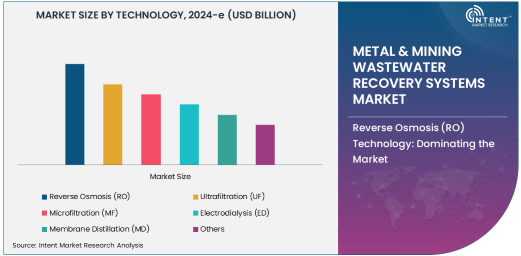
Reverse Osmosis (RO) Technology: Dominating the Market
Reverse Osmosis (RO) is the largest and most widely adopted technology in the metal and mining wastewater recovery systems market. RO technology is highly effective in removing dissolved solids, heavy metals, and other contaminants from wastewater, making it suitable for a wide range of applications, including the treatment of water used in mining, metal processing, and power generation. The ability of RO systems to produce high-quality treated water for reuse in industrial operations makes them a preferred choice for companies aiming to reduce their water consumption and meet regulatory standards.
RO technology works by passing contaminated water through a semi-permeable membrane, which allows only water molecules to pass through, effectively removing harmful substances. As metal and mining operations often involve high levels of contaminants, RO is particularly beneficial in ensuring that water is purified to meet the required quality standards. With advancements in membrane technology and system efficiency, the adoption of RO-based wastewater recovery systems is expected to remain strong across the mining and metal processing sectors, where water reuse is crucial for sustainability and cost-saving.
Ultrafiltration (UF): Fastest Growing Technology
Ultrafiltration (UF) technology is the fastest-growing segment within the metal and mining wastewater recovery systems market. UF is gaining traction due to its ability to provide a cost-effective solution for pre-treatment and primary filtration, especially in mining and metal processing industries. This technology uses a membrane to separate suspended solids, large molecules, and particulate matter from wastewater, making it highly effective in reducing the load on more complex treatment processes, such as Reverse Osmosis (RO).
UF systems are particularly advantageous in treating wastewater with a high concentration of suspended solids, which is common in mining operations. By removing large particles, UF systems enhance the efficiency of downstream treatments and extend the lifespan of more advanced filtration membranes like RO. As industries increasingly seek to optimize their water recovery processes and reduce operational costs, the adoption of UF technology is rapidly growing. Moreover, UF systems are highly flexible and scalable, making them suitable for a range of industrial applications, from small-scale mining operations to large metal processing plants.
Mining Industry: Largest End-User
The mining industry is the largest end-user of wastewater recovery systems in the metal and mining sector. Mining operations consume vast amounts of water for activities such as ore extraction, washing, and processing, which results in significant water pollution. To minimize environmental impacts and comply with stringent water discharge regulations, mining companies are increasingly investing in advanced wastewater treatment systems to recycle and recover water for reuse in their operations. Additionally, the need for wastewater recovery is amplified by the growing awareness of water scarcity in many mining regions, making water recycling a critical component of sustainable mining practices.
The mining industry, especially in regions like North America, Latin America, and Asia-Pacific, faces growing pressure to reduce water consumption and manage wastewater efficiently. As a result, mining companies are adopting a variety of treatment technologies, including Reverse Osmosis (RO), Ultrafiltration (UF), and Membrane Distillation (MD), to ensure that water is effectively treated and recycled. These systems not only help reduce water extraction costs but also allow mining companies to meet regulatory compliance and enhance their environmental stewardship practices.
Power Generation Industry: Fastest Growing End-User
The power generation industry is the fastest growing end-user of wastewater recovery systems in the metal and mining sector. Power plants, particularly those using fossil fuels, are major consumers of water for cooling and other processes. As regulatory pressures on water usage and discharge intensify, power generation companies are turning to advanced wastewater recovery systems to reduce their water consumption and minimize the impact of their operations on local water resources.
The adoption of wastewater recovery technologies in power generation is being driven by the need to improve water-use efficiency, reduce environmental footprints, and comply with increasingly stringent regulations. As renewable energy sources gain momentum, power plants are also integrating wastewater recovery systems to complement their sustainable practices and make their operations more eco-friendly. Membrane technologies like RO and UF are proving to be essential in treating water used in power generation processes, ensuring that water is purified to meet the required standards for reuse in cooling and other operational functions.
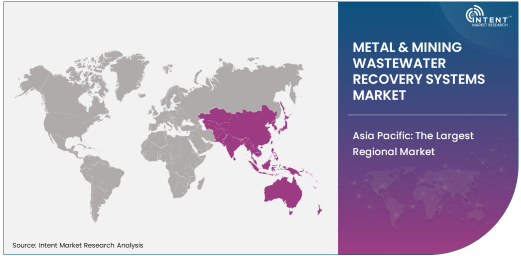
Asia Pacific: The Largest Regional Market
Asia Pacific is the largest regional market for metal and mining wastewater recovery systems, driven by the rapid industrialization and increasing mining activities in countries like China, India, Australia, and Indonesia. The region’s growing mining and metal processing sectors, coupled with water scarcity issues and stringent environmental regulations, are driving the demand for wastewater recovery systems. As governments across Asia Pacific continue to implement stricter water management policies, industries are increasingly adopting advanced wastewater treatment technologies to reduce their water consumption and comply with environmental standards.
China and India, being among the world’s largest producers of minerals and metals, are leading the way in adopting wastewater recovery systems to address environmental concerns. In Australia, mining companies are investing in cutting-edge technologies to minimize water use and maximize recycling, particularly in remote regions where access to fresh water is limited. With the focus on sustainable mining practices and the implementation of stricter environmental policies, the Asia Pacific region is expected to continue dominating the global market for wastewater recovery systems in the metal and mining industries.
Competitive Landscape
The metal and mining wastewater recovery systems market is competitive, with several key players offering advanced solutions for wastewater treatment. Leading companies in this market include Veolia North America, SUEZ Water Technologies & Solutions, Aquatech International LLC, Pall Corporation, and Pentair plc. These companies are focusing on product innovation, expanding their service offerings, and enhancing the efficiency of their treatment technologies to meet the growing demand for sustainable water management solutions in the mining and metal processing sectors.
In addition to established players, several smaller and regional companies are also entering the market, providing specialized technologies and services tailored to the needs of specific industries or geographic regions. As the market continues to expand, competition is expected to intensify, with companies investing in research and development to improve system efficiency, reduce costs, and offer more integrated solutions for wastewater recovery and water reuse in metal and mining operations.
Recent Developments:
- Veolia Environnement S.A. launched a new wastewater treatment system for mining operations that focuses on improving water reuse and reducing the environmental footprint of mining activities.
- SUEZ Water Technologies & Solutions expanded its range of wastewater recovery solutions for metal processing plants to improve water efficiency and reduce operational costs.
- Pentair plc introduced an advanced reverse osmosis system for mining wastewater treatment, optimizing water recovery and minimizing waste generation.
- Aqua America, Inc. acquired a wastewater treatment technology company to strengthen its portfolio of sustainable water solutions, including for the mining industry.
- Xylem Inc. announced a new partnership with a major mining operator to deploy innovative water treatment systems aimed at reducing water consumption and improving operational sustainability.
List of Leading Companies:
- Veolia Environnement S.A.
- SUEZ Water Technologies & Solutions
- Pentair plc
- A. O. Smith Corporation
- Xylem Inc.
- Aqua America, Inc.
- 3M Company
- Dow Chemical Company
- Nalco Water (an Ecolab Company)
- GE Water & Process Technologies
- Aquatech International LLC
- IDE Technologies
- Thermo Fisher Scientific Inc.
- IDEX Corporation
- Kurita Water Industries Ltd.
Report Scope:
|
Report Features |
Description |
|
Market Size (2024-e) |
USD 5.5 billion |
|
Forecasted Value (2030) |
USD 9.5 billion |
|
CAGR (2025 – 2030) |
9.6% |
|
Base Year for Estimation |
2024-e |
|
Historic Year |
2023 |
|
Forecast Period |
2025 – 2030 |
|
Report Coverage |
Market Forecast, Market Dynamics, Competitive Landscape, Recent Developments |
|
Segments Covered |
Metal & Mining Wastewater Recovery Systems Market By Technology (Reverse Osmosis (RO), Ultrafiltration (UF), Microfiltration (MF), Electrodialysis (ED), Membrane Distillation (MD)), By End-Use Industry (Mining, Metal Processing, Industrial, Power Generation) |
|
Regional Analysis |
North America (US, Canada, Mexico), Europe (Germany, France, UK, Italy, Spain, and Rest of Europe), Asia-Pacific (China, Japan, South Korea, Australia, India, and Rest of Asia-Pacific), Latin America (Brazil, Argentina, and Rest of Latin America), Middle East & Africa (Saudi Arabia, UAE, Rest of Middle East & Africa) |
|
Major Companies |
Veolia Environnement S.A., SUEZ Water Technologies & Solutions, Pentair plc, A. O. Smith Corporation, Xylem Inc., Aqua America, Inc., 3M Company, Dow Chemical Company, Nalco Water (an Ecolab Company), GE Water & Process Technologies, Aquatech International LLC, IDE Technologies, Thermo Fisher Scientific Inc., IDEX Corporation, Kurita Water Industries Ltd. |
|
Customization Scope |
Customization for segments, region/country-level will be provided. Moreover, additional customization can be done based on the requirements |
|
1. Introduction |
|
1.1. Market Definition |
|
1.2. Scope of the Study |
|
1.3. Research Assumptions |
|
1.4. Study Limitations |
|
2. Research Methodology |
|
2.1. Research Approach |
|
2.1.1. Top-Down Method |
|
2.1.2. Bottom-Up Method |
|
2.1.3. Factor Impact Analysis |
|
2.2. Insights & Data Collection Process |
|
2.2.1. Secondary Research |
|
2.2.2. Primary Research |
|
2.3. Data Mining Process |
|
2.3.1. Data Analysis |
|
2.3.2. Data Validation and Revalidation |
|
2.3.3. Data Triangulation |
|
3. Executive Summary |
|
3.1. Major Markets & Segments |
|
3.2. Highest Growing Regions and Respective Countries |
|
3.3. Impact of Growth Drivers & Inhibitors |
|
3.4. Regulatory Overview by Country |
|
4. Metal & Mining Wastewater Recovery Systems Market, by Technology (Market Size & Forecast: USD Million, 2022 – 2030) |
|
4.1. Reverse Osmosis (RO) |
|
4.2. Ultrafiltration (UF) |
|
4.3. Microfiltration (MF) |
|
4.4. Electrodialysis (ED) |
|
4.5. Membrane Distillation (MD) |
|
4.6. Others |
|
5. Metal & Mining Wastewater Recovery Systems Market, by End-Use Industry (Market Size & Forecast: USD Million, 2022 – 2030) |
|
5.1. Mining |
|
5.2. Metal Processing |
|
5.3. Industrial |
|
5.4. Power Generation |
|
5.5. Others |
|
6. Regional Analysis (Market Size & Forecast: USD Million, 2022 – 2030) |
|
6.1. Regional Overview |
|
6.2. North America |
|
6.2.1. Regional Trends & Growth Drivers |
|
6.2.2. Barriers & Challenges |
|
6.2.3. Opportunities |
|
6.2.4. Factor Impact Analysis |
|
6.2.5. Technology Trends |
|
6.2.6. North America Metal & Mining Wastewater Recovery Systems Market, by Technology |
|
6.2.7. North America Metal & Mining Wastewater Recovery Systems Market, by End-Use Industry |
|
6.2.8. By Country |
|
6.2.8.1. US |
|
6.2.8.1.1. US Metal & Mining Wastewater Recovery Systems Market, by Technology |
|
6.2.8.1.2. US Metal & Mining Wastewater Recovery Systems Market, by End-Use Industry |
|
6.2.8.2. Canada |
|
6.2.8.3. Mexico |
|
*Similar segmentation will be provided for each region and country |
|
6.3. Europe |
|
6.4. Asia-Pacific |
|
6.5. Latin America |
|
6.6. Middle East & Africa |
|
7. Competitive Landscape |
|
7.1. Overview of the Key Players |
|
7.2. Competitive Ecosystem |
|
7.2.1. Level of Fragmentation |
|
7.2.2. Market Consolidation |
|
7.2.3. Product Innovation |
|
7.3. Company Share Analysis |
|
7.4. Company Benchmarking Matrix |
|
7.4.1. Strategic Overview |
|
7.4.2. Product Innovations |
|
7.5. Start-up Ecosystem |
|
7.6. Strategic Competitive Insights/ Customer Imperatives |
|
7.7. ESG Matrix/ Sustainability Matrix |
|
7.8. Manufacturing Network |
|
7.8.1. Locations |
|
7.8.2. Supply Chain and Logistics |
|
7.8.3. Product Flexibility/Customization |
|
7.8.4. Digital Transformation and Connectivity |
|
7.8.5. Environmental and Regulatory Compliance |
|
7.9. Technology Readiness Level Matrix |
|
7.10. Technology Maturity Curve |
|
7.11. Buying Criteria |
|
8. Company Profiles |
|
8.1. Veolia Environnement S.A. |
|
8.1.1. Company Overview |
|
8.1.2. Company Financials |
|
8.1.3. Product/Service Portfolio |
|
8.1.4. Recent Developments |
|
8.1.5. IMR Analysis |
|
*Similar information will be provided for other companies |
|
8.2. SUEZ Water Technologies & Solutions |
|
8.3. Pentair plc |
|
8.4. A. O. Smith Corporation |
|
8.5. Xylem Inc. |
|
8.6. Aqua America, Inc. |
|
8.7. 3M Company |
|
8.8. Dow Chemical Company |
|
8.9. Nalco Water (an Ecolab Company) |
|
8.10. GE Water & Process Technologies |
|
8.11. Aquatech International LLC |
|
8.12. IDE Technologies |
|
8.13. Thermo Fisher Scientific Inc. |
|
8.14. IDEX Corporation |
|
8.15. Kurita Water Industries Ltd. |
|
9. Appendix |
A comprehensive market research approach was employed to gather and analyze data on the Metal & Mining Wastewater Recovery Systems Market. In the process, the analysis was also done to analyze the parent market and relevant adjacencies to measure the impact of them on the Metal & Mining Wastewater Recovery Systems Market. The research methodology encompassed both secondary and primary research techniques, ensuring the accuracy and credibility of the findings.
.jpg)
Secondary Research
Secondary research involved a thorough review of pertinent industry reports, journals, articles, and publications. Additionally, annual reports, press releases, and investor presentations of industry players were scrutinized to gain insights into their market positioning and strategies.
Primary Research
Primary research involved conducting in-depth interviews with industry experts, stakeholders, and market participants across the E-Waste Management ecosystem. The primary research objectives included:
- Validating findings and assumptions derived from secondary research
- Gathering qualitative and quantitative data on market trends, drivers, and challenges
- Understanding the demand-side dynamics, encompassing end-users, component manufacturers, facility providers, and service providers
- Assessing the supply-side landscape, including technological advancements and recent developments
Market Size Assessment
A combination of top-down and bottom-up approaches was utilized to analyze the overall size of the Metal & Mining Wastewater Recovery Systems Market. These methods were also employed to assess the size of various subsegments within the market. The market size assessment methodology encompassed the following steps:
- Identification of key industry players and relevant revenues through extensive secondary research
- Determination of the industry's supply chain and market size, in terms of value, through primary and secondary research processes
- Calculation of percentage shares, splits, and breakdowns using secondary sources and verification through primary sources
.jpg)
Data Triangulation
To ensure the accuracy and reliability of the market size, data triangulation was implemented. This involved cross-referencing data from various sources, including demand and supply side factors, market trends, and expert opinions. Additionally, top-down and bottom-up approaches were employed to validate the market size assessment.
NA