
As per Intent Market Research, the Machine Risk Assessment Market was valued at USD 1.4 Billion in 2024-e and will surpass USD 3.0 Billion by 2030; growing at a CAGR of 11.8% during 2025-2030.
The global machine risk assessment market is evolving rapidly as industries across the globe prioritize operational safety and efficiency. The increasing emphasis on workplace safety, coupled with technological advancements in automation and AI, has driven demand for risk assessment solutions. These solutions are critical in identifying potential hazards, ensuring regulatory compliance, and improving operational performance. With the rise in industrial automation and machinery use, companies are increasingly seeking solutions that ensure the safety of their operations and minimize downtime caused by accidents. This market is poised for continued growth, driven by technological innovation, regulatory pressure, and an expanding global manufacturing base.
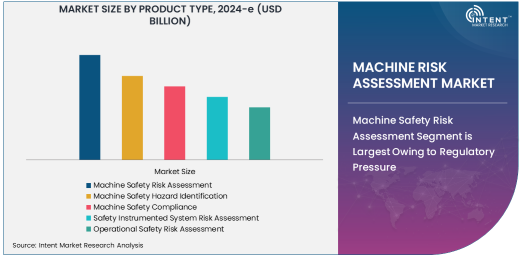
Machine Safety Risk Assessment Segment is Largest Owing to Regulatory Pressure
Machine safety risk assessment is the largest segment in the machine risk assessment market, primarily due to increasing global regulatory requirements and the growing emphasis on workplace safety. With stringent government regulations like OSHA and ISO standards, manufacturers are required to assess and mitigate risks associated with machinery to ensure the safety of workers and prevent costly accidents. Companies in high-risk industries, such as automotive, aerospace, and manufacturing, are investing heavily in machine safety risk assessments to avoid penalties and ensure smooth operations. Additionally, the widespread adoption of automation and robotic systems, which require complex safety measures, is further boosting the demand for risk assessment solutions.
Machine safety risk assessments are vital in ensuring the functional safety of machinery, particularly as industries continue to integrate more advanced technologies such as robotics and AI into their operations. The global push for more robust safety practices is expected to keep this segment dominant in the coming years. As the complexity of machinery and processes increases, so does the need for comprehensive risk management frameworks that prevent system failures and safeguard personnel.
Consulting Services Segment is Fastest Growing Owing to Specialized Expertise
Among the service types in the machine risk assessment market, consulting services are experiencing the fastest growth. This surge is driven by the increasing complexity of modern manufacturing environments and the need for expert guidance to navigate regulatory landscapes and safety standards. Consulting firms offer specialized expertise in risk management, safety analysis, and compliance, helping companies address the unique challenges posed by advanced machinery and automated systems. The growing trend of outsourcing safety assessments to third-party consultants has created an expanding market for consulting services, particularly in industries that require high levels of customization and regulatory adherence.
As industries evolve with emerging technologies, consulting firms provide valuable insight into creating more efficient safety protocols and implementing best practices. Moreover, these services are not only crucial for meeting regulations but also for fostering a culture of safety and operational excellence. With more industries realizing the value of expert advice to improve risk management strategies, consulting services are expected to see continued growth in the market.
Automotive Industry is Largest End-User Due to High Machinery Use
The automotive industry is the largest end-user of machine risk assessment services. This sector relies heavily on advanced machinery and automated systems throughout the manufacturing process. Given the scale and complexity of operations, the automotive industry is highly exposed to safety risks that can have severe consequences. As a result, automakers are increasingly investing in machine risk assessments to protect workers, improve system reliability, and maintain compliance with evolving safety standards. The automotive industry's need for safety-critical equipment, such as robotic arms and assembly lines, drives substantial demand for machine safety risk assessments to ensure safe and efficient operations.
The need for machine risk assessment solutions in the automotive industry is fueled not only by worker safety concerns but also by a growing focus on product quality and operational efficiency. With ongoing innovations in automotive manufacturing, including the integration of AI and autonomous systems, the demand for comprehensive risk management strategies is expected to grow.
Artificial Intelligence (AI) Technology is Fastest Growing Due to Automation Integration
Artificial Intelligence (AI) is the fastest-growing technology in the machine risk assessment market. The increasing integration of AI in industries like manufacturing, automotive, and aerospace is reshaping how risk assessments are conducted. AI-powered tools can automatically analyze vast amounts of data from machine operations, identifying potential safety hazards and suggesting corrective actions in real time. This technology enables more accurate, proactive assessments compared to traditional methods, reducing the likelihood of human error and improving overall safety.
As AI continues to advance, its applications in predictive maintenance and real-time risk analysis are becoming more prevalent. The ability of AI to continuously monitor and assess machine performance, coupled with its capacity for learning and adapting, positions it as a critical tool for enhancing operational safety. With industries increasingly adopting AI for various applications, the demand for AI-driven risk assessment solutions is expected to accelerate rapidly.
Direct Sales is Largest Distribution Channel Owing to Strong Customer Relationships
Direct sales remain the largest distribution channel in the machine risk assessment market. This channel allows companies to establish strong relationships with customers, offering personalized risk assessment solutions tailored to specific operational needs. Direct sales teams can provide in-depth consultations, product demonstrations, and post-sale support, which is particularly important in the machine risk assessment industry, where customization and compliance are key. Moreover, direct sales offer the advantage of providing immediate feedback from clients, helping companies refine their offerings and improve customer satisfaction.
This channel is particularly beneficial in industries where safety solutions must meet strict regulatory requirements, and companies require high-touch service. As industries continue to invest in safety and risk management solutions, the direct sales model will remain pivotal in ensuring customers receive the full support and expertise needed to implement effective risk assessment systems.
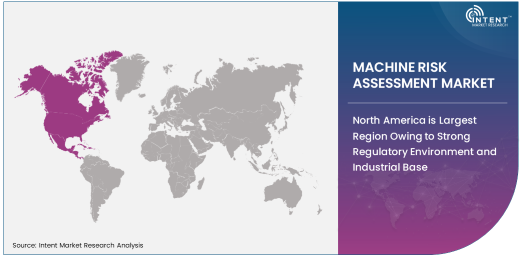
North America is Largest Region Owing to Strong Regulatory Environment and Industrial Base
North America holds the largest share of the machine risk assessment market, driven by a combination of stringent regulatory frameworks and a mature industrial base. The U.S. and Canada have well-established safety standards that require organizations to implement risk assessments for machinery and workplace environments. These regulations are enforced by agencies such as OSHA, which mandate regular safety audits and risk management processes in various industries, including manufacturing, automotive, and aerospace. The strong industrial presence in these regions, coupled with increasing automation, drives demand for machine risk assessment services and solutions.
Additionally, North America benefits from a highly developed technological infrastructure, making it an ideal region for the adoption of advanced machine safety tools powered by AI and IoT. As companies seek to comply with safety regulations while maintaining productivity, North America is expected to continue leading the machine risk assessment market.
Competitive Landscape and Leading Companies
The machine risk assessment market is highly competitive, with several global players leading the charge in innovation and service offerings. Companies like Honeywell, Siemens, and ABB are at the forefront, providing a range of solutions that combine advanced technologies such as AI, IoT, and machine learning with traditional safety assessments. These companies have a strong market presence and offer comprehensive solutions across various industries, including manufacturing, automotive, and energy.
Other notable players include Rockwell Automation, Emerson Electric, and TÜV Rheinland, which provide both consulting and software solutions to help organizations comply with safety regulations. As the market continues to grow, leading companies are focusing on strategic partnerships, acquisitions, and technological advancements to maintain a competitive edge. The emphasis on customized solutions and regulatory compliance will continue to shape the competitive dynamics of the market.
Recent Developments:
- Siemens AG announces an upgrade to its Digital Industries portfolio with enhanced machine risk assessment solutions, incorporating AI for better predictive maintenance.
- Honeywell International Inc. expands its machine safety offering by acquiring a machine learning-based predictive analytics company.
- Rockwell Automation introduces a new platform for real-time machine risk monitoring, using IoT to deliver more accurate hazard identification.
- Schneider Electric partners with a global manufacturing giant to implement its risk assessment solutions and improve workplace safety standards.
- ABB Ltd. launches a cloud-based service for machine risk assessment that enables users to conduct safety evaluations remotely across multiple facilities.
List of Leading Companies:
- ABB Ltd.
- Siemens AG
- Honeywell International Inc.
- Rockwell Automation, Inc.
- Bosch Rexroth AG
- Schneider Electric
- Mitsubishi Electric Corporation
- Emerson Electric Co.
- Eaton Corporation
- Yokogawa Electric Corporation
- TÜV Rheinland
- TÜV SÜD
- Intertek Group PLC
- UL LLC
- National Instruments Corporation
Report Scope:
|
Report Features |
Description |
|
Market Size (2024-e) |
USD 1.4 Billion |
|
Forecasted Value (2030) |
USD 3.0 Billion |
|
CAGR (2025 – 2030) |
11.8% |
|
Base Year for Estimation |
2024-e |
|
Historic Year |
2023 |
|
Forecast Period |
2025 – 2030 |
|
Report Coverage |
Market Forecast, Market Dynamics, Competitive Landscape, Recent Developments |
|
Segments Covered |
Machine Risk Assessment Market By Product Type (Machine Safety Risk Assessment, Machine Safety Hazard Identification, Machine Safety Compliance, Safety Instrumented System Risk Assessment, Operational Safety Risk Assessment), By Service Type (Consulting Services, Training Services, Software & Platform Services, Maintenance & Support Services), By End-User Industry (Manufacturing, Automotive, Aerospace & Defense, Energy & Utilities, Pharmaceuticals, Food & Beverages, Mining & Metals), By Technology (Artificial Intelligence, Machine Learning, Internet of Things, Big Data Analytics, Cloud Computing), and By Distribution Channel (Direct Sales, Online Sales, Third-Party Distributors, Retail Sales); |
|
Regional Analysis |
North America (US, Canada, Mexico), Europe (Germany, France, UK, Italy, Spain, and Rest of Europe), Asia-Pacific (China, Japan, South Korea, Australia, India, and Rest of Asia-Pacific), Latin America (Brazil, Argentina, and Rest of Latin America), Middle East & Africa (Saudi Arabia, UAE, Rest of Middle East & Africa) |
|
Major Companies |
ABB Ltd., Siemens AG, Honeywell International Inc., Rockwell Automation, Inc., Bosch Rexroth AG, Schneider Electric, Mitsubishi Electric Corporation, Emerson Electric Co., Eaton Corporation, Yokogawa Electric Corporation, TÜV Rheinland, TÜV SÜD, Intertek Group PLC, UL LLC, National Instruments Corporation |
|
Customization Scope |
Customization for segments, region/country-level will be provided. Moreover, additional customization can be done based on the requirements |
|
1. Introduction |
|
1.1. Market Definition |
|
1.2. Scope of the Study |
|
1.3. Research Assumptions |
|
1.4. Study Limitations |
|
2. Research Methodology |
|
2.1. Research Approach |
|
2.1.1. Top-Down Method |
|
2.1.2. Bottom-Up Method |
|
2.1.3. Factor Impact Analysis |
|
2.2. Insights & Data Collection Process |
|
2.2.1. Secondary Research |
|
2.2.2. Primary Research |
|
2.3. Data Mining Process |
|
2.3.1. Data Analysis |
|
2.3.2. Data Validation and Revalidation |
|
2.3.3. Data Triangulation |
|
3. Executive Summary |
|
3.1. Major Markets & Segments |
|
3.2. Highest Growing Regions and Respective Countries |
|
3.3. Impact of Growth Drivers & Inhibitors |
|
3.4. Regulatory Overview by Country |
|
4. Machine Risk Assessment Market, by Product Type (Market Size & Forecast: USD Million, 2023 – 2030) |
|
4.1. Machine Safety Risk Assessment |
|
4.2. Machine Safety Hazard Identification |
|
4.3. Machine Safety Compliance |
|
4.4. Safety Instrumented System Risk Assessment |
|
4.5. Operational Safety Risk Assessment |
|
5. Machine Risk Assessment Market, by Service Type (Market Size & Forecast: USD Million, 2023 – 2030) |
|
5.1. Consulting Services |
|
5.2. Training Services |
|
5.3. Software & Platform Services |
|
5.4. Maintenance & Support Services |
|
6. Machine Risk Assessment Market, by End-User Industry (Market Size & Forecast: USD Million, 2023 – 2030) |
|
6.1. Manufacturing |
|
6.2. Automotive |
|
6.3. Aerospace & Defense |
|
6.4. Energy & Utilities |
|
6.5. Pharmaceuticals |
|
6.6. Food & Beverages |
|
6.7. Mining & Metals |
|
7. Machine Risk Assessment Market, by Technology (Market Size & Forecast: USD Million, 2023 – 2030) |
|
7.1. Artificial Intelligence (AI) |
|
7.2. Machine Learning (ML) |
|
7.3. Internet of Things (IoT) |
|
7.4. Big Data Analytics |
|
7.5. Cloud Computing |
|
8. Machine Risk Assessment Market, by Distribution Channel (Market Size & Forecast: USD Million, 2023 – 2030) |
|
8.1. Direct Sales |
|
8.2. Online Sales |
|
8.3. Third-Party Distributors |
|
8.4. Retail Sales |
|
9. Regional Analysis (Market Size & Forecast: USD Million, 2023 – 2030) |
|
9.1. Regional Overview |
|
9.2. North America |
|
9.2.1. Regional Trends & Growth Drivers |
|
9.2.2. Barriers & Challenges |
|
9.2.3. Opportunities |
|
9.2.4. Factor Impact Analysis |
|
9.2.5. Technology Trends |
|
9.2.6. North America Machine Risk Assessment Market, by Product Type |
|
9.2.7. North America Machine Risk Assessment Market, by Service Type |
|
9.2.8. North America Machine Risk Assessment Market, by End-User Industry |
|
9.2.9. North America Machine Risk Assessment Market, by Technology |
|
9.2.10. North America Machine Risk Assessment Market, by Distribution Channel |
|
9.2.11. By Country |
|
9.2.11.1. US |
|
9.2.11.1.1. US Machine Risk Assessment Market, by Product Type |
|
9.2.11.1.2. US Machine Risk Assessment Market, by Service Type |
|
9.2.11.1.3. US Machine Risk Assessment Market, by End-User Industry |
|
9.2.11.1.4. US Machine Risk Assessment Market, by Technology |
|
9.2.11.1.5. US Machine Risk Assessment Market, by Distribution Channel |
|
9.2.11.2. Canada |
|
9.2.11.3. Mexico |
|
*Similar segmentation will be provided for each region and country |
|
9.3. Europe |
|
9.4. Asia-Pacific |
|
9.5. Latin America |
|
9.6. Middle East & Africa |
|
10. Competitive Landscape |
|
10.1. Overview of the Key Players |
|
10.2. Competitive Ecosystem |
|
10.2.1. Level of Fragmentation |
|
10.2.2. Market Consolidation |
|
10.2.3. Product Innovation |
|
10.3. Company Share Analysis |
|
10.4. Company Benchmarking Matrix |
|
10.4.1. Strategic Overview |
|
10.4.2. Product Innovations |
|
10.5. Start-up Ecosystem |
|
10.6. Strategic Competitive Insights/ Customer Imperatives |
|
10.7. ESG Matrix/ Sustainability Matrix |
|
10.8. Manufacturing Network |
|
10.8.1. Locations |
|
10.8.2. Supply Chain and Logistics |
|
10.8.3. Product Flexibility/Customization |
|
10.8.4. Digital Transformation and Connectivity |
|
10.8.5. Environmental and Regulatory Compliance |
|
10.9. Technology Readiness Level Matrix |
|
10.10. Technology Maturity Curve |
|
10.11. Buying Criteria |
|
11. Company Profiles |
|
11.1. ABB Ltd. |
|
11.1.1. Company Overview |
|
11.1.2. Company Financials |
|
11.1.3. Product/Service Portfolio |
|
11.1.4. Recent Developments |
|
11.1.5. IMR Analysis |
|
*Similar information will be provided for other companies |
|
11.2. Siemens AG |
|
11.3. Honeywell International Inc. |
|
11.4. Rockwell Automation, Inc. |
|
11.5. Bosch Rexroth AG |
|
11.6. Schneider Electric |
|
11.7. Mitsubishi Electric Corporation |
|
11.8. Emerson Electric Co. |
|
11.9. Eaton Corporation |
|
11.10. Yokogawa Electric Corporation |
|
11.11. TÜV Rheinland |
|
11.12. TÜV SÜD |
|
11.13. Intertek Group PLC |
|
11.14. UL LLC |
|
11.15. National Instruments Corporation |
|
12. Appendix |
A comprehensive market research approach was employed to gather and analyze data on the Machine Risk Assessment Market. In the process, the analysis was also done to analyze the parent market and relevant adjacencies to measure the impact of them on the Machine Risk Assessment Market. The research methodology encompassed both secondary and primary research techniques, ensuring the accuracy and credibility of the findings.
.jpg)
Secondary Research
Secondary research involved a thorough review of pertinent industry reports, journals, articles, and publications. Additionally, annual reports, press releases, and investor presentations of industry players were scrutinized to gain insights into their market positioning and strategies.
Primary Research
Primary research involved conducting in-depth interviews with industry experts, stakeholders, and market participants across the E-Waste Management ecosystem. The primary research objectives included:
- Validating findings and assumptions derived from secondary research
- Gathering qualitative and quantitative data on market trends, drivers, and challenges
- Understanding the demand-side dynamics, encompassing end-users, component manufacturers, facility providers, and service providers
- Assessing the supply-side landscape, including technological advancements and recent developments
Market Size Assessment
A combination of top-down and bottom-up approaches was utilized to analyze the overall size of the Machine Risk Assessment Market. These methods were also employed to assess the size of various subsegments within the market. The market size assessment methodology encompassed the following steps:
- Identification of key industry players and relevant revenues through extensive secondary research
- Determination of the industry's supply chain and market size, in terms of value, through primary and secondary research processes
- Calculation of percentage shares, splits, and breakdowns using secondary sources and verification through primary sources
.jpg)
Data Triangulation
To ensure the accuracy and reliability of the market size, data triangulation was implemented. This involved cross-referencing data from various sources, including demand and supply side factors, market trends, and expert opinions. Additionally, top-down and bottom-up approaches were employed to validate the market size assessment.
NA