
As per Intent Market Research, the Lyme Disease Treatment Market was valued at USD 0.9 Billion in 2024-e and will surpass USD 1.5 Billion by 2030; growing at a CAGR of 8.7% during 2025-2030.
The Lyme disease treatment market is experiencing significant growth due to the rising incidence of the disease, which is caused by the Borrelia burgdorferi bacteria transmitted through ticks. Lyme disease can have severe consequences if not treated promptly, making early detection and proper treatment crucial. With advancements in medical research and healthcare infrastructure, more treatment options are becoming available to manage both early and late-stage Lyme disease. The market encompasses a wide array of therapeutics, including antibiotics, pain relief medications, and immune system modulators, catering to a diverse range of patients and healthcare settings.
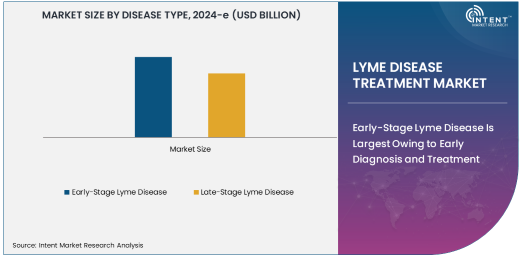
Early-Stage Lyme Disease Is Largest Owing to Early Diagnosis and Treatment
Among the various disease types, early-stage Lyme disease remains the largest subsegment, driven by its high treatability with antibiotics. Early diagnosis is crucial as it prevents the disease from progressing to more severe forms. Patients diagnosed at this stage typically receive oral antibiotics, which are highly effective in eliminating the Borrelia burgdorferi bacteria, reducing the need for more aggressive treatments. The large volume of early-stage diagnoses and the availability of accessible treatments contribute to the dominance of this subsegment in the market. Public awareness campaigns and advancements in diagnostic methods have further bolstered the growth of this segment.
The early-stage Lyme disease treatment market benefits from the growing number of healthcare initiatives aimed at rapid diagnosis and treatment. This trend is expected to continue with further improvements in diagnostic tools and antibiotic therapies. As awareness grows and better treatments are developed, the market for early-stage Lyme disease treatments is anticipated to maintain its leadership position.
Antibiotics Are Fastest Growing Treatment Type Due to Efficacy in Disease Management
Antibiotics are the fastest-growing treatment type within the Lyme disease treatment market. They play a pivotal role in both early and late-stage Lyme disease management, with drugs such as doxycycline, amoxicillin, and cefuroxime being the most commonly prescribed. The growth in this segment is largely attributed to the increasing prevalence of Lyme disease, especially in North America and parts of Europe, where the disease is endemic. The development of new antibiotics and the expansion of treatment regimens that target resistant strains of Borrelia burgdorferi are also driving growth in this market segment.
Antibiotic treatments are essential in preventing severe complications in Lyme disease, making them the first line of defense in both early and late-stage conditions. The rising incidence of antibiotic resistance, however, is pushing pharmaceutical companies to innovate and improve existing therapies, further contributing to the rapid growth of this segment. As a result, antibiotics are expected to continue to dominate the Lyme disease treatment market.
Oral Route of Administration Is Largest Due to Convenience and Accessibility
The oral route of administration is the largest subsegment in the Lyme disease treatment market, primarily due to its convenience, affordability, and ease of use. Oral antibiotics, such as doxycycline, are commonly prescribed for early-stage Lyme disease and are preferred by both healthcare providers and patients. The oral administration of antibiotics allows for outpatient treatment, reducing the burden on healthcare facilities. This route is also less invasive compared to injectables and intravenous treatments, making it the preferred option for both patients and physicians.
The dominance of oral antibiotics in Lyme disease treatment is further supported by the increasing awareness of the disease, which has led to more people seeking early treatment. Additionally, the cost-effectiveness of oral treatments plays a significant role in maintaining their market leadership, particularly in regions where healthcare costs are a major concern.
Hospitals Are Fastest Growing End-User Due to Rising Cases and Specialization
The hospital segment is the fastest growing end-user in the Lyme disease treatment market. Hospitals are increasingly becoming the primary setting for the treatment of more complex or late-stage cases, especially in regions where Lyme disease is highly endemic. These healthcare institutions have the resources and specialists necessary to manage severe forms of Lyme disease, including neurological and cardiac complications. The rising number of hospital admissions for Lyme disease, particularly in North America and Europe, has contributed to the growth of this subsegment.
The need for specialized care in hospitals, especially for late-stage Lyme disease, is expected to drive further growth in this segment. As Lyme disease cases become more severe and complex, hospitals are equipped to provide a higher level of care, including intravenous treatments and monitoring, further boosting this subsegment's expansion.
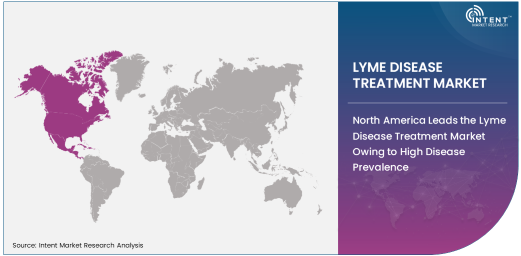
North America Leads the Lyme Disease Treatment Market Owing to High Disease Prevalence
North America is the largest region in the Lyme disease treatment market, owing to the high prevalence of the disease, particularly in the United States. The region accounts for a significant share of the global market, driven by the endemic nature of Lyme disease in several states and the increasing awareness among the population. The robust healthcare infrastructure and high healthcare spending in the region contribute significantly to market growth. Additionally, the advanced diagnostic tools available in North America ensure early detection and treatment of Lyme disease, further promoting the dominance of this region.
The region's large market share is also a result of continued investments in research and development to improve Lyme disease treatment. With a focus on new therapeutic approaches and the development of more effective antibiotics, North America is expected to maintain its leadership in the Lyme disease treatment market for the foreseeable future.
Leading Companies and Competitive Landscape
The Lyme disease treatment market features several established global players, including Pfizer, Merck, GlaxoSmithKline, and Novartis. These companies dominate the market due to their extensive portfolios of antibiotics, pain relief medications, and immunomodulators. Research and development are key drivers of competition in the market, with pharmaceutical companies investing heavily in the development of new drugs and treatment regimens to address the growing concerns of antibiotic resistance and the need for more effective therapies.
In addition to large multinational companies, smaller biotech firms are also making strides in Lyme disease treatment, focusing on niche therapeutics and innovative drug delivery methods. Collaborations and partnerships between pharmaceutical companies, research institutions, and healthcare providers are common in this market, aiming to expedite the development of novel treatments and improve patient outcomes. The competitive landscape remains dynamic, with ongoing efforts to enhance treatment efficacy and patient compliance.
Recent Developments:
- Pfizer has announced the development of a new antibiotic for Lyme disease that promises to be more effective against antibiotic-resistant strains of Borrelia burgdorferi.
- Merck & Co. has received FDA approval for a new intravenous treatment for advanced stages of Lyme disease, offering hope for patients with severe symptoms.
- GlaxoSmithKline has partnered with several research institutions to explore new vaccine candidates for Lyme disease, aiming to prevent infection before it occurs.
- Sanofi recently acquired a smaller biotech firm specializing in Lyme disease treatments, enhancing its portfolio in the infectious diseases segment.
- Bayer AG has introduced a new over-the-counter pain relief medication specifically targeting Lyme disease-related symptoms such as joint pain and inflammation.
List of Leading Companies:
- GlaxoSmithKline
- Pfizer Inc.
- Merck & Co.
- AbbVie Inc.
- Sanofi
- Bayer AG
- Johnson & Johnson
- Eli Lilly and Co.
- Novartis International AG
- Roche
- Bristol-Myers Squibb
- Teva Pharmaceutical Industries Ltd.
- AstraZeneca
- Mylan N.V.
- Amgen Inc.
Report Scope:
|
Report Features |
Description |
|
Market Size (2024-e) |
USD 0.9 Billion |
|
Forecasted Value (2030) |
USD 1.5 Billion |
|
CAGR (2025 – 2030) |
8.7% |
|
Base Year for Estimation |
2024-e |
|
Historic Year |
2023 |
|
Forecast Period |
2025 – 2030 |
|
Report Coverage |
Market Forecast, Market Dynamics, Competitive Landscape, Recent Developments |
|
Segments Covered |
Lyme Disease Treatment Market By Disease Type (Early-Stage Lyme Disease, Late-Stage Lyme Disease), By Treatment Type (Antibiotics, Pain Relief Medications, Anti-Inflammatory Drugs, Immune System Modulators), By Route of Administration (Oral, Injectable, Intravenous), By End-User (Hospitals, Clinics, Homecare, Specialty Centers) |
|
Regional Analysis |
North America (US, Canada, Mexico), Europe (Germany, France, UK, Italy, Spain, and Rest of Europe), Asia-Pacific (China, Japan, South Korea, Australia, India, and Rest of Asia-Pacific), Latin America (Brazil, Argentina, and Rest of Latin America), Middle East & Africa (Saudi Arabia, UAE, Rest of Middle East & Africa) |
|
Major Companies |
GlaxoSmithKline, Pfizer Inc., Merck & Co., AbbVie Inc., Sanofi, Bayer AG, Johnson & Johnson, Eli Lilly and Co., Novartis International AG, Roche, Bristol-Myers Squibb, Teva Pharmaceutical Industries Ltd., AstraZeneca, Mylan N.V., Amgen Inc. |
|
Customization Scope |
Customization for segments, region/country-level will be provided. Moreover, additional customization can be done based on the requirements |
|
1. Introduction |
|
1.1. Market Definition |
|
1.2. Scope of the Study |
|
1.3. Research Assumptions |
|
1.4. Study Limitations |
|
2. Research Methodology |
|
2.1. Research Approach |
|
2.1.1. Top-Down Method |
|
2.1.2. Bottom-Up Method |
|
2.1.3. Factor Impact Analysis |
|
2.2. Insights & Data Collection Process |
|
2.2.1. Secondary Research |
|
2.2.2. Primary Research |
|
2.3. Data Mining Process |
|
2.3.1. Data Analysis |
|
2.3.2. Data Validation and Revalidation |
|
2.3.3. Data Triangulation |
|
3. Executive Summary |
|
3.1. Major Markets & Segments |
|
3.2. Highest Growing Regions and Respective Countries |
|
3.3. Impact of Growth Drivers & Inhibitors |
|
3.4. Regulatory Overview by Country |
|
4. Lyme Disease Treatment Market, by Disease Type (Market Size & Forecast: USD Million, 2023 – 2030) |
|
4.1. Early-Stage Lyme Disease |
|
4.2. Late-Stage Lyme Disease |
|
5. Lyme Disease Treatment Market, by Treatment Type (Market Size & Forecast: USD Million, 2023 – 2030) |
|
5.1. Antibiotics |
|
5.2. Pain Relief Medications |
|
5.3. Anti-Inflammatory Drugs |
|
5.4. Immune System Modulators |
|
6. Lyme Disease Treatment Market, by Route of Administration (Market Size & Forecast: USD Million, 2023 – 2030) |
|
6.1. Oral |
|
6.2. Injectable |
|
6.3. Intravenous |
|
7. Lyme Disease Treatment Market, by End-User (Market Size & Forecast: USD Million, 2023 – 2030) |
|
7.1. Hospitals |
|
7.2. Clinics |
|
7.3. Homecare |
|
7.4. Specialty Centers |
|
8. Regional Analysis (Market Size & Forecast: USD Million, 2023 – 2030) |
|
8.1. Regional Overview |
|
8.2. North America |
|
8.2.1. Regional Trends & Growth Drivers |
|
8.2.2. Barriers & Challenges |
|
8.2.3. Opportunities |
|
8.2.4. Factor Impact Analysis |
|
8.2.5. Technology Trends |
|
8.2.6. North America Lyme Disease Treatment Market, by Disease Type |
|
8.2.7. North America Lyme Disease Treatment Market, by Treatment Type |
|
8.2.8. North America Lyme Disease Treatment Market, by Route of Administration |
|
8.2.9. By Country |
|
8.2.9.1. US |
|
8.2.9.1.1. US Lyme Disease Treatment Market, by Disease Type |
|
8.2.9.1.2. US Lyme Disease Treatment Market, by Treatment Type |
|
8.2.9.1.3. US Lyme Disease Treatment Market, by Route of Administration |
|
8.2.9.2. Canada |
|
8.2.9.3. Mexico |
|
*Similar segmentation will be provided for each region and country |
|
8.3. Europe |
|
8.4. Asia-Pacific |
|
8.5. Latin America |
|
8.6. Middle East & Africa |
|
9. Competitive Landscape |
|
9.1. Overview of the Key Players |
|
9.2. Competitive Ecosystem |
|
9.2.1. Level of Fragmentation |
|
9.2.2. Market Consolidation |
|
9.2.3. Product Innovation |
|
9.3. Company Share Analysis |
|
9.4. Company Benchmarking Matrix |
|
9.4.1. Strategic Overview |
|
9.4.2. Product Innovations |
|
9.5. Start-up Ecosystem |
|
9.6. Strategic Competitive Insights/ Customer Imperatives |
|
9.7. ESG Matrix/ Sustainability Matrix |
|
9.8. Manufacturing Network |
|
9.8.1. Locations |
|
9.8.2. Supply Chain and Logistics |
|
9.8.3. Product Flexibility/Customization |
|
9.8.4. Digital Transformation and Connectivity |
|
9.8.5. Environmental and Regulatory Compliance |
|
9.9. Technology Readiness Level Matrix |
|
9.10. Technology Maturity Curve |
|
9.11. Buying Criteria |
|
10. Company Profiles |
|
10.1. GlaxoSmithKline |
|
10.1.1. Company Overview |
|
10.1.2. Company Financials |
|
10.1.3. Product/Service Portfolio |
|
10.1.4. Recent Developments |
|
10.1.5. IMR Analysis |
|
*Similar information will be provided for other companies |
|
10.2. Pfizer Inc. |
|
10.3. Merck & Co. |
|
10.4. AbbVie Inc. |
|
10.5. Sanofi |
|
10.6. Bayer AG |
|
10.7. Johnson & Johnson |
|
10.8. Eli Lilly and Co. |
|
10.9. Novartis International AG |
|
10.10. Roche |
|
10.11. Bristol-Myers Squibb |
|
10.12. Teva Pharmaceutical Industries Ltd. |
|
10.13. AstraZeneca |
|
10.14. Mylan N.V. |
|
10.15. Amgen Inc. |
|
11. Appendix |
A comprehensive market research approach was employed to gather and analyze data on the Lyme Disease Treatment Market. In the process, the analysis was also done to analyze the parent market and relevant adjacencies to measure the impact of them on the Lyme Disease Treatment Market. The research methodology encompassed both secondary and primary research techniques, ensuring the accuracy and credibility of the findings.
.jpg)
Secondary Research
Secondary research involved a thorough review of pertinent industry reports, journals, articles, and publications. Additionally, annual reports, press releases, and investor presentations of industry players were scrutinized to gain insights into their market positioning and strategies.
Primary Research
Primary research involved conducting in-depth interviews with industry experts, stakeholders, and market participants across the E-Waste Management ecosystem. The primary research objectives included:
- Validating findings and assumptions derived from secondary research
- Gathering qualitative and quantitative data on market trends, drivers, and challenges
- Understanding the demand-side dynamics, encompassing end-users, component manufacturers, facility providers, and service providers
- Assessing the supply-side landscape, including technological advancements and recent developments
Market Size Assessment
A combination of top-down and bottom-up approaches was utilized to analyze the overall size of the Lyme Disease Treatment Market. These methods were also employed to assess the size of various subsegments within the market. The market size assessment methodology encompassed the following steps:
- Identification of key industry players and relevant revenues through extensive secondary research
- Determination of the industry's supply chain and market size, in terms of value, through primary and secondary research processes
- Calculation of percentage shares, splits, and breakdowns using secondary sources and verification through primary sources
.jpg)
Data Triangulation
To ensure the accuracy and reliability of the market size, data triangulation was implemented. This involved cross-referencing data from various sources, including demand and supply side factors, market trends, and expert opinions. Additionally, top-down and bottom-up approaches were employed to validate the market size assessment.
NA