
As per Intent Market Research, the Human Growth Hormone Market was valued at USD 5.4 Billion in 2024-e and will surpass USD 9.1 Billion by 2030; growing at a CAGR of 7.8% during 2025-2030.
The human growth hormone (HGH) market is experiencing substantial growth, driven by increasing awareness about its therapeutic benefits and advancements in biotechnology. Human growth hormone is essential in regulating growth, metabolism, and cellular repair. It is primarily used to treat growth hormone deficiencies in both children and adults, with applications in pediatric growth disorders, anti-aging treatments, and sports. As healthcare infrastructure improves and the demand for HGH therapies rises, the market is expected to continue expanding, with significant investments in research and development aimed at improving treatment delivery and reducing costs.
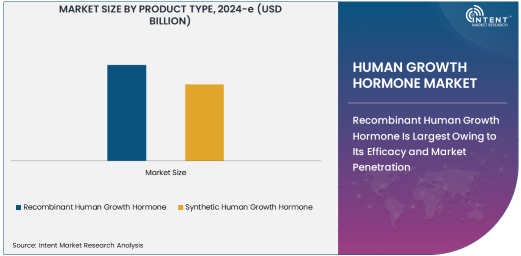
Recombinant Human Growth Hormone Is Largest Owing to Its Efficacy and Market Penetration
Among the various product types, recombinant human growth hormone (rHGH) is the largest segment in the HGH market. Recombinant HGH is synthesized through recombinant DNA technology, making it more effective and accessible compared to synthetic versions. This product type is widely used to treat growth hormone deficiencies, particularly in pediatric patients, and has established itself as the preferred choice due to its higher purity, effectiveness, and safety profile. The adoption of rHGH continues to grow globally as it offers an efficient and reliable method to treat growth disorders and hormone deficiencies.
Recombinant HGH is also a key player in adult growth hormone deficiency treatments and anti-aging therapies. As the demand for HGH treatments increases, driven by factors such as aging populations and higher awareness, recombinant HGH’s role is becoming even more prominent. Furthermore, advancements in rHGH formulations, such as improved delivery mechanisms and longer-lasting effects, are expected to sustain its dominance in the market, making it a critical segment for the growth of the HGH industry.
Pediatric Growth Disorders Application Is Fastest Growing Owing to Rising Diagnosis Rates
The pediatric growth disorders application segment is the fastest-growing in the human growth hormone market. As awareness around childhood growth deficiencies increases, more children are being diagnosed with growth hormone deficiencies, driving the demand for HGH therapies. Pediatric growth disorders, including conditions like dwarfism and Turner syndrome, are often treated with HGH to stimulate growth and development. With advancements in diagnostic tools and an improved understanding of growth disorders, early intervention has become more accessible, leading to a higher rate of treatment and thus propelling this segment’s growth.
Furthermore, the emphasis on improving children's overall quality of life and health outcomes contributes to the increasing adoption of HGH therapies. As healthcare infrastructure continues to develop globally, particularly in emerging markets, the pediatric growth disorders segment is expected to see substantial growth in the coming years, further expanding the reach of HGH treatments to younger populations.
Hospitals & Clinics End-User Segment Leads Due to Medical Supervision and Accessibility
The hospitals & clinics end-user segment is the largest in the HGH market, driven by the need for professional medical supervision during HGH therapy. Hospitals and clinics provide an essential environment for the proper administration of growth hormone injections, ensuring that patients receive appropriate dosing and monitoring. The treatment of HGH deficiencies, especially in children, requires careful oversight to prevent side effects and maximize therapeutic outcomes. Hospitals and clinics are well-equipped to handle these complexities, making them the primary setting for HGH therapy.
Additionally, hospitals and clinics often have the necessary infrastructure to perform diagnostic tests and provide comprehensive healthcare services to patients receiving HGH treatments. As a result, they continue to dominate the market in terms of HGH administration. The accessibility and trust in medical institutions further contribute to the preference for this distribution channel, solidifying its position as the largest end-user segment in the HGH market.
Retail Pharmacies Are the Largest Distribution Channel for HGH Therapy
Among the distribution channels, retail pharmacies represent the largest segment in the HGH market. Retail pharmacies are a vital point of access for patients who require HGH therapy, offering ease of access and convenience. Many patients, particularly adults using HGH for anti-aging or fitness purposes, prefer retail pharmacies for refills and consultations. In addition, healthcare providers often prescribe HGH therapy for home use, and patients can conveniently collect their prescriptions from retail pharmacies, eliminating the need for hospital visits.
Retail pharmacies play a crucial role in making HGH therapies more widely available, with an increasing number of pharmacy chains offering HGH products as part of their healthcare services. The growth of online pharmacy platforms also contributes to the increasing preference for retail pharmacies as a distribution channel, allowing for greater convenience in acquiring HGH treatments, especially in regions where access to specialized healthcare providers may be limited.
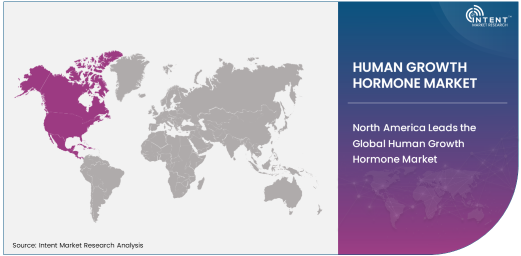
North America Leads the Global Human Growth Hormone Market
North America is the largest region in the global human growth hormone market, primarily driven by a well-established healthcare infrastructure, high awareness of growth hormone deficiencies, and advanced diagnostic and therapeutic services. The United States, in particular, has a robust healthcare system, with a significant number of patients receiving HGH therapy for both pediatric growth disorders and adult growth hormone deficiencies. In addition to a high prevalence of HGH treatments for medical conditions, there is also growing interest in HGH for anti-aging and fitness purposes, further boosting demand in the region.
The regulatory environment in North America is favorable to the HGH market, with the U.S. Food and Drug Administration (FDA) and other regulatory bodies ensuring the safety and efficacy of HGH treatments. As healthcare professionals continue to advocate for HGH therapies, North America’s market dominance is expected to continue in the coming years, despite increasing competition from other regions such as Europe and Asia-Pacific.
Competitive Landscape and Leading Companies
The human growth hormone market is highly competitive, with several key players leading the market. Novo Nordisk, Eli Lilly and Company, and Pfizer Inc. are major players, dominating the production and distribution of recombinant human growth hormone. These companies focus heavily on research and development, aiming to improve the delivery and effectiveness of HGH treatments. Additionally, Merck & Co., Ipsen, and Ferring Pharmaceuticals are also significant contributors to the HGH market, offering both recombinant and synthetic HGH therapies.
The competitive landscape is shaped by factors such as product innovation, pricing strategies, and regulatory approvals. Companies are increasingly focusing on creating more convenient administration options, such as longer-acting formulations and pen injectors, to improve patient adherence to treatment regimens. The growth of biosimilar products is another significant trend in the market, as it opens up the HGH therapy market to a broader patient base by offering more affordable alternatives. As competition intensifies, companies will continue to invest in expanding their product portfolios and developing innovative solutions to capture a larger share of the HGH market.
Recent Developments:
- Novo Nordisk launched a new formulation of recombinant human growth hormone aimed at improving delivery methods in November 2024.
- Pfizer acquired a biotechnology company specializing in advanced HGH therapies to expand its portfolio in the growth hormone treatment market in January 2025.
- Eli Lilly and Company received FDA approval for a new human growth hormone injection for pediatric growth disorders in October 2024.
- Ferring Pharmaceuticals announced a partnership with a global healthcare provider to enhance access to HGH therapies in developing markets in December 2024.
- Ipsen launched a new HGH biosimilar product, offering more affordable treatment options for adult growth hormone deficiencies in Q4 2024.
List of Leading Companies:
- Novo Nordisk
- Eli Lilly and Company
- Pfizer Inc.
- Merck & Co., Inc.
- Ferring Pharmaceuticals
- Sandoz (a Novartis division)
- Ipsen
- Genentech (Roche)
- Anke Bio
- LG Life Sciences
- Stada Arzneimittel AG
- RepliCel Life Sciences
- Mylan N.V.
- HAIHE Pharmaceutical
- Kangtai Biological Products
Report Scope:
|
Report Features |
Description |
|
Market Size (2024-e) |
USD 5.4 Billion |
|
Forecasted Value (2030) |
USD 9.1 Billion |
|
CAGR (2025 – 2030) |
7.8% |
|
Base Year for Estimation |
2024-e |
|
Historic Year |
2023 |
|
Forecast Period |
2025 – 2030 |
|
Report Coverage |
Market Forecast, Market Dynamics, Competitive Landscape, Recent Developments |
|
Segments Covered |
Human Growth Hormone Market By Product Type (Recombinant Human Growth Hormone, Synthetic Human Growth Hormone), By Application (Pediatric Growth Disorders, Adult Growth Hormone Deficiency, Anti-Aging Treatment, Sports & Fitness), By End-User (Hospitals & Clinics, Homecare Settings, Ambulatory Surgical Centers), By Distribution Channel (Online Pharmacies, Retail Pharmacies, Hospital Pharmacies, Direct Sales), and By Region; Global Insights & Forecast (2023 – 2030) |
|
Regional Analysis |
North America (US, Canada, Mexico), Europe (Germany, France, UK, Italy, Spain, and Rest of Europe), Asia-Pacific (China, Japan, South Korea, Australia, India, and Rest of Asia-Pacific), Latin America (Brazil, Argentina, and Rest of Latin America), Middle East & Africa (Saudi Arabia, UAE, Rest of Middle East & Africa) |
|
Major Companies |
Novo Nordisk, Eli Lilly and Company, Pfizer Inc., Merck & Co., Inc., Ferring Pharmaceuticals, Sandoz (a Novartis division), Ipsen, Genentech (Roche), Anke Bio, LG Life Sciences, Stada Arzneimittel AG, RepliCel Life Sciences, Mylan N.V., HAIHE Pharmaceutical, Kangtai Biological Products |
|
Customization Scope |
Customization for segments, region/country-level will be provided. Moreover, additional customization can be done based on the requirements |
|
1. Introduction |
|
1.1. Market Definition |
|
1.2. Scope of the Study |
|
1.3. Research Assumptions |
|
1.4. Study Limitations |
|
2. Research Methodology |
|
2.1. Research Approach |
|
2.1.1. Top-Down Method |
|
2.1.2. Bottom-Up Method |
|
2.1.3. Factor Impact Analysis |
|
2.2. Insights & Data Collection Process |
|
2.2.1. Secondary Research |
|
2.2.2. Primary Research |
|
2.3. Data Mining Process |
|
2.3.1. Data Analysis |
|
2.3.2. Data Validation and Revalidation |
|
2.3.3. Data Triangulation |
|
3. Executive Summary |
|
3.1. Major Markets & Segments |
|
3.2. Highest Growing Regions and Respective Countries |
|
3.3. Impact of Growth Drivers & Inhibitors |
|
3.4. Regulatory Overview by Country |
|
4. Human Growth Hormone Market, by Product Type (Market Size & Forecast: USD Million, 2023 – 2030) |
|
4.1. Recombinant Human Growth Hormone |
|
4.2. Synthetic Human Growth Hormone |
|
5. Human Growth Hormone Market, by Application (Market Size & Forecast: USD Million, 2023 – 2030) |
|
5.1. Pediatric Growth Disorders |
|
5.2. Adult Growth Hormone Deficiency |
|
5.3. Anti-Aging Treatment |
|
5.4. Sports & Fitness |
|
5.5. Others |
|
6. Human Growth Hormone Market, by End-User (Market Size & Forecast: USD Million, 2023 – 2030) |
|
6.1. Hospitals & Clinics |
|
6.2. Homecare Settings |
|
6.3. Ambulatory Surgical Centers |
|
7. Human Growth Hormone Market, by Distribution Channel (Market Size & Forecast: USD Million, 2023 – 2030) |
|
7.1. Online Pharmacies |
|
7.2. Retail Pharmacies |
|
7.3. Hospital Pharmacies |
|
7.4. Direct Sales |
|
8. Regional Analysis (Market Size & Forecast: USD Million, 2023 – 2030) |
|
8.1. Regional Overview |
|
8.2. North America |
|
8.2.1. Regional Trends & Growth Drivers |
|
8.2.2. Barriers & Challenges |
|
8.2.3. Opportunities |
|
8.2.4. Factor Impact Analysis |
|
8.2.5. Technology Trends |
|
8.2.6. North America Human Growth Hormone Market, by Product Type |
|
8.2.7. North America Human Growth Hormone Market, by Application |
|
8.2.8. North America Human Growth Hormone Market, by End-User |
|
8.2.9. North America Human Growth Hormone Market, by Distribution Channel |
|
8.2.10. By Country |
|
8.2.10.1. US |
|
8.2.10.1.1. US Human Growth Hormone Market, by Product Type |
|
8.2.10.1.2. US Human Growth Hormone Market, by Application |
|
8.2.10.1.3. US Human Growth Hormone Market, by End-User |
|
8.2.10.1.4. US Human Growth Hormone Market, by Distribution Channel |
|
8.2.10.2. Canada |
|
8.2.10.3. Mexico |
|
*Similar segmentation will be provided for each region and country |
|
8.3. Europe |
|
8.4. Asia-Pacific |
|
8.5. Latin America |
|
8.6. Middle East & Africa |
|
9. Competitive Landscape |
|
9.1. Overview of the Key Players |
|
9.2. Competitive Ecosystem |
|
9.2.1. Level of Fragmentation |
|
9.2.2. Market Consolidation |
|
9.2.3. Product Innovation |
|
9.3. Company Share Analysis |
|
9.4. Company Benchmarking Matrix |
|
9.4.1. Strategic Overview |
|
9.4.2. Product Innovations |
|
9.5. Start-up Ecosystem |
|
9.6. Strategic Competitive Insights/ Customer Imperatives |
|
9.7. ESG Matrix/ Sustainability Matrix |
|
9.8. Manufacturing Network |
|
9.8.1. Locations |
|
9.8.2. Supply Chain and Logistics |
|
9.8.3. Product Flexibility/Customization |
|
9.8.4. Digital Transformation and Connectivity |
|
9.8.5. Environmental and Regulatory Compliance |
|
9.9. Technology Readiness Level Matrix |
|
9.10. Technology Maturity Curve |
|
9.11. Buying Criteria |
|
10. Company Profiles |
|
10.1. Novo Nordisk |
|
10.1.1. Company Overview |
|
10.1.2. Company Financials |
|
10.1.3. Product/Service Portfolio |
|
10.1.4. Recent Developments |
|
10.1.5. IMR Analysis |
|
*Similar information will be provided for other companies |
|
10.2. Eli Lilly and Company |
|
10.3. Pfizer Inc. |
|
10.4. Merck & Co., Inc. |
|
10.5. Ferring Pharmaceuticals |
|
10.6. Sandoz (a Novartis division) |
|
10.7. Ipsen |
|
10.8. Genentech (Roche) |
|
10.9. Anke Bio |
|
10.10. LG Life Sciences |
|
10.11. Stada Arzneimittel AG |
|
10.12. RepliCel Life Sciences |
|
10.13. Mylan N.V. |
|
10.14. HAIHE Pharmaceutical |
|
10.15. Kangtai Biological Products |
|
11. Appendix |
A comprehensive market research approach was employed to gather and analyze data on the Human Growth Hormone Market. In the process, the analysis was also done to analyze the parent market and relevant adjacencies to measure the impact of them on the Human Growth Hormone Market. The research methodology encompassed both secondary and primary research techniques, ensuring the accuracy and credibility of the findings.
.jpg)
Secondary Research
Secondary research involved a thorough review of pertinent industry reports, journals, articles, and publications. Additionally, annual reports, press releases, and investor presentations of industry players were scrutinized to gain insights into their market positioning and strategies.
Primary Research
Primary research involved conducting in-depth interviews with industry experts, stakeholders, and market participants across the E-Waste Management ecosystem. The primary research objectives included:
- Validating findings and assumptions derived from secondary research
- Gathering qualitative and quantitative data on market trends, drivers, and challenges
- Understanding the demand-side dynamics, encompassing end-users, component manufacturers, facility providers, and service providers
- Assessing the supply-side landscape, including technological advancements and recent developments
Market Size Assessment
A combination of top-down and bottom-up approaches was utilized to analyze the overall size of the Human Growth Hormone Market. These methods were also employed to assess the size of various subsegments within the market. The market size assessment methodology encompassed the following steps:
- Identification of key industry players and relevant revenues through extensive secondary research
- Determination of the industry's supply chain and market size, in terms of value, through primary and secondary research processes
- Calculation of percentage shares, splits, and breakdowns using secondary sources and verification through primary sources
.jpg)
Data Triangulation
To ensure the accuracy and reliability of the market size, data triangulation was implemented. This involved cross-referencing data from various sources, including demand and supply side factors, market trends, and expert opinions. Additionally, top-down and bottom-up approaches were employed to validate the market size assessment.
NA