
As per Intent Market Research, the Androgen Deprivation Therapy Market was valued at USD 4.2 Billion in 2024-e and will surpass USD 6.1 Billion by 2030; growing at a CAGR of 5.7% during 2025-2030.
The Androgen Deprivation Therapy (ADT) market plays a critical role in the management of prostate cancer, one of the most common cancers affecting men worldwide. ADT primarily works by reducing androgen levels in the body, which can stimulate the growth of prostate cancer cells. This market has witnessed steady growth, driven by increasing prostate cancer diagnoses, rising healthcare expenditures, and advancements in drug therapies. The market also benefits from continuous research and development efforts aimed at providing more effective and personalized treatments with fewer side effects.
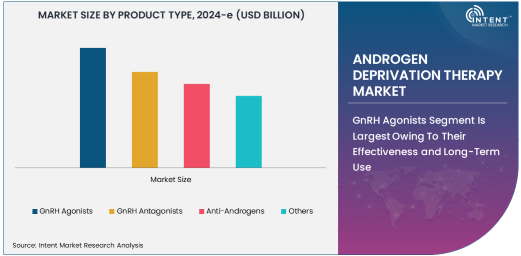
The market is segmented based on product type, drug class, treatment type, end-user, and route of administration. The GnRH Agonists segment, one of the most widely used ADT treatments, continues to lead the market. GnRH agonists work by reducing the production of testosterone, which is the primary androgen responsible for prostate cancer cell growth. These drugs are highly effective in managing the progression of prostate cancer, particularly in advanced stages, and have long been the standard treatment choice for prostate cancer patients.
GnRH Agonists Segment Is Largest Owing To Their Effectiveness and Long-Term Use
GnRH agonists, such as Leuprolide and Goserelin, are the most commonly prescribed medications in the ADT market. They work by stimulating the release of luteinizing hormone, which in turn reduces the levels of testosterone. The segment remains dominant due to the long-established clinical use and proven effectiveness of these medications in treating prostate cancer, particularly in managing advanced and metastatic forms of the disease. Their ability to provide consistent and long-term testosterone suppression makes them a reliable choice for many healthcare providers.
Despite the emergence of newer treatment options such as GnRH antagonists and oral anti-androgens, GnRH agonists retain the largest market share. The segment benefits from their established safety profiles, ease of administration, and wide availability, making them a staple in prostate cancer treatment regimens worldwide. Their continued dominance in the market is supported by the availability of generics, making these treatments cost-effective for both healthcare providers and patients.
LHRH Agonists Segment Is Fastest Growing Due to Enhanced Efficacy
LHRH agonists are an important subsegment of the GnRH agonists class and are experiencing rapid growth within the ADT market. These drugs, like Leuprolide and Goserelin, directly impact the pituitary gland to reduce testosterone production, and they are increasingly becoming the treatment of choice for many healthcare providers due to their improved efficacy over older therapies. The adoption of LHRH agonists is expanding as they demonstrate more durable results, better management of side effects, and greater patient compliance compared to other ADT therapies.
The LHRH agonists' segment is benefiting from continuous advancements in drug formulations, offering longer-acting versions of these medications that reduce the frequency of administration. These formulations are a significant factor in the growing adoption of LHRH agonists in clinical practice, especially among patients seeking more convenient treatment options with fewer hospital visits. The growing recognition of their benefits in clinical guidelines further supports their rapid expansion in the market.
Palliative Therapy Is Fastest Growing Treatment Type Due to Increasing Demand for Symptom Management
The Palliative Therapy segment is experiencing the fastest growth within the Androgen Deprivation Therapy market. Palliative therapy, aimed at alleviating symptoms rather than curing the disease, plays a vital role in improving the quality of life for patients with advanced prostate cancer. As the global aging population increases, more individuals are diagnosed with prostate cancer in its later stages, resulting in an increased demand for palliative treatments. This segment is critical for patients who may not be candidates for curative treatments but require therapies to manage pain, discomfort, and other symptoms of the disease.
The growth in palliative therapy is driven by an increase in the awareness of its importance in cancer care and the ongoing research to enhance the quality of life for patients with metastatic prostate cancer. The availability of new drugs and treatment combinations that target specific symptoms has contributed to the accelerated growth of this segment. Moreover, palliative therapies are becoming more integrated into holistic cancer treatment approaches, further driving their adoption in clinical settings.
Injectable Route of Administration Is Widely Adopted for ADT Treatments
Among the different routes of administration for ADT treatments, the injectable route is the most widely adopted. Injectable ADT therapies, such as Leuprolide (Lupron) and Goserelin (Zoladex), offer prolonged action, which reduces the need for frequent administration. These drugs are typically administered at regular intervals ranging from a few weeks to several months, ensuring consistent suppression of testosterone levels. The long-lasting effects of injectable therapies are especially beneficial for patients who require continuous treatment for prostate cancer.
Injectable ADT medications are preferred by many healthcare professionals due to their established safety and efficacy. They are particularly advantageous in patients with advanced prostate cancer who need effective long-term management without frequent oral medication. Furthermore, injectable formulations have fewer compliance issues compared to oral treatments, as they do not require daily administration, thus contributing to their widespread use.
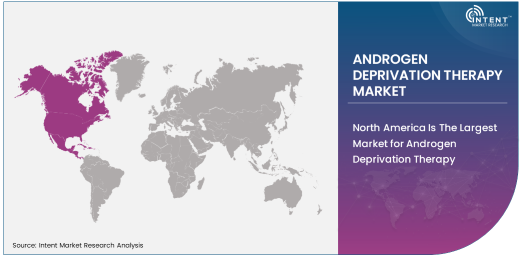
North America Is The Largest Market for Androgen Deprivation Therapy
North America continues to be the largest regional market for Androgen Deprivation Therapy. The region benefits from a well-established healthcare infrastructure, high healthcare spending, and access to advanced treatments and therapies. The United States, in particular, is a major player in the global ADT market due to its high prostate cancer incidence rates, widespread adoption of ADT therapies, and the presence of key pharmaceutical companies developing innovative treatments.
North America also leads in terms of the number of clinical trials, healthcare research funding, and regulatory approvals, all of which contribute to the rapid adoption of newer, more effective ADT treatments. Additionally, the increasing demand for personalized treatments and the growing awareness of prostate cancer screening further fuel market growth in the region.
Competitive Landscape and Leading Companies
The Androgen Deprivation Therapy market is highly competitive, with several global pharmaceutical companies leading the way in developing and marketing ADT treatments. Key players like AstraZeneca, Johnson & Johnson, Bayer AG, and Merck & Co. have a strong presence in the market, offering a range of GnRH agonists, LHRH agonists, and other hormone therapies. These companies are involved in extensive research and development to enhance treatment efficacy, minimize side effects, and improve patient outcomes.
The market is also seeing growing competition from emerging biotech firms focusing on novel therapies that target prostate cancer more specifically. Partnerships, mergers, and acquisitions are common as companies aim to expand their portfolios and strengthen their market position. Ongoing innovation and the introduction of new drug formulations, including longer-acting injectables and oral therapies, are expected to intensify competition and drive further market growth.
Recent Developments:
- AstraZeneca launched a new clinical trial to assess the effectiveness of its advanced ADT drug, aiming to improve outcomes for prostate cancer patients who have not responded to traditional therapies.
- Johnson & Johnson announced a strategic partnership with a biotech company to develop new anti-androgen therapies for treating advanced prostate cancer, focusing on improving patient response and minimizing side effects.
- Bayer AG received regulatory approval in Europe for its latest GnRH antagonist, enhancing its portfolio of ADT treatments and offering new options for patients with advanced prostate cancer.
- Merck & Co., Inc. unveiled promising clinical data on its new oral anti-androgen therapy, demonstrating improved efficacy and safety over existing injectable options in clinical trials.
- Sanofi completed the acquisition of a leading biotech firm specializing in ADT treatments, aiming to expand its prostate cancer treatment options and enhance its market position
List of Leading Companies:
- AstraZeneca
- Johnson & Johnson
- Bayer AG
- Novartis International AG
- Sanofi
- Pfizer
- Merck & Co., Inc.
- Bristol-Myers Squibb
- AbbVie Inc.
- Ipsen
- Astellas Pharma
- Endo Pharmaceuticals
- Teva Pharmaceutical Industries
- Eli Lilly and Company
- Takeda Pharmaceutical Company
Report Scope:
|
Report Features |
Description |
|
Market Size (2024-e) |
USD 4.2 Billion |
|
Forecasted Value (2030) |
USD 6.1 Billion |
|
CAGR (2025 – 2030) |
5.7% |
|
Base Year for Estimation |
2024-e |
|
Historic Year |
2023 |
|
Forecast Period |
2025 – 2030 |
|
Report Coverage |
Market Forecast, Market Dynamics, Competitive Landscape, Recent Developments |
|
Segments Covered |
Androgen Deprivation Therapy Market By Product Type (GnRH Agonists, GnRH Antagonists, Anti-Androgens), By Drug Class (LHRH Agonists, LHRH Antagonists, Oral Anti-Androgens, Injectable Anti-Androgens), By Treatment Type (Neoadjuvant Therapy, Adjuvant Therapy, Palliative Therapy), By End-User (Hospitals, Clinics, Homecare), and By Route of Administration (Oral, Injectable, Implantable) |
|
Regional Analysis |
North America (US, Canada, Mexico), Europe (Germany, France, UK, Italy, Spain, and Rest of Europe), Asia-Pacific (China, Japan, South Korea, Australia, India, and Rest of Asia-Pacific), Latin America (Brazil, Argentina, and Rest of Latin America), Middle East & Africa (Saudi Arabia, UAE, Rest of Middle East & Africa) |
|
Major Companies |
AstraZeneca, Johnson & Johnson, Bayer AG, Novartis International AG, Sanofi, Pfizer, Merck & Co., Inc., Bristol-Myers Squibb, AbbVie Inc., Ipsen, Astellas Pharma, Endo Pharmaceuticals, Teva Pharmaceutical Industries, Eli Lilly and Company, Takeda Pharmaceutical Company |
|
Customization Scope |
Customization for segments, region/country-level will be provided. Moreover, additional customization can be done based on the requirements |
|
1. Introduction |
|
1.1. Market Definition |
|
1.2. Scope of the Study |
|
1.3. Research Assumptions |
|
1.4. Study Limitations |
|
2. Research Methodology |
|
2.1. Research Approach |
|
2.1.1. Top-Down Method |
|
2.1.2. Bottom-Up Method |
|
2.1.3. Factor Impact Analysis |
|
2.2. Insights & Data Collection Process |
|
2.2.1. Secondary Research |
|
2.2.2. Primary Research |
|
2.3. Data Mining Process |
|
2.3.1. Data Analysis |
|
2.3.2. Data Validation and Revalidation |
|
2.3.3. Data Triangulation |
|
3. Executive Summary |
|
3.1. Major Markets & Segments |
|
3.2. Highest Growing Regions and Respective Countries |
|
3.3. Impact of Growth Drivers & Inhibitors |
|
3.4. Regulatory Overview by Country |
|
4. Androgen Deprivation Therapy Market, by Product Type (Market Size & Forecast: USD Million, 2023 – 2030) |
|
4.1. GnRH Agonists |
|
4.2. GnRH Antagonists |
|
4.3. Anti-Androgens |
|
4.4. Others |
|
5. Androgen Deprivation Therapy Market, by Drug Class (Market Size & Forecast: USD Million, 2023 – 2030) |
|
5.1. LHRH Agonists |
|
5.2. LHRH Antagonists |
|
5.3. Oral Anti-Androgens |
|
5.4. Injectable Anti-Androgens |
|
6. Androgen Deprivation Therapy Market, by Treatment Type (Market Size & Forecast: USD Million, 2023 – 2030) |
|
6.1. Neoadjuvant Therapy |
|
6.2. Adjuvant Therapy |
|
6.3. Palliative Therapy |
|
7. Androgen Deprivation Therapy Market, by End-User (Market Size & Forecast: USD Million, 2023 – 2030) |
|
7.1. Hospitals |
|
7.2. Clinics |
|
7.3. Homecare |
|
8. Androgen Deprivation Therapy Market, by Route of Administration (Market Size & Forecast: USD Million, 2023 – 2030) |
|
8.1. Oral |
|
8.2. Injectable |
|
8.3. Implantable |
|
9. Regional Analysis (Market Size & Forecast: USD Million, 2023 – 2030) |
|
9.1. Regional Overview |
|
9.2. North America |
|
9.2.1. Regional Trends & Growth Drivers |
|
9.2.2. Barriers & Challenges |
|
9.2.3. Opportunities |
|
9.2.4. Factor Impact Analysis |
|
9.2.5. Technology Trends |
|
9.2.6. North America Androgen Deprivation Therapy Market, by Product Type |
|
9.2.7. North America Androgen Deprivation Therapy Market, by Drug Class |
|
9.2.8. North America Androgen Deprivation Therapy Market, by Treatment Type |
|
9.2.9. North America Androgen Deprivation Therapy Market, by End-User |
|
9.2.10. North America Androgen Deprivation Therapy Market, by Route of Administration |
|
9.2.11. By Country |
|
9.2.11.1. US |
|
9.2.11.1.1. US Androgen Deprivation Therapy Market, by Product Type |
|
9.2.11.1.2. US Androgen Deprivation Therapy Market, by Drug Class |
|
9.2.11.1.3. US Androgen Deprivation Therapy Market, by Treatment Type |
|
9.2.11.1.4. US Androgen Deprivation Therapy Market, by End-User |
|
9.2.11.1.5. US Androgen Deprivation Therapy Market, by Route of Administration |
|
9.2.11.2. Canada |
|
9.2.11.3. Mexico |
|
*Similar segmentation will be provided for each region and country |
|
9.3. Europe |
|
9.4. Asia-Pacific |
|
9.5. Latin America |
|
9.6. Middle East & Africa |
|
10. Competitive Landscape |
|
10.1. Overview of the Key Players |
|
10.2. Competitive Ecosystem |
|
10.2.1. Level of Fragmentation |
|
10.2.2. Market Consolidation |
|
10.2.3. Product Innovation |
|
10.3. Company Share Analysis |
|
10.4. Company Benchmarking Matrix |
|
10.4.1. Strategic Overview |
|
10.4.2. Product Innovations |
|
10.5. Start-up Ecosystem |
|
10.6. Strategic Competitive Insights/ Customer Imperatives |
|
10.7. ESG Matrix/ Sustainability Matrix |
|
10.8. Manufacturing Network |
|
10.8.1. Locations |
|
10.8.2. Supply Chain and Logistics |
|
10.8.3. Product Flexibility/Customization |
|
10.8.4. Digital Transformation and Connectivity |
|
10.8.5. Environmental and Regulatory Compliance |
|
10.9. Technology Readiness Level Matrix |
|
10.10. Technology Maturity Curve |
|
10.11. Buying Criteria |
|
11. Company Profiles |
|
11.1. AstraZeneca |
|
11.1.1. Company Overview |
|
11.1.2. Company Financials |
|
11.1.3. Product/Service Portfolio |
|
11.1.4. Recent Developments |
|
11.1.5. IMR Analysis |
|
*Similar information will be provided for other companies |
|
11.2. Johnson & Johnson |
|
11.3. Bayer AG |
|
11.4. Novartis International AG |
|
11.5. Sanofi |
|
11.6. Pfizer |
|
11.7. Merck & Co., Inc. |
|
11.8. Bristol-Myers Squibb |
|
11.9. AbbVie Inc. |
|
11.10. Ipsen |
|
11.11. Astellas Pharma |
|
11.12. Endo Pharmaceuticals |
|
11.13. Teva Pharmaceutical Industries |
|
11.14. Eli Lilly and Company |
|
11.15. Takeda Pharmaceutical Company |
|
12. Appendix |
A comprehensive market research approach was employed to gather and analyze data on the Androgen Deprivation Therapy Market. In the process, the analysis was also done to analyze the parent market and relevant adjacencies to measure the impact of them on the Androgen Deprivation Therapy Market. The research methodology encompassed both secondary and primary research techniques, ensuring the accuracy and credibility of the findings.
.jpg)
Secondary Research
Secondary research involved a thorough review of pertinent industry reports, journals, articles, and publications. Additionally, annual reports, press releases, and investor presentations of industry players were scrutinized to gain insights into their market positioning and strategies.
Primary Research
Primary research involved conducting in-depth interviews with industry experts, stakeholders, and market participants across the E-Waste Management ecosystem. The primary research objectives included:
- Validating findings and assumptions derived from secondary research
- Gathering qualitative and quantitative data on market trends, drivers, and challenges
- Understanding the demand-side dynamics, encompassing end-users, component manufacturers, facility providers, and service providers
- Assessing the supply-side landscape, including technological advancements and recent developments
Market Size Assessment
A combination of top-down and bottom-up approaches was utilized to analyze the overall size of the Androgen Deprivation Therapy Market. These methods were also employed to assess the size of various subsegments within the market. The market size assessment methodology encompassed the following steps:
- Identification of key industry players and relevant revenues through extensive secondary research
- Determination of the industry's supply chain and market size, in terms of value, through primary and secondary research processes
- Calculation of percentage shares, splits, and breakdowns using secondary sources and verification through primary sources
.jpg)
Data Triangulation
To ensure the accuracy and reliability of the market size, data triangulation was implemented. This involved cross-referencing data from various sources, including demand and supply side factors, market trends, and expert opinions. Additionally, top-down and bottom-up approaches were employed to validate the market size assessment.
NA